Pay in installments of $5.03 with
 ,
,
 and
and

Shipping Estimate
USA
- USA
- CAN
- USA
- CAN
Ships within 48 hours · Estimated delivery Aug 7 - Aug 12
 Promo Codes Available:
For Your Every Summer RSVP, with Code: SUMMER15
Description
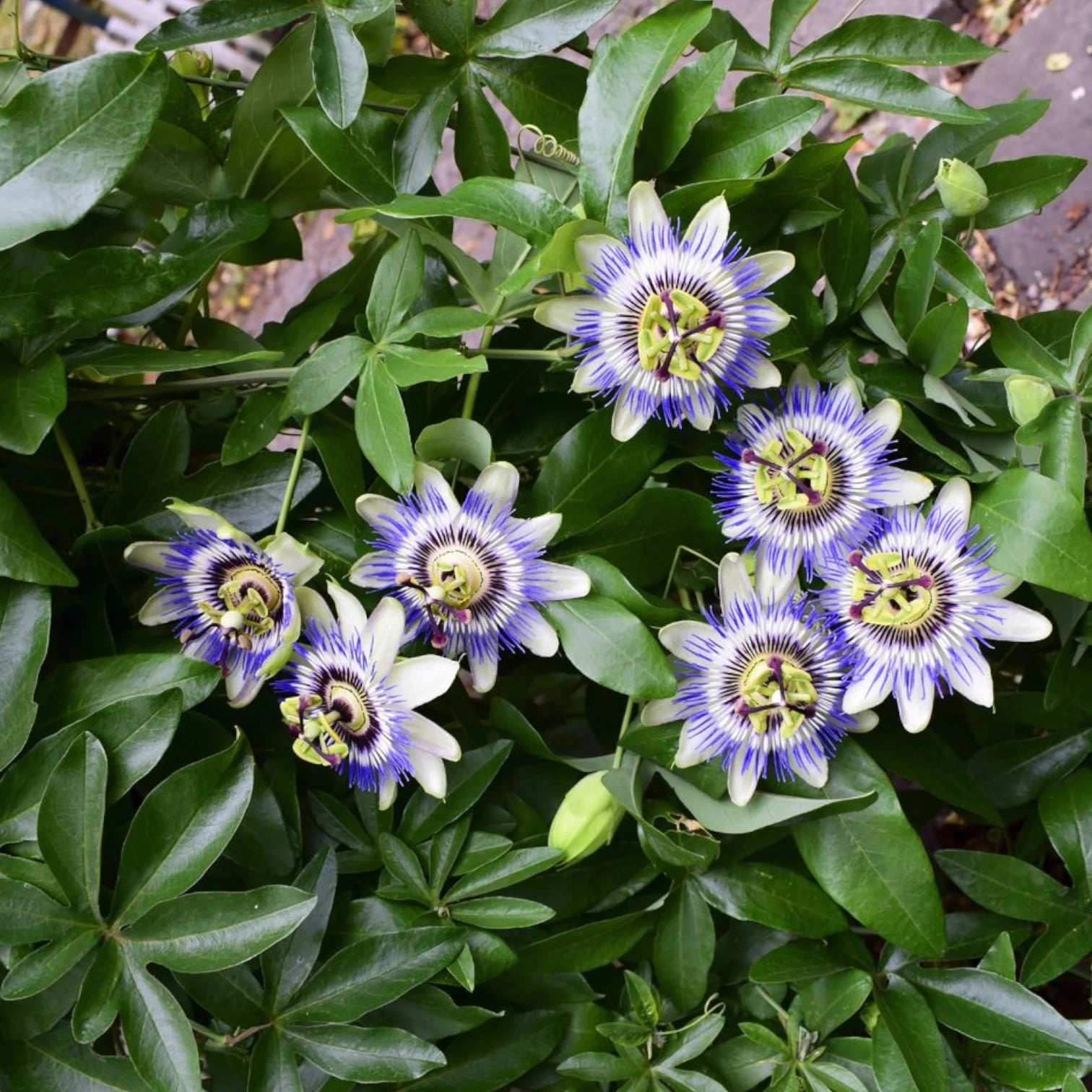
passiflora indoor plant Passiflora caerulea (Passionflower) | Outdoor PlantPassiflora caerulea: blue passion flower for sheltered gardens Passiflora caerulea is the best known hardy passion flower, grown for its unmistakable blooms: white petals topped with a crown of blue and purple filaments. Flowers open from summer into autumn, and in warm seasons they can be followed by orange, ovoid fruits. The plant is a vigorous tendril climber with lobed, rich green leaves, and it quickly turns a trellis or wire system into a leafy
Passiflora caerulea: blue passion flower for sheltered gardens
Passiflora caerulea is the best-known hardy passion flower, grown for its unmistakable blooms: white petals topped with a crown of blue and purple filaments. Flowers open from summer into autumn, and in warm seasons they can be followed by orange, ovoid fruits. The plant is a vigorous tendril climber with lobed, rich green leaves, and it quickly turns a trellis or wire system into a leafy screen.
In mild areas it keeps a strong evergreen look, while colder winters can reduce foliage and cause some dieback-followed by fast regrowth as temperatures rise. The most reliable performance comes from a sunny or lightly shaded position with shelter and a warm wall effect.
Growth habit and mature size
In open ground, Passiflora caerulea typically reaches 8-12 m in height and spreads 2.5-4 m across its support. It climbs by tendrils, wrapping around wires, trellis bars, and thin branches. Because the stems extend rapidly in warm weather, a clear training plan helps keep growth distributed across the support for even coverage.
For a balanced look, guide new shoots sideways and upward as they grow. That fills the support evenly, keeps flowers within view, and makes pruning simpler in spring.
Light, warmth, and the sheltered-wall advantage
This passion flower grows in full sun or partial shade, and it performs best where warmth builds during the day and cold winds are reduced. A south- or west-facing wall is ideal. Shelter also helps the plant’s H4 hardiness level by reducing exposure and keeping the root zone and lower stems a little warmer through winter.
- Position: Full sun to part shade
- Aspect: South or west supports stronger flowering
- Exposure: Sheltered sites improve winter reliability
Soil: moist but well-drained, with air around the roots
Passiflora caerulea grows in chalk, loam, and sand and tolerates a broad pH range (acid, neutral, or alkaline). The main requirement is moisture that stays steady through summer, combined with drainage that keeps the root zone airy. In heavy ground, mix in grit and compost to improve structure; in very light soils, add compost to hold moisture for longer.
Watering is most important during establishment and during prolonged dry spells. A deep soak once the top layer has dried keeps growth steady and supports bud formation. A mulch helps stabilise moisture and keeps the root zone cooler while the top growth enjoys the warmth of its support.
Support and training for tendrils
Passion flowers climb by tendrils, so they need something slender enough to wrap around. Horizontal wires, lattice trellis, or a pergola with thin crossbars all work well. Start training early: tie in the main stems loosely and guide extension shoots along the support to fill gaps.
- Best supports: Wire grids, trellis panels, pergola crossbars, fence wires
- Training tip: Guide young shoots while they are flexible for a neat framework
- Spacing: Give stems room so foliage and flowers receive light and airflow
Pruning in early spring
Prune in early spring, once the worst of winter has passed. Begin by removing any winter-damaged tips, then shorten long stems to keep growth close to the support. On established plants, thinning congested growth and shortening laterals encourages fresh extension shoots and keeps flowering growth within reach.
If your plant has been hit by cold, cut back to healthy tissue and let new shoots rebuild the canopy. Passiflora caerulea responds quickly once temperatures rise and the root system is active.
Feeding and watering through the growing season
A spring mulch and a balanced feed at the start of growth support strong leaf and flower production. In containers or very lean soils, a second feed in early summer can help maintain steady growth. Regular watering matters most in warm weather, especially for pot-grown plants where the root zone dries quickly.
Growing Passiflora caerulea in pots
In a container, growth stays smaller and slower than in open ground, which can be useful where space is limited or winters are colder. Use a large, stable pot, a free-draining mix with a moisture-retentive component, and a strong frame for climbing. Water when the top layer has dried and let excess drain fully, then feed lightly through the active growing season.
For winter, a sheltered position against a warm wall and insulation around the container help protect roots. In colder regions, overwintering the plant in a bright, frost-free space is a practical option, then moving it back out once spring temperatures stabilise.
Pests and setbacks
In sheltered glazing or indoors for winter, passion flowers can attract sap-sucking pests such as spider mites, whitefly, or scale. Regular checks of the undersides of leaves and a prompt rinse or treatment keeps small problems from building. Outdoors, good airflow and steady watering keep the plant looking its best, and a spring tidy keeps growth strong.
Flower structure and late-season fruit
Each flower has a white base and a distinctive crown of filaments in blue and purple tones, giving it a graphic, almost architectural look at close range. After flowering, orange fruits can develop; they are edible, though flavour is usually mild. In warm microclimates, fruiting is more likely, especially where the plant has consistent moisture through summer.
Winter behaviour in colder gardens
In sheltered urban sites and mild regions, Passiflora caerulea often holds onto a good portion of its foliage. In colder winters, top growth can die back and then regrow from the base in spring. A warm wall, a mulch over the root zone, and shelter from drying winds all help the plant come through winter with less stem loss.
- Border planting: Mulch in autumn and keep the base protected from harsh wind
- Pot growing: Insulate the container and water lightly so the root ball never dries out completely
- Spring reset: Prune after cold weather to tidy and shape the new season’s growth
For an architectural climber with intricate flowers and fast summer coverage, Passiflora caerulea is a standout choice for sheltered walls, pergolas, and large containers.
Shipping Notes
- Free Standard Shipping on $100+ Orders to the USA.
- Except Preorder products are shipped in 48 hours.
- Delivery to the USA:
- Standard Shipping : 3-10 business days
- If time is of the essence, please consider selecting expedited delivery for faster service.
Exchange/Return Notes
- We offer a 30-day return/exchange service after receiving.
- Final sale items are not eligible for returns or exchanges.
- To process your return/exchange, please contact us at [email protected]
- Please click here for more details>>> Return & Exchange Policy