Pay in installments of $5.43 with
 ,
,
 and
and

Shipping Estimate
USA
- USA
- CAN
- USA
- CAN
Ships within 48 hours · Estimated delivery Aug 20 - Aug 25
 Promo Codes Available:
For Your Every Summer RSVP, with Code: SUMMER15
Description
trigona succulent African Milk TreeIntroducing the stunning African milk tree, known as Euphorbia trigona 'Rubra', the perfect addition to any collection of Euphorbias. The African milk tree is named after its white, milky sap, which is of African origin and is referred to as a "milk tree." The African milk tree has many other common names, such as the Royal Red, the Abyssinian Euphorbia, and the High Chaparral. Though this euphorbia plant also goes by the names "candelabra cactus,"
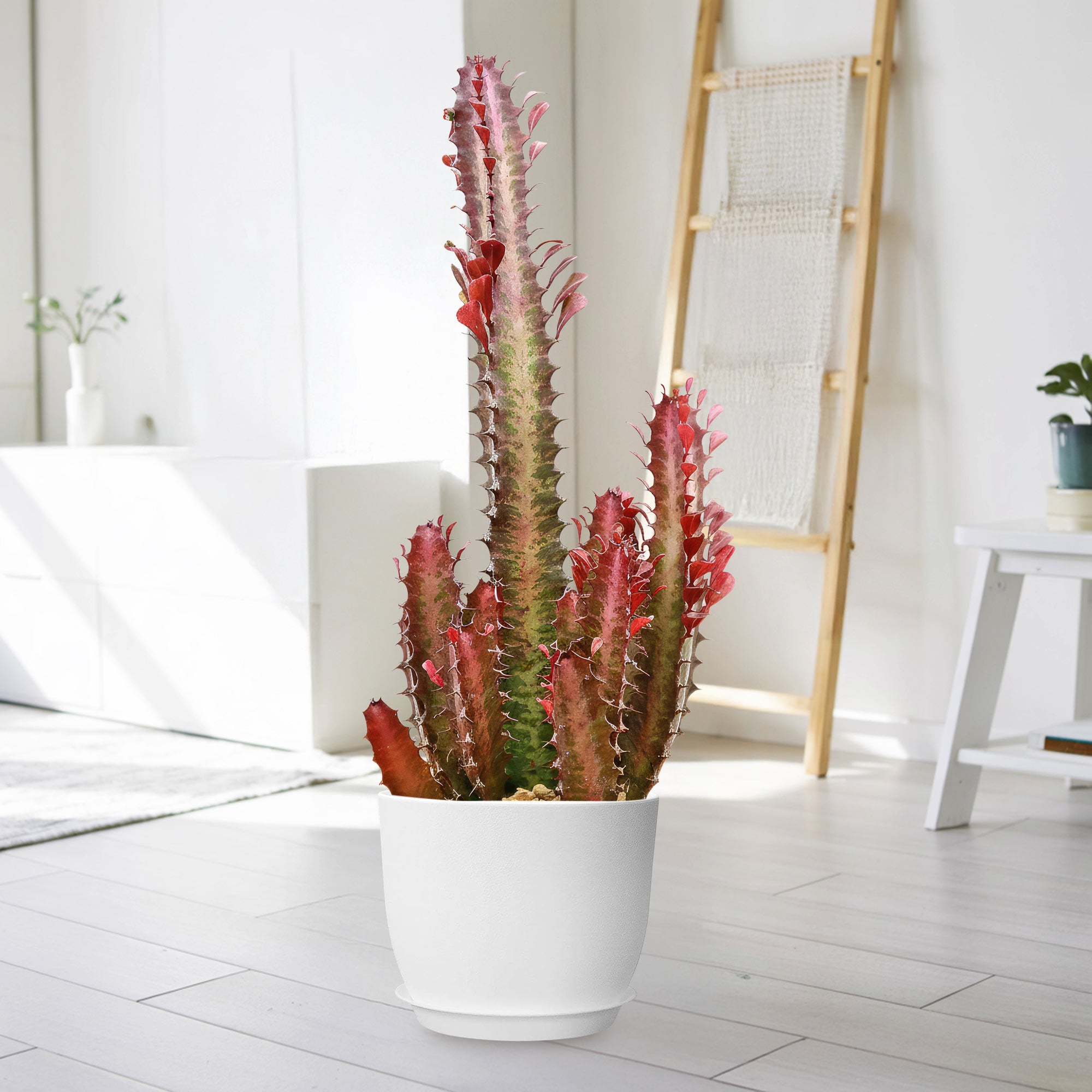
Introducing the stunning African milk tree, known as Euphorbia trigona 'Rubra', the perfect addition to any collection of Euphorbias. The African milk tree is named after its white, milky sap, which is of African origin and is referred to as a "milk tree."
The African milk tree has many other common names, such as the Royal Red, the Abyssinian Euphorbia, and the High Chaparral. Though this euphorbia plant also goes by the names "candelabra cactus," "cathedral cactus," "friendship cactus," and "good luck cactus." This red Euphorbia milk tree is actually a succulent plant, despite looking a lot like a cactus.
The Rubra or Royal Red variety is well known for its vibrant Euphorbia cactus color, which develops late in the growing season.
African milk bush has a long lifespan and grows quickly, gaining 1 to 2 feet per year and reaching a height of 9 feet in just 3-5 years. When grown indoors, however, this African milk tree will only reach approximately half of its maximum height.
The African milk tree has branches that resemble three-winged angles and are covered in leaves and short, prickly spines. Euphorbia rubra has a vibrant purple-red color on its stem and leaves, while Euphorbia trigona has a bronzish hue. Its red teardrop-shaped leaves last for one or two seasons and can be propagated for a more impressive hedge or houseplant collection.
The flowers of the African Milk Tree are typically green or yellow in color and are surrounded by colorful bracts. It's actually quite rare for it to produce flowers indoors. In its natural habitat, however, this Euphorbia trigona rubra can produce small, inconspicuous flowers during the spring and summer months.
When and How to Water Your African Milk Tree
The African milk tree is a drought-tolerant succulent that stores water in its fleshy stems, making it well adapted to dry environments. In the spring and summer, during the active growing season, Euphorbia trigona 'Rubra' should be watered every 10 to 14 days,
Go to soil-cactus-mix-blend-1-gal-4-qt-cacti-succulent-dirt-compost-growing-media
Green African Milk Tree
or whenever the top 1–2 inches of soil feels completely dry. Water thoroughly until it drains from the bottom, but always allow the soil to dry out before watering again.
In the fall and winter months, when the plant enters dormancy, watering should be reduced to once every 3 to 4 weeks, or even less if the indoor environment is cool and the soil remains slightly moist. Overwatering during dormancy is a common mistake and can easily lead to root rot.
Overwatering can lead to root rot, which can kill your red African milk tree. It is important to allow the soil to dry out between waterings to prevent this.
Light Requirements - Where to Place Your Euphorbia trigona
If growing indoors as a houseplant, the African Milk Tree thrives in bright, indirect light for at least 4-6 hours a day. Avoid placing it in direct sunlight, as this can scorch its leaves. If you notice the stems stretching or the leaves losing their vibrant color, it might be an indication that your African milk tree is not receiving enough bright light. In such cases, you can supplement its light requirements with the help of artificial grow lights.
When growing outdoors, your Euphorbia trigona rubra thrives in full sun to partial shade. The African milk tree can tolerate some direct sunlight, but too much can cause the leaves to burn.
In general, it should be placed in a location that receives bright but filtered light, such as near a window with a sheer curtain.
Remember, if you live in a region with a mild climate, you can consider placing your African milk tree plant in a partially shaded area outdoors.
However, if you reside in a hot and arid region, it's best to provide some shade during the hottest parts of the day to prevent sunburn.
Additionally, if they don't receive enough light, their stems may grow leggy and become paler, and their spines will shorten. So, make your milk plant happy and give it plenty of bright sunlight. If your Euphorbia trigona rubra is not receiving enough light, the leaves may become pale or yellow, while too much light can cause the leaves to turn brown or black.
Optimal Soil & Fertilizer Needs
The African milk plant favors very airy, sandy soil that drains well within a soil pH of 5.5 to 6.5. Planting them in ordinary soil will result in compacted roots, stunted growth, and, most likely, root rot. Instead, make or buy a well-draining soil, or ideally, use our that contains over 5 natural substrates and mycorrhizae to promote the development of new growth and a strong root system that helps your healthy plant thrive.
The Euphorbia tree prefers fertilizer with lower doses of NPK once a year in spring, with a maximum ratio of 5-10-5 that is higher in phosphorus than nitrogen. This will help promote healthy growth without causing excessive leafy growth.
Indoor Growing Temperature & Humidity
If you are growing your Euphorbia trigona rubra indoors, they prefer constant temperatures above 70°F, and can tolerate triple digits in the summer, so don't worry if your cactus gets too hot. In the United States, that usually means they're indoor plants or grown in a greenhouse in areas with colder climates, at least for part of the year.
These plants prefer low to moderate humidity, similar to their native arid environment. Avoid placing them in overly humid rooms like bathrooms, and ensure there is good air circulation to prevent moisture buildup around the roots.
Hardiness Zones & More
In the United States, this African milk plant is mostly an indoor plant, but if you live in southern Florida or Hawaii, then you can cultivate it outdoors in USDA zones 9-11.
Remember, these perennial succulents cannot handle frost or cold temperatures, but African milk trees are not truly hardy plants, and prolonged exposure will almost certainly cause some damage. So, make sure they don't get below 45°F in their environment.
Remember, this Euphorbia spurge doesn't require additional humidity, so growing it in a humid location could stress it out and lead to fungus growth or pest infestation.
Wildlife - Euphorbia trigona Flowers Attract the Following Friendly Pollinators
Euphorbia trigona flowers are known to attract a variety of friendly pollinators, including bees, butterflies, and hummingbirds. These pollinators are drawn to the bright colors and sweet nectar of the flowers, making them essential for the plant's reproduction and overall ecosystem health.
According to ASPCA, the sap of the African milk tree is mildly toxic to both pets and humans and can cause blisters, severe eye irritation, and convulsions if swallowed. So, always keep Euphorbia trigona rubra away from pets and children.
How to Propagate Your African Milk Tree
The African Milk Tree can be propagated by stem cuttings is a rewarding experience, just as it is for the . Take a healthy stem, callous it, and plant it in a well-draining soil mix. Keep the soil moist and in a warm, bright location away from direct sunlight. With proper care, the cutting will develop roots and grow into a new plant.
Key Takeaways
- Euphorbia trigona 'Rubra' is highly drought-tolerant, thriving in dry conditions and requiring very little water once established.
- This plant is extremely popular among succulent enthusiasts and collectors for its vivid burgundy stems and striking vertical form.
- Euphorbia trigona 'Rubra' grows rapidly, especially during warm months with plenty of indirect sunlight.
- The plant has an upright, columnar growth habit, often branching as it matures to form a dramatic, tree-like silhouette.
- Euphorbia trigona 'Rubra' is well-suited for both indoor and outdoor settings, provided it is protected from frost and receives adequate light.
The Bottom Line
Overall, the African Milk Tree (Euphorbia trigona rubra) is a stunning and captivating succulent that will surely steal the show in any plant collection. With its vibrant red stems and unique branching pattern, it adds a touch of exotic beauty to any space. When it comes to African milk tree care, it prefers bright, indirect light and well-draining soil, and it can tolerate a wide range of temperatures. Just be cautious of its milky sap, as it can be irritating to the skin and eyes.
Don't miss out on this opportunity to add something truly exceptional to your garden. Order your very own Euphorbia trigona 'Rubra'—the African milk tree—today!
Shipping Notes
- Free Standard Shipping on $100+ Orders to the USA.
- Except Preorder products are shipped in 48 hours.
- Delivery to the USA:
- Standard Shipping : 3-10 business days
- If time is of the essence, please consider selecting expedited delivery for faster service.
Exchange/Return Notes
- We offer a 30-day return/exchange service after receiving.
- Final sale items are not eligible for returns or exchanges.
- To process your return/exchange, please contact us at [email protected]
- Please click here for more details>>> Return & Exchange Policy