Shipping Estimate
USA
- USA
- CAN
- USA
- CAN
Ships within 48 hours · Estimated delivery Jul 13 - Jul 18
 Promo Codes Available:
For Your Every Summer RSVP, with Code: SUMMER15
Description
windmill palm cats Trachycarpus fortuneiTrachycarpus fortunei Trachycarpus fortunei is a hardy outdoor fan palm with green, pleated leaves and a solitary trunk covered in coarse brown fibre from old leaf bases. It is widely grown in temperate gardens because established plants handle cool weather better than many palms, especially when they are rooted into well drained ground and protected from strong drying wind. Young plants grow slowly at first, building a crown of fan leaves before the
Trachycarpus fortunei
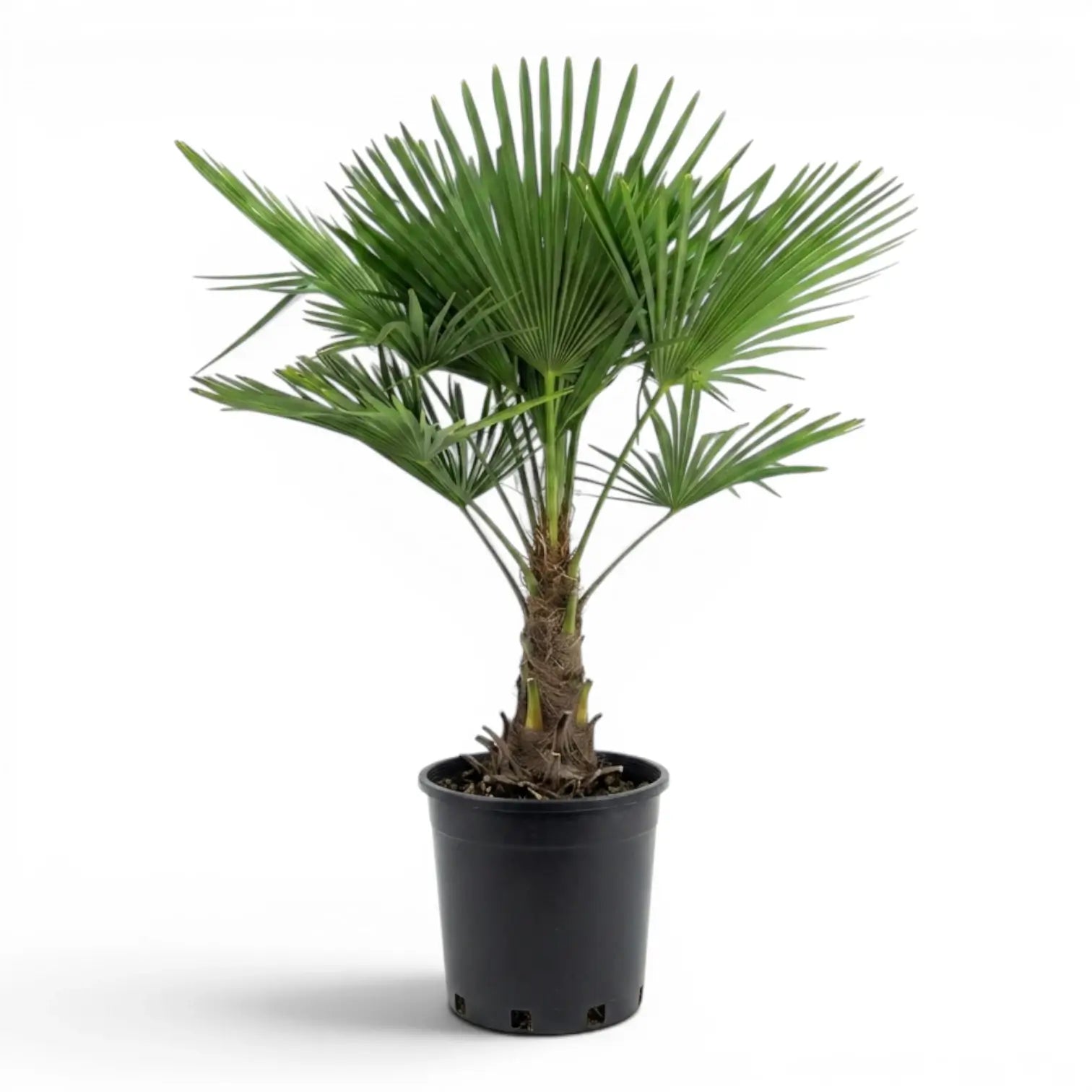
Trachycarpus fortunei is a hardy outdoor fan palm with green, pleated leaves and a solitary trunk covered in coarse brown fibre from old leaf bases. It is widely grown in temperate gardens because established plants handle cool weather better than many palms, especially when they are rooted into well-drained ground and protected from strong drying wind.
Young plants grow slowly at first, building a crown of fan leaves before the trunk becomes more obvious. In containers, the plant stays smaller and easier to manage; in favourable garden conditions, mature specimens can eventually reach several metres tall.
- Leaf form: Large green fan leaves divided into many narrow segments.
- Growth habit: Solitary trunk-forming palm with a rounded evergreen crown.
- Trunk texture: Persistent brown fibres give older stems their rough, hemp-palm look.
- Growth rate: Slow to steady, with faster establishment once the roots have space.
- Use: Suitable for sheltered patios, large planters and mild garden borders.
Trachycarpus fortunei for pots and sheltered garden beds
Trachycarpus fortunei works well as a long-term container palm when the pot is deep, heavy and free draining. The root ball should not sit wet through winter, and the container needs enough weight to keep the crown stable in wind. In the ground, choose a bright, sheltered position where winter water can drain away from the roots.
Full sun to light shade is suitable in outdoor culture. Newly placed plants appreciate a short settling-in period before full exposure, especially after delivery or after moving from a protected growing area.
Trachycarpus fortunei care
Water deeply during dry spells, then allow the upper part of the soil or substrate to begin drying before watering again. Constant wetness is more damaging than a short dry interval, particularly in cool weather. A mineral component in the substrate helps keep container roots aerated.
Feed lightly from spring into summer with a balanced outdoor plant or palm fertiliser. Stop feeding late in the season so new growth can firm up before colder weather. Remove only fully brown or badly damaged fronds, keeping healthy green leaves on the crown.
- Light: Full sun to light shade.
- Soil: Fertile, well-drained garden soil or an open palm-suitable container mix.
- Water: Medium; water more closely in pots during dry weather.
- Pruning: Cut away dead lower fronds only.
- Support: No climbing support needed; use a stable pot for larger plants.
Hardiness and winter care for Trachycarpus fortunei
Established plants in the ground tolerate cold better than potted plants because the roots are insulated by surrounding soil. In suitable, drained positions, well-rooted plants can tolerate severe frost, while potted palms should be protected much earlier because the root ball can freeze from all sides.
Use around -7 °C as a practical protection point for container plants. Wrap the pot, move the palm to a sheltered position, and protect the root zone during hard frost. Avoid waterlogged winter soil, and remove temporary fleece during milder weather so moisture does not build up around the crown.
Common issues with Trachycarpus fortunei
Torn leaf segments are common after wind exposure and usually affect appearance more than plant health. Brown tips can come from drying wind, irregular watering, root stress or salt build-up in the substrate. Yellowing often points to cold wet roots, low nutrient levels or a pot that has become too small.
Scale insects and aphids can settle around leaf bases and sheltered crown areas, especially on potted plants kept under cover. Check new growth and older leaf bases regularly, and correct drainage problems before they weaken the root system.
Flowers, fruit and safety
Mature Trachycarpus fortunei may produce yellowish flower clusters outdoors in suitable conditions. The species is dioecious, with male and female flowers on separate plants. Female plants can form dark blue fruit when pollinated.
Trachycarpus fortunei is considered non-toxic to cats and dogs. The leaves and trunk fibre are stiff and rough rather than soft, so gloves are useful when pruning older fronds or moving larger container plants.
Trachycarpus fortunei name and origin
Trachycarpus fortunei belongs to Arecaceae and is native from south-central China to northern Myanmar, where it grows primarily in temperate habitats. The genus name Trachycarpus comes from Greek roots meaning rough fruit, and the species epithet fortunei honours the Scottish plant collector Robert Fortune.
Trachycarpus fortunei is a dependable choice for a hardy evergreen palm with green fan leaves, fibrous trunk texture and long-term outdoor structure in a sheltered position.
Shipping Notes
- Free Standard Shipping on $100+ Orders to the USA.
- Except Preorder products are shipped in 48 hours.
- Delivery to the USA:
- Standard Shipping : 3-10 business days
- If time is of the essence, please consider selecting expedited delivery for faster service.
Exchange/Return Notes
- We offer a 30-day return/exchange service after receiving.
- Final sale items are not eligible for returns or exchanges.
- To process your return/exchange, please contact us at [email protected]
- Please click here for more details>>> Return & Exchange Policy