Pay in installments of $6.86 with
 ,
,
 and
and

Shipping Estimate
USA
- USA
- CAN
- USA
- CAN
Ships within 48 hours · Estimated delivery Aug 8 - Aug 13
 Promo Codes Available:
For Your Every Summer RSVP, with Code: SUMMER15
Description
caladium vs philodendron Caladium 'Casey'Caladium 'Casey' Caladium 'Casey' is a compact patterned Caladium with heart shaped leaves in green, pink, and pale cream white tones. Its foliage rises from a tuber on slender petioles, forming a soft seasonal canopy for small pots, warm windowsills, and sheltered bright shade. The pattern is lively and varied across the plant. Green areas frame the blade, pink to red pink veining runs through the surface, and pale speckles or patches brighten
Caladium 'Casey'
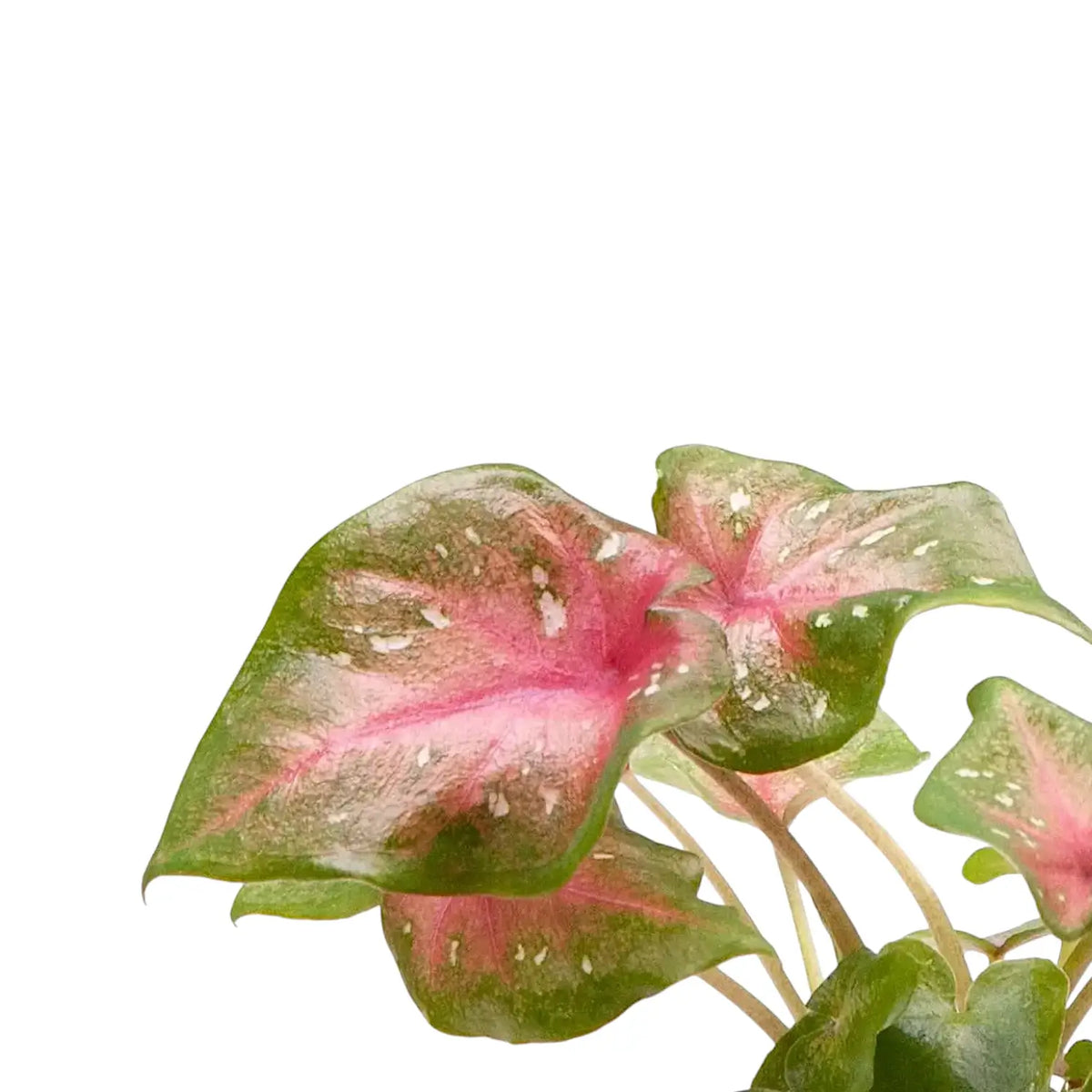
Caladium 'Casey' is a compact patterned Caladium with heart-shaped leaves in green, pink, and pale cream-white tones. Its foliage rises from a tuber on slender petioles, forming a soft seasonal canopy for small pots, warm windowsills, and sheltered bright shade.
The pattern is lively and varied across the plant. Green areas frame the blade, pink to red-pink veining runs through the surface, and pale speckles or patches brighten individual leaves. Each flush can bring a slightly different balance of colour within the same green-pink-white palette.
Caladium 'Casey' green-pink-white leaf palette
- Compact Caladium with heart-shaped seasonal leaves
- Green foliage with pink veining and pale speckling or patches
- Upright petioles growing from a storage tuber
- Warm indoor positions and sheltered bright shade during active growth
- Natural foliage decline followed by a tuber resting phase
Caladium 'Casey' tuber growth in compact pots
Caladium 'Casey' is a compact cultivated Caladium selection with green leaves, pink veining and pale speckling. The tuber forms the plant’s storage organ, while the visible canopy is seasonal and made of thin leaves carried on upright petioles. Warm substrate and an airy, lightly moist mix keep the tuber firm while new petioles form.
The blades can show marks from transport, dry air, cold windows or strong sun. A firm tuber and clean new leaves show that the plant is active and rooting well during the leafy season.
Caladium 'Casey' compact pot care
- Bright shade indoors: Provide bright filtered light. A bright room away from harsh midday sun protects the thin leaves while the tuber is producing new petioles.
- Watering interval: During the leafy season, water thoroughly, then allow the upper substrate to lose surface moisture before watering again.
- Aerated fine root mix: Use a fine-textured, open mix that holds light moisture while air spaces keep the tuber base well aerated.
- Steady warmth: Keep above 18 °C, with warmer conditions preferred after potting, shipping, or seasonal restart.
- Expansion-phase humidity: Keep air moisture steady through the surrounding air; the thin blades expand more evenly in stable conditions.
- Low-dose feeding: Feed lightly while new leaves are forming. A reduced-strength balanced fertiliser every few weeks is enough for a small container plant.
- Pot fit: Choose a pot with drainage and moderate space around the tuber. Oversized pots can hold excess moisture around young roots.
- Dormancy cue: As the canopy yellows, taper watering and keep the dormant tuber warm, dry, and ventilated until growth resumes.
Caladium 'Casey' leaf response and recovery cues
- Dry brown edging: Check humidity, watering intervals, and heat from nearby glass or radiators.
- Sudden collapse: Inspect the tuber and root zone for cold wet substrate or poor drainage.
- Undersized new blades: Increase warmth and stabilise moisture before changing fertiliser strength.
- Faded older leaves: Review season and light exposure; older foliage naturally loses strength as the plant redirects energy.
Caladium 'Casey' pet and child safety
Caladium 'Casey' should be placed away from cats, dogs, and children who may touch or chew plants. Its tissues contain calcium oxalate crystals, which can cause oral and digestive irritation after chewing or swallowing.
Caladium 'Casey' genus background
The genus name Caladium is commonly traced to Malay keladi, used for aroid plants. Caladium 'Casey' is a compact cultivated selection with green, pink and pale-patterned leaves.
In small pots, its green-pink-white palette changes slightly with each flush of new leaves.
Shipping Notes
- Free Standard Shipping on $100+ Orders to the USA.
- Except Preorder products are shipped in 48 hours.
- Delivery to the USA:
- Standard Shipping : 3-10 business days
- If time is of the essence, please consider selecting expedited delivery for faster service.
Exchange/Return Notes
- We offer a 30-day return/exchange service after receiving.
- Final sale items are not eligible for returns or exchanges.
- To process your return/exchange, please contact us at [email protected]
- Please click here for more details>>> Return & Exchange Policy