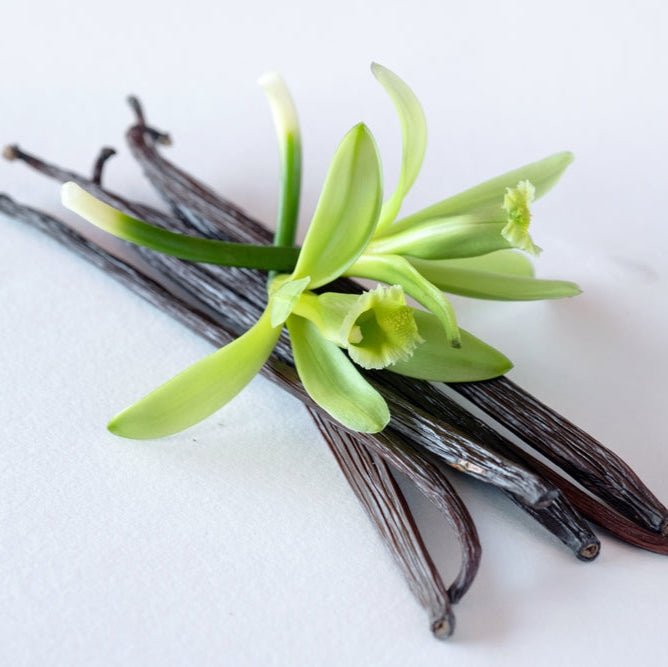
SKU: 30436431967
madagascar vanilla seeds for planting

madagascar vanilla seeds for planting Vanilla Planifolia – Grow Your Own Vanilla Beans at Home

Sale price$19.23 Regular price$21.37
Save 10%

Shipping Estimate
USA
  • USA
  • CAN

Ships within 48 hours · Estimated delivery Jul 13 - Jul 18

Promo Codes Available:

For Your Every Summer RSVP, with Code: SUMMER15

Description

madagascar vanilla seeds for planting Vanilla Planifolia – Grow Your Own Vanilla Beans at HomeVanilla Planifolia Grow Your Own Vanilla at Home Bring the exotic and rewarding experience of growing your own vanilla beans into your home or garden with Vanilla planifolia. Known for producing the worlds most sought after vanilla, this stunning vining orchid is a must have for plant lovers and culinary enthusiasts alike. Unlike many other plants, Vanilla planifolia offers both beauty and function, gracing your space with lush, climbing vines and,

Vanilla Planifolia – Grow Your Own Vanilla at Home

Bring the exotic and rewarding experience of growing your own vanilla beans into your home or garden with Vanilla planifolia. Known for producing the world’s most sought-after vanilla, this stunning vining orchid is a must-have for plant lovers and culinary enthusiasts alike. Unlike many other plants, Vanilla planifolia offers both beauty and function, gracing your space with lush, climbing vines and, when properly cared for, fragrant vanilla beans.

What Makes Vanilla Planifolia Special?

  • The Source of Real Vanilla – If you’ve ever enjoyed vanilla ice cream or baked goods flavored with genuine vanilla extract, chances are it came from Vanilla planifolia. This plant is responsible for nearly 99% of commercial vanilla production worldwide.
  • A Rare Flowering Orchid – As a member of the orchid family, Vanilla planifolia produces delicate, pale yellow-green flowers that bloom for just one day, adding an element of intrigue and rarity to its growth cycle.
  • Edible and Aromatic Rewards – Unlike most orchids that are purely ornamental, Vanilla planifolia produces long, slender pods filled with tiny seeds—these are the vanilla beans that, when cured and dried, yield the rich, aromatic flavor used in countless recipes.
  • A Fast-Growing Climber – This plant doesn’t just sit in a pot; it thrives when allowed to climb, making it an excellent choice for trellises, greenhouses, or large indoor spaces with vertical support.
  • Unique Growth Habit – Unlike traditional orchids, this variety grows as a vine rather than in a compact form, giving it a strikingly different appearance compared to its relatives.

Growing Vanilla Planifolia at Home

You don’t need a tropical rainforest to cultivate Vanilla planifolia—with the right conditions, you can successfully grow it in your home or garden. While it thrives in warm, humid environments, it can adapt to indoor cultivation with careful attention to its needs.

Light Requirements

  • Prefers bright, indirect light—too much direct sun can scorch its delicate leaves, but too little will slow its growth.
  • If growing indoors, place near an east or south-facing window with filtered light.
  • Can also thrive under grow lights if natural light is insufficient.

Temperature & Humidity

  • Loves warmth! Ideal temperatures range from 65°F to 85°F.
  • Humidity is key—aim for 50-70% humidity to mimic its natural tropical habitat.
  • If you live in a dry climate, consider misting the plant or using a humidity tray.

Watering & Soil

  • Keep the soil moist but not soggy—overwatering can lead to root rot, a common issue with orchids.
  • Use a well-draining, airy potting mix—orchid bark mixed with perlite and peat moss works well.
  • Water when the top inch of soil begins to dry out.

Support for Climbing

  • Vanilla planifolia needs a sturdy support structure to climb, such as a trellis, moss pole, or wooden stake.
  • Unlike some vines, it doesn’t have tendrils to attach itself, so gently secure it as it grows.

Pollination & Blooming

  • Hand-pollination is necessary if you want vanilla beans—unless you live in an area with the specific pollinators this plant relies on (such as the Melipona bee in Mexico).
  • Flowers bloom for just one day, so pollination must be done within hours of opening.
  • If successful, the flowers will develop into green vanilla pods, which take 6-9 months to fully mature before they can be harvested and cured.

Why Grow Vanilla Planifolia?

A One-of-a-Kind Houseplant

While many orchids are grown for their flowers, Vanilla planifolia offers a unique twist by providing edible rewards alongside its beautiful, trailing vines. Its ability to grow like a climbing vine sets it apart from other houseplants, making it an eye-catching feature in any collection.

A Rewarding Culinary Experience

There’s something special about making your own vanilla extract from homegrown beans. By growing Vanilla planifolia, you gain complete control over the process—from pollinating the flowers to curing the beans. The result? A richer, fresher vanilla flavor that’s unlike anything store-bought.

Low Maintenance Compared to Other Orchids

Unlike delicate orchid varieties that require strict humidity control and frequent repotting, Vanilla planifolia is more forgiving. It’s resilient, adaptable, and can thrive with basic care, making it a fantastic choice for both beginners and experienced plant lovers.

A Sustainable and Ethical Choice

Vanilla production is labor-intensive, and much of the commercially available vanilla comes from plantations where environmental and labor concerns exist. Growing your own vanilla ensures an ethical, chemical-free supply for personal use, reducing reliance on mass-produced sources.

Fun Facts About Vanilla Planifolia

  • One of the Only Edible Orchids – While many orchids have beautiful flowers, Vanilla planifolia is among the very few that produce an edible product.
  • A Slow but Worthwhile Process – Vanilla beans must be cured for several months after harvest to develop their signature aroma and flavor.
  • Originally from Mexico – Though now grown in Madagascar, Tahiti, and other tropical regions, Vanilla planifoliais native to Mexico, where the Totonac people were the first to cultivate it.
  • Vanilla is a Natural Mood Booster – The scent of vanilla has been shown to have calming effects and may even help reduce stress.

Is Vanilla Planifolia Right for You?

This plant is ideal for those who love orchids but want something beyond traditional flowering varieties. If you have a bright, humid space and are willing to provide a climbing structure, Vanilla planifolia will reward you with stunning vines and the potential to produce your very own vanilla beans. Whether you’re an orchid collector, a foodie, or someone looking for an exciting plant challenge, Vanilla planifolia is a fantastic choice!


Add this incredible vanilla orchid to your collection today and start your journey toward growing and harvesting your very own homegrown vanilla beans!

Shipping Notes
  • Free Standard Shipping on $100+ Orders to the USA.
  • Except Preorder products are shipped in 48 hours.
  • Delivery to the USA:
  1. Standard Shipping : 3-10 business days
  • If time is of the essence, please consider selecting expedited delivery for faster service.
Exchange/Return Notes
  • We offer a 30-day return/exchange service after receiving.
  • Final sale items are not eligible for returns or exchanges.
  • To process your return/exchange, please contact us at [email protected]
  • Please click here for more details>>> Return & Exchange Policy
SKU: 30436431967

Discover Niche Categories That Outsell madagascar vanilla seeds for planting

Top-Converting Item to Boost Your Average Order

4.7 ★★★★★
Based on 934 reviews
Sort
Highest Rating
Newest First
Oldest First
Product Reviews
O
Verified Purchase
omer tamer
Fort Morgan, US
★★★★★ 5
is a great scholar if Islam who consolidated the tenets of the ...
Imam Gazali, also known as Hujjatul Islam, is a great scholar if Islam who consolidated the tenets of the religion against corruption. The Alchemy of Happiness is a must read for anyone who wishes to take the journey for self explotation, to better understand the self; and by doing so, establish a solid relationship with Allah, the lord of the heavens and the earth and everything in between. The true happiness will only come through such a relationship.
WAS THIS REVIEW HELPFUL?YesReportShare
Reviewed in the United States on March 9, 2016
S
Verified Purchase
Suleman kazi
Waukegan, US
★★★★★ 3
Weird translation
Format: Paperback
Good content but the translation is a bit off. Dont know if I can trust the information in it completely. Still okay for the price i guess
WAS THIS REVIEW HELPFUL?YesReportShare
Reviewed in the United States on June 19, 2025
L
Verified Purchase
Lisa Mitchell, MFT, ATR
Phoenix, US
★★★★★ 5
A letter of Gratitude to Irv Yalom for Creatures of a Day.
Format: Hardcover
Dear Irv Yalom, This letter is a declaration of gratitude for your newly published book, Creatures of a Day, and the artful legacy you’ve bestowed upon the field of psychotherapy. In the era of fast technology and mass production, your attention to relationship and the handcrafted nature of therapy is a life line. In all of your 50 years as a psychotherapist, you didn’t sell out for clinical blueprints and formulaic approaches. Instead, you opted to stay true to what you knew--the here and now, the importance of the therapeutic relationship, and your own internal thoughts and experiences as essential elements for your work with clients. Creatures of a Day waves a flag and asks us to take notice. It invites us back into the mystery of our work and reminds us to celebrate our humanness. Your masterful story telling allows us to see you and your clients in action, mistakes and vulnerabilities included, and shares pivotal moments that will provoke thoughtful learning for generations of therapists. So thank you for this. You show us your mistakes You see, your books (especially Love’s Executioner and Creatures of a Day) let us into your thoughts and experiences. We get to hear you talk to yourself and occasionally grapple with doubt. We get to know your own vulnerabilities and how they influence your therapeutic relationships. This is such a rare view. And I am hungry for it. There are too few books, too few videos, and fewer workshops or trainings that offer this kind of perspective for therapists. We don’t get to see masters make mistakes. We don’t get to hear supervisors or consultants narrate their doubts. So, I consider your book an invitation to write about my own similar encounters in my work. And to continue to make this kind of conversation central to my trainings and retreats for therapists. Thank you for the inspiration and the permission. You offer central themes and an individualized perspective As a collection of psychotherapy tales, I think of Creatures of a Day as a series. Like a series of paintings that are created around central themes, your tales invite us to look at the existential themes of aging, death, and connectedness. And, just like a painting series, each reader will take with them a message that is individualized and of unique importance to him/her. In this way, you are truly exhibiting your art as a writer and a psychotherapist. In Creatures of a Day, two patients read the same book and take from it a very different, but beautifully applicable, message. A nurse perceives the angry words she hissed to her dying patient completely opposite of the way in which they were received by the woman she was treating. And a case that you filed away as a blunder turns out to have been a life changer that is only revealed about a decade or so later. This is a reminder to me that while we can’t predict how our art is received, we can in fact commit to creating and collaborating in the very best way we can. You invite humanness and the art of relationship I’d like to let you know that in addition to the invitation to write about my experience as a therapist, I welcome your permission to be human with my clients. And, with that comes a renewed dedication to knowing and experiencing what being human is for me. This means deepening my relationship with my art, continuing my work in therapy, and showing up with the same honesty and openness that you let us see in your book. You make risk a good thing You ask your patients to risk and use this in as a very important subject during the course of treatment. You take several risks in Creatures of a Day, and show us that risks are a vital part of being an authentic and real therapist. You show us that in your work you are just being honest and attending to your experience and the client’s experience. In fact it is more risky to be untruthful or hide than it is to show up and attend the the relationship. You inspire me I won’t stop practicing. You inspire me to continue to write about my own work. And in my own small way, carry your legacy forward. Once again, thank you for your guidance, your influence, and your legacy. Lisa Mitchell, MFT, ATR, LPC www.innercanvas.com
WAS THIS REVIEW HELPFUL?YesReportShare
Reviewed in the United States on March 31, 2015
C
Verified Purchase
Coleman Family
Grantham, US
★★★★★ 5
Short book, big recommendation!
Format: Hardcover
Great book, smooth read that is not overly technical for those who aren't therapists themselves. Examines large existential questions in a digestible format with each chapter being a different real world story. Highly recommend.
WAS THIS REVIEW HELPFUL?YesReportShare
Reviewed in the United States on April 6, 2026
L
Verified Purchase
Lee M Vance
San Leandro, US
★★★★★ 4
Yalom as always, but fizzing out.
Format: Hardcover
When entering the field of psychology, I was first introduced to Yalom. As I look back on my early career, I realize that he has influenced my thinking more than I'd like to admit. His focus on relationships and death anxiety are central in this work, as they were in the past. You get a real sense of how he works and we are invited into the intimate and sacred corners of his office and his mind. However, his depth - his use of metaphors and his robust explanations are declining. He is still a profound and articulate writer but I have noticed a drop off in his writing that began with the Spinoza Problem and continues here. Ironically, Yalom is fading, his writing abilities are dying - which makes his own wrestling with his mortality even more visceral to me as a reader. I continue to be thankful for his insight and work.
WAS THIS REVIEW HELPFUL?YesReportShare
Reviewed in the United States on August 8, 2015

recommand products