Pay in installments of $6.86 with
 ,
,
 and
and

Shipping Estimate
USA
- USA
- CAN
- USA
- CAN
Ships within 48 hours · Estimated delivery Aug 3 - Aug 8
 Promo Codes Available:
For Your Every Summer RSVP, with Code: SUMMER15
Description
elephant ear plant arizona Buy Blue Slick Elephant's Ear Phoenix, AZ | KalanchoeArizona's Most Dramatic Velvety Succulent Shrub Blue Slick Elephant's Ear (Kalanchoe beharensis 'Blue Slick') is one of the most architecturally stunning succulent shrubs you can grow in the Phoenix Valley. This rare cultivar features oversized, velvety silver blue leaves that look like sculpted felt, growing on thick trunks that reach 36 feet tall. Whether you're creating a tropical desert fusion garden in Scottsdale, adding height to a succulent
Arizona's Most Dramatic Velvety Succulent Shrub
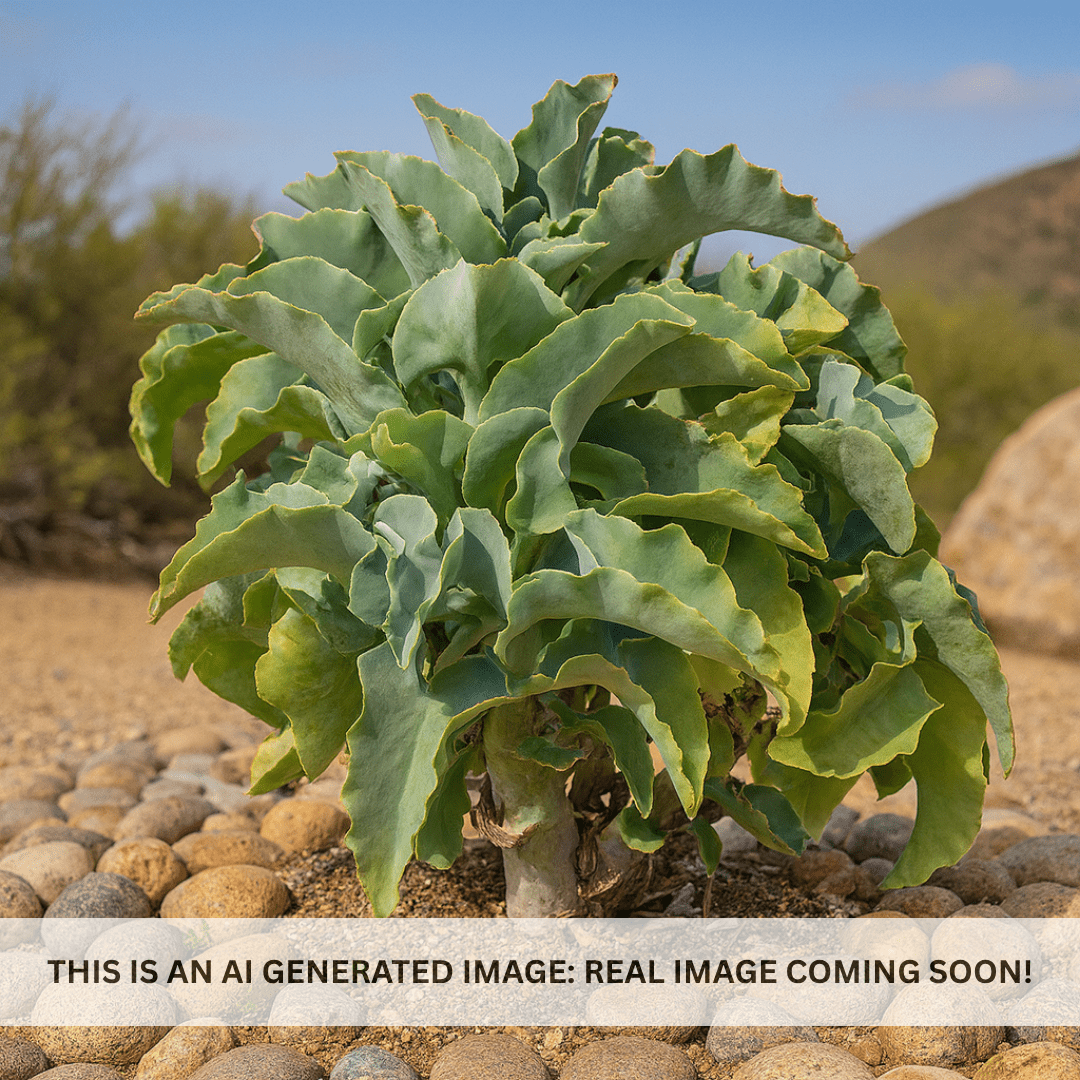
Blue Slick Elephant's Ear (Kalanchoe beharensis 'Blue Slick') is one of the most architecturally stunning succulent shrubs you can grow in the Phoenix Valley. This rare cultivar features oversized, velvety silver-blue leaves that look like sculpted felt, growing on thick trunks that reach 3–6 feet tall. Whether you're creating a tropical-desert fusion garden in Scottsdale, adding height to a succulent border in Mesa, or building a dramatic focal point in a Chandler courtyard — Blue Slick Elephant's Ear brings bold texture and cool-toned elegance that no other plant can match.
Blue Slick Elephant's Ear Plant Details
| Attribute | Detail |
|---|---|
| Scientific Name | Kalanchoe beharensis 'Blue Slick' |
| Common Names | Blue Slick Elephant's Ear, Felt Bush, Velvet Leaf Kalanchoe |
| Mature Height | 3–6 feet (up to 10 feet in ideal conditions) |
| Mature Width | 3–4 feet |
| Growth Rate | Moderate — 1–2 feet per year in Phoenix |
| Sun | Full sun to partial shade. Handles reflected heat from walls. |
| Water | Low once established. Highly drought-tolerant. |
| USDA Zones | 9b–11 (Phoenix is Zone 9b–10a) |
| Soil | Well-draining. Adapts to Arizona caliche soils with good drainage. |
| Foliage | Evergreen — silvery-blue velvety leaves year-round |
| Bloom | Yellow-green to rusty orange flowers on tall stalks |
Blue Slick Elephant's Ear Uses in Phoenix Landscapes
Architectural Focal Point
The massive, velvety silver-blue leaves and tree-like form make Blue Slick Elephant's Ear an instant conversation piece. Plant it as a standalone specimen in a prominent garden bed or courtyard where it can be admired up close. The unique texture and color create striking contrast against dark gravel or warm-toned desert walls.
Mixed Succulent Garden Centerpiece
Use Blue Slick as a tall background plant in mixed succulent beds throughout Scottsdale, Gilbert, and Tempe. Its cool silver-blue tones pair beautifully with warm-colored plants like Firestick Euphorbia, Crown of Thorns, and Burgundy Ice Dyckia. The height difference creates natural visual layering.
Container and Patio Statement
Blue Slick thrives in large containers, making it perfect for covered patios, pool areas, and entryways. Use a well-draining cactus mix in a pot at least 14 inches wide with drainage holes. The velvety leaves stay clean and dramatic in sheltered spots.
Best Time to Plant Blue Slick Elephant's Ear in Phoenix
Fall (October–November) is ideal. Warm soil promotes fast root establishment while cooler air reduces transplant stress, giving the plant 6–8 months to settle before its first Phoenix summer. Spring (February–April) is a solid second choice. Avoid summer planting — the large leaves lose moisture quickly in extreme heat before roots establish.
How to Plant Blue Slick Elephant's Ear
- Dig wide, not deep — 2–3x the root ball width, same depth as the container
- Check for caliche — break through any hardpan layer for drainage
- Backfill with native soil mixed with 20% perlite or pumice for extra drainage
- Spacing — 3–4 feet apart for a grouped planting; 5+ feet as standalone specimens
- Water basin — build a 3–4 inch ring around the plant to direct water to roots
- Mulch — 2–3 inches of decorative gravel to retain moisture and keep the trunk dry
Watering Blue Slick Elephant's Ear in Phoenix
First Year Watering Schedule
Weeks 1–2: Every 2–3 days, deep soak. Month 1–2: Every 4–5 days. Month 3–6: Every 7–10 days (every 5–7 days in peak summer). After Year 1: Every 10–14 days in summer; every 3–4 weeks in winter.
Drip Irrigation
Place one 2-GPH emitter 12 inches from the trunk base. Established plants are very drought-tolerant. Overwatering causes root rot — when in doubt, let the soil dry out completely between waterings.
How fast does Blue Slick Elephant's Ear grow in Phoenix?
Expect 1–2 feet of height per year in Phoenix's warm climate. Plants typically reach their full 3–6 foot height within 3–4 years. In protected spots, they can eventually grow taller.
Is Blue Slick Elephant's Ear drought-tolerant once established?
Very. The thick, succulent leaves store water efficiently. Once established, it thrives on minimal supplemental irrigation and handles Phoenix summer heat well, especially with some afternoon shade protection.
What's the difference between Blue Slick and regular Elephant's Ear Kalanchoe?
Blue Slick is a selected cultivar with distinctly silver-blue, smoother-textured leaves compared to the standard Kalanchoe beharensis which tends toward brown-green, rougher foliage. Blue Slick's cooler coloring makes it a standout in desert gardens.
Does it handle Phoenix frost?
Blue Slick is frost-sensitive below 30°F. In most Phoenix Valley locations it overwinters fine, but cover it or bring containers indoors during rare hard freezes in Fountain Hills, Cave Creek, or north Scottsdale.
You May Also Like
Elephant's Ear (standard Kalanchoe beharensis) — the classic velvety succulent shrub. Flapjacks — bold paddle-shaped succulent with red-edged leaves. Madagascar Palm — another dramatic trunk-forming succulent. Pink Jade Plant — compact succulent with rosy-tipped leaves. Ponytail Palm — architectural trunk with cascading foliage.
How Many Blue Slick Elephant's Ear Do I Need?
This is a sculptural specimen, best given room to show off its velvety silver-blue leaves. Plant a single trunk as a focal point in a bed or large container, or set an odd-numbered group of 3 spaced 3 to 4 feet apart for a layered succulent grouping. As a true standalone statement, allow 5 or more feet of clearance. Keep it close to a wall or under high shade in the hottest exposures so the big leaves stay clean and unscorched.
Blue Slick Elephant's Ear Season-by-Season in Phoenix
- Spring (Feb to Apr): Active growth resumes and new velvety leaves unfurl. Strong second planting window. Tall flower stalks of yellow-green to rusty orange can appear on mature plants.
- Summer (May to Sep): Puts on most of its 1 to 2 feet of yearly height. Handles reflected heat but looks best with some afternoon shade, which keeps the leaves from bleaching or scorching. Water deeply but let the soil dry between soakings.
- Fall (Oct to Nov): Best planting season. Warm soil and easing heat let roots settle before winter.
- Winter (Dec to Jan): Stays evergreen in most of the Valley but is frost-sensitive below 30°F. Cover it or move containers indoors on hard-freeze nights in colder pockets like Fountain Hills, Cave Creek, and north Scottsdale.
At a Glance
✔ Evergreen ✔ Drought-Tolerant ✔ Heat-Loving (Reflected-Heat Tolerant) ✔ Low-Maintenance ✔ Spineless ✔ Pool-Friendly (Low-Litter)
Plant It With
- Elephant's Ear: the classic green-toned Kalanchoe beharensis for a matched-texture pairing.
- Flapjacks: bold red-edged paddles that warm up the cool silver-blue leaves.
- Pink Jade Plant: a compact rosy-tipped succulent for the front of the grouping.
- Ponytail Palm: another architectural trunk-former that echoes the specimen look.
Is Blue Slick Elephant's Ear Right for Your Yard?
It is ideal for a sheltered focal spot, a large patio container, or a mixed succulent bed with sharp drainage and bright light to light afternoon shade. It is not a fit for an open, unprotected yard in the Valley's coldest pockets, where a hard winter freeze can damage the big soft leaves unless you cover it.
Shipping Notes
- Free Standard Shipping on $100+ Orders to the USA.
- Except Preorder products are shipped in 48 hours.
- Delivery to the USA:
- Standard Shipping : 3-10 business days
- If time is of the essence, please consider selecting expedited delivery for faster service.
Exchange/Return Notes
- We offer a 30-day return/exchange service after receiving.
- Final sale items are not eligible for returns or exchanges.
- To process your return/exchange, please contact us at [email protected]
- Please click here for more details>>> Return & Exchange Policy