Pay in installments of $5.06 with
 ,
,
 and
and

Shipping Estimate
USA
- USA
- CAN
- USA
- CAN
Ships within 48 hours · Estimated delivery Aug 8 - Aug 13
 Promo Codes Available:
For Your Every Summer RSVP, with Code: SUMMER15
Description
lavender chaste tree Buy Chaste Tree Phoenix, AZ | Vitex agnus-castusPhoenix's Best Drought Tolerant Purple Flowering Tree Chaste Tree Chaste Tree (Vitex agnus castus) is the premier drought tolerant flowering tree for the Phoenix Valley. This stunning multi trunk tree produces massive spikes of lavender, purple, blue, and white blooms all summer long from May through September making it the most cold hardy and water wise flowering tree available for Arizona landscapes. It grows 35 feet per year and reaches 1520 feet
Phoenix's Best Drought-Tolerant Purple Flowering Tree — Chaste Tree
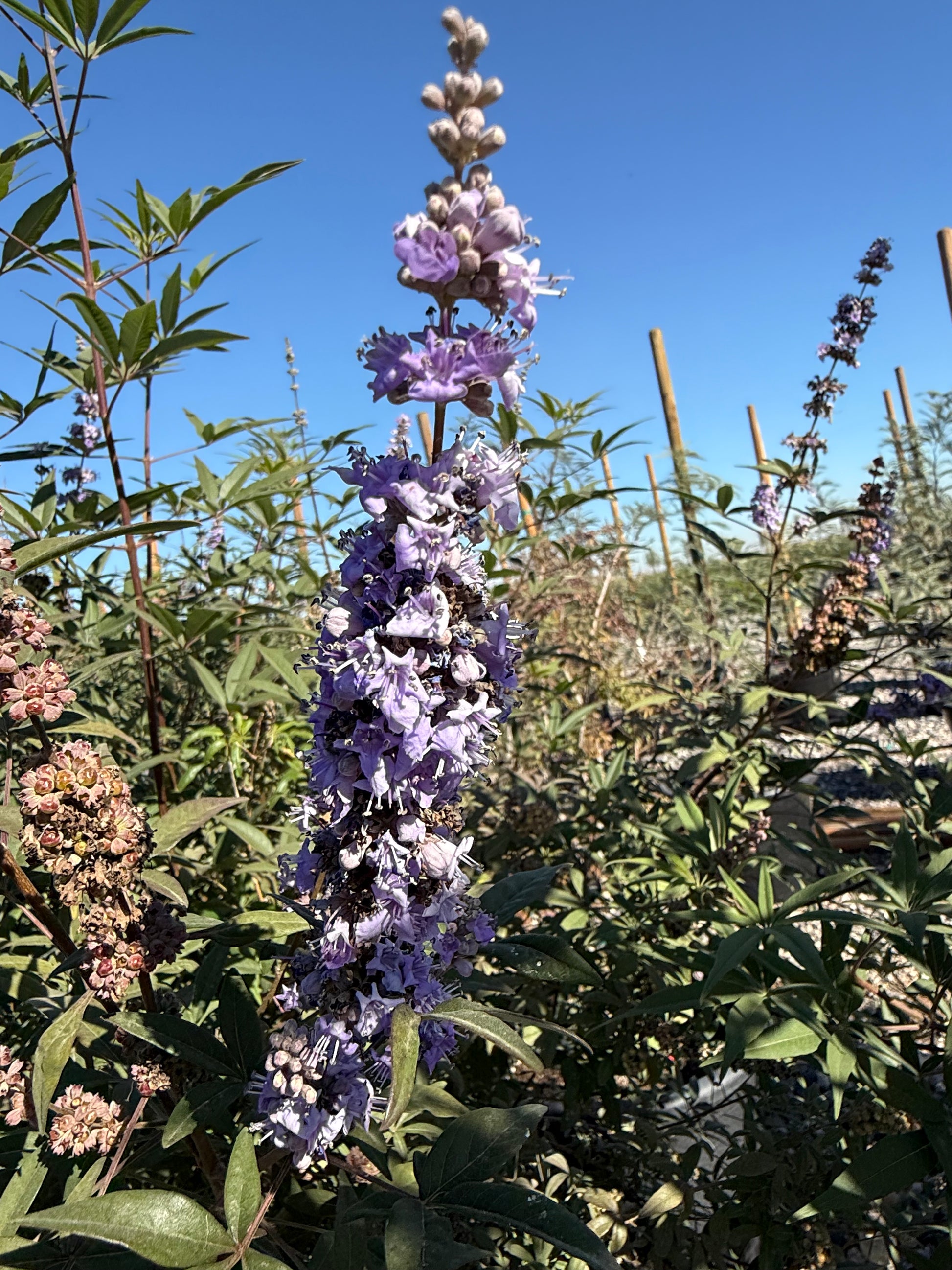
Chaste Tree (Vitex agnus-castus) is the premier drought-tolerant flowering tree for the Phoenix Valley. This stunning multi-trunk tree produces massive spikes of lavender, purple, blue, and white blooms all summer long — from May through September — making it the most cold-hardy and water-wise flowering tree available for Arizona landscapes. It grows 3–5 feet per year and reaches 15–20 feet tall with minimal care. Whether you're creating a low-water oasis in Scottsdale, adding summer color in Chandler or Gilbert, or establishing a pollinator garden in Mesa or Tempe — Chaste Tree thrives where other flowering trees struggle.
Chaste Tree Plant Details
| Attribute | Detail |
|---|---|
| Scientific Name | Vitex agnus-castus |
| Common Names | Chaste Tree, Vitex, Monk's Pepper, Abraham's Balm |
| Mature Height | 15–20 feet |
| Mature Width | 10–15 feet |
| Growth Rate | Fast — 3–5 feet per year in Phoenix |
| Sun | Full sun (6+ hrs). Thrives with Phoenix's intense reflected heat. |
| Water | Low once established. Excellent drought tolerance. |
| USDA Zones | 6–9 (Phoenix is Zone 9b–10a — grows vigorously) |
| Soil | Well-draining. Adapts readily to Arizona caliche soils. |
| Foliage | Deciduous — drops leaves in winter; fragrant gray-green leaves |
| Bloom Season | May through September (peaks June–August) |
| Bloom Color | Lavender, purple, blue, and white (by variety) |
| Pet Friendly | Yes — safe for dogs and cats |
Chaste Tree Uses in Phoenix Landscapes
Drought-Tolerant Flowering Focal Point
Chaste Tree is one of the few large flowering trees in Phoenix that produces months of blooms on extremely low water — making it ideal for xeriscape designs and water-conscious homeowners across the Valley. The tall lavender flower spikes rise above the canopy from May through September, creating vertical interest that few desert plants can match. Plant it as a standalone specimen in a gravel or decomposed granite garden in Scottsdale or Peoria for a low-maintenance showpiece that blooms for five straight months.
Privacy Screen and Shade Tree
With its fast 3–5 foot annual growth and broad multi-trunk form, Chaste Tree quickly creates a natural privacy screen along property lines. Unlike single-trunk trees, the multi-stem structure fills in from the ground up, providing screening all the way to 15–20 feet. Plant trees 10–12 feet apart for a dense privacy row. Three to five trees will cover a 40-foot fence line and provide meaningful shade within two to three seasons in Chandler, Gilbert, or Tempe.
Planting density: 40 ft fence line — 4 trees / 60 ft fence line — 6 trees
Pollinator and Wildlife Garden
Chaste Tree is one of the most pollinator-friendly trees available in the Phoenix Valley. Its long bloom spikes attract hummingbirds, butterflies, and native bees throughout the summer. The fragrant flowers produce nectar continuously from May through September, making it a key food source during the desert's hottest months when other flowering plants are dormant. Pair it with Desert Spoon, Ruellia, or Texas Sage for a complete pollinator habitat garden.
Modern Desert and Mediterranean Landscape Design
The Chaste Tree's fine-textured, gray-green fragrant foliage and elegant branching structure make it a perfect fit for Mediterranean and modern desert landscape styles common in the Phoenix Valley. The silvery leaf color provides a soft contrast to bold desert succulents like Agave and Desert Spoon. Its upright multi-stem form works beautifully in contemporary xeriscapes — whether flanking an entry gate in Glendale or anchoring a front yard bed in Mesa.
Best Time to Plant Chaste Tree in Phoenix
Fall planting (October–November) is ideal. The warm soil encourages root establishment while cooler air temperatures reduce transplant stress. A fall-planted Chaste Tree gets a full 6–8 months of root development before its first Phoenix summer. Spring planting (February–April) is the second-best window — the tree will bloom its first season when planted in spring. Avoid summer planting (June–August) as heat stress combined with transplant shock can stall growth significantly, even in a drought-tolerant tree like Vitex.
How to Plant Chaste Tree
- Dig wide, not deep — Dig the hole 2–3x the width of the root ball, but no deeper than the root ball itself. Shallow, wide holes help the multi-stem root system spread naturally.
- Check for caliche — Break through any hardpan caliche layer with a breaker bar to ensure proper drainage. Vitex tolerates dry conditions but not standing water.
- Backfill with native soil — A light 20% organic compost blend is fine. Avoid heavy amendment mixes — Chaste Tree actually thrives in leaner, well-drained soils.
- Spacing — Plant 10–12 feet apart for a privacy screen; 15 feet apart as individual specimens to allow full canopy development.
- Build a water basin — Form a 3–4 inch earthen ring 18–24 inches from the outermost stems to direct water to the root zone during establishment.
- Mulch — Apply 2–3 inches of bark mulch or decomposed granite around the base (keep away from the trunks) to retain moisture and moderate soil temperature.
Watering Chaste Tree in Phoenix
First Year Watering Schedule
Weeks 1–2: Water every 1–2 days, deep and slow (20–30 minutes per session). Month 1–2: Reduce to every 3–4 days. Month 3–6: Every 7–10 days (every 5–7 days during June–September peak heat). After Year 1: Every 14–21 days in summer; every 4–6 weeks in winter. Chaste Tree is one of the most drought-tolerant large flowering trees in Phoenix — once established, it can survive on monsoon rains alone with only minimal supplemental irrigation.
Drip Irrigation
Place drip emitters 18–24 inches from the outermost trunks of the multi-stem form, not at the base. Use 2–4 GPH emitters and run them for 1–2 hours per session to ensure deep water penetration. Overwatering is the most common mistake with Vitex — established trees prefer to dry out completely between waterings.
How fast does Chaste Tree grow in Phoenix?
Chaste Tree is a fast-grower in Phoenix, adding 3–5 feet per year under full sun with regular establishment watering. A 5-gallon tree planted in fall can reach 10–12 feet within 2 seasons. Phoenix's intense sun and heat actually accelerate growth compared to cooler climates where Vitex grows more slowly.
Is Chaste Tree drought tolerant once established?
Yes — Chaste Tree is one of the most drought-tolerant large flowering trees available for Phoenix landscapes. After the first full year in the ground, it can survive on very infrequent deep watering and often handles the monsoon season without any supplemental irrigation. This makes it a top choice for water-wise and xeriscape landscape designs across the Valley.
Does Chaste Tree bloom in extreme Phoenix summer heat?
Absolutely. Unlike many flowering trees that stop blooming in extreme heat, Vitex thrives and blooms most heavily during Phoenix's hottest months — June through August. The flower spikes actually intensify as temperatures rise, making it one of the most dependable summer color sources in the Valley when temperatures exceed 110°F.
What's the difference between Chaste Tree and a standard flowering tree?
Chaste Tree grows as a multi-trunk large shrub or small tree form — unlike single-trunk specimens like Desert Willow or Cascalote. This multi-stem habit fills in from the ground up, providing privacy screening and full canopy coverage that single-trunk trees can't achieve. The multi-trunk form also makes it more wind-resistant and structurally resilient during Phoenix's monsoon storms.
Is Chaste Tree pet friendly?
Yes. Vitex agnus-castus is considered non-toxic and safe for dogs and cats, making it an excellent choice for pet-friendly Phoenix backyards. It's one of the few large flowering trees that's both drought-tolerant AND pet-safe — a rare combination in Arizona landscapes.
You May Also Like
Desert Willow — Another fast-growing Arizona flowering tree with orchid-like blooms and extreme heat tolerance — pairs beautifully with Chaste Tree in mixed landscape designs.
Texas Sage — A low-water, drought-tolerant flowering shrub with silvery foliage and purple blooms that complements Chaste Tree's color palette perfectly.
Mexican Bird of Paradise — A vibrant summer-blooming shrub/tree with bold orange and yellow flowers that creates stunning contrast alongside Chaste Tree's lavender blooms.
Cascalote Tree — A bold desert-native flowering tree with yellow winter blooms that provides color when the deciduous Chaste Tree is bare.
White Crape Myrtle — A fast-growing summer flowering tree that pairs well with Chaste Tree for a mixed privacy screen with varied bloom colors.
How Many Chaste Trees Do I Need?
Chaste Tree matures 10 to 15 feet wide as a broad multi-trunk form. As a flowering focal point, plant it single or in an odd-numbered group of 3 spaced about 15 feet apart. For a fast privacy and screening row that fills from the ground up, plant 10 to 12 feet on center.
| Run Length | Privacy Screen (11 ft spacing) |
|---|---|
| 22 ft | 3 trees |
| 33 ft | 4 trees |
| 44 ft | 5 trees |
| 55 ft | 6 trees |
Chaste Tree Season-by-Season in Phoenix
- Spring (Feb to Apr): Leafs out with fragrant gray-green foliage and a strong growth flush. A spring-planted tree blooms its first season. Good second planting window.
- Summer (May to Sep): Peak performance: tall lavender to purple flower spikes bloom right through 110F-plus heat and the monsoon, feeding bees, butterflies, and hummingbirds when little else flowers. Let the soil dry fully between deep soakings.
- Fall (Oct to Nov): Blooming winds down and foliage begins to color and drop. Prime planting season for establishment.
- Winter (Dec to Jan): Fully deciduous, resting as a bare multi-trunk form. Extremely cold-hardy (zone 6, to about 0F), so Valley winters pose no risk.
At a Glance
✔ Pollinator-Friendly ✔ Hummingbird-Friendly ✔ Heat-Loving (Reflected-Heat Tolerant) ✔ Drought-Tolerant ✔ Low-Maintenance ✔ Shade-Providing ✔ Deer & Rabbit-Resistant ✔ Cold-Hardy to 0°F
Plant It With
- Desert Willow: heat-loving native flowering tree that pairs well in a mixed low-water bed.
- Texas Sage: silvery low-water shrub with purple bloom that echoes the Chaste Tree's color.
- Cascalote Tree: yellow winter blooms that add color while the deciduous Chaste Tree is bare.
- Crape Myrtle Tree: another fast summer-flowering tree for a varied-color privacy screen.
Is Chaste Tree Right for Your Yard?
Chaste Tree thrives in full sun and reflected heat, takes caliche and alkaline soil as long as it drains, and blooms hardest on lean water in the hottest months. It is a top low-water, pet-safe choice for summer color, screening, or a pollinator garden. Not a fit if you want a tidy evergreen poolside tree: it is fully deciduous and drops leaves and spent flower spikes, so keep it in beds and borders rather than over a pool deck.
Shipping Notes
- Free Standard Shipping on $100+ Orders to the USA.
- Except Preorder products are shipped in 48 hours.
- Delivery to the USA:
- Standard Shipping : 3-10 business days
- If time is of the essence, please consider selecting expedited delivery for faster service.
Exchange/Return Notes
- We offer a 30-day return/exchange service after receiving.
- Final sale items are not eligible for returns or exchanges.
- To process your return/exchange, please contact us at [email protected]
- Please click here for more details>>> Return & Exchange Policy