Pay in installments of $5.91 with
 ,
,
 and
and

Shipping Estimate
USA
- USA
- CAN
- USA
- CAN
Ships within 48 hours · Estimated delivery Jul 24 - Jul 29
 Promo Codes Available:
For Your Every Summer RSVP, with Code: SUMMER15
Description
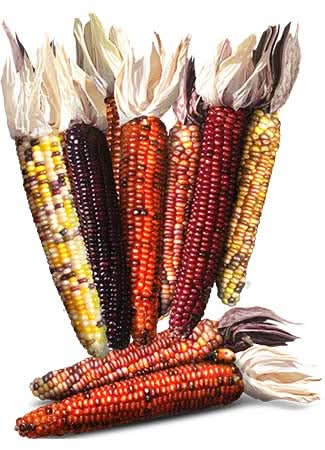
corn seed for planting Indian Corn Seeds, Ornamental Mixture (Zea mays)Indian corn, otherwise known as flint corn, is a colorful variety of decorative corn that is associated with fall. You see it on a nice Thanksgiving table as part of a centerpiece, on the mantel over a nice fire, in wreaths at the decor store, or wherever the corn can be fit in for a warm accent. What does it look like? Indian corn is known for being multicolored. Different kernels on the same cob may have different colors, the most common of which
Indian corn, otherwise known as flint corn, is a colorful variety of decorative corn that is associated with fall. You see it on a nice Thanksgiving table as part of a centerpiece, on the mantel over a nice fire, in wreaths at the decor store, or wherever the corn can be fit in for a warm accent.
What does it look like?
Indian corn is known for being multicolored. Different kernels on the same cob may have different colors, the most common of which are orange, yellow, brown, red, and navy. Indian corn is typically smaller than the type of corn you buy at the store, with a diameter of one inch and a length of 8-12 inches. The stalks themselves can grow 4-5 feet.
Where is it from?
Indian corn is, in fact, a variation of the maize plant. The maize plant doesn't occur naturally in the wild. Rather, it was domesticated thousands of years ago by indigenous Mexicans. The ancestor of corn is a wild grass called Balsas teosinte. As the grass was bred for better seed yields, then later, better kernel yields, the vegetable we know as corn came to exist. Indian corn specifically is an early variation, used for milling and storage.
What can I use it for?
When people see Indian corn, they typically think decor. But, did you know that it can be eaten, too? The other term for it is flint corn, which refers to the fact that the kernels of these ears are incredibly hard - like flints. Due to the nature of the kernels, this is not a corn to be eaten on the cob, or to be cooked as sweet corn. The kernels consist of soft starch surrounded by a shell of hard starch.
If you're going to cook your Indian corn, you have a few methods. The hard, starchy, kernels are good to make cornmeal out of. From the larger hunks out of the grinding process, you can make good grits or polenta. The finer cornmeal can go into cornbread, corn muffins, or corn tortillas. The kernels are already dry, but you will want to dry them more before grinding.
Corn can also be popped on the cob! Try buttering the cob before putting it in a brown paper bag, and into the microwave. As a baseline, try 50% power for four minutes. Microwaves vary, however, so you might want to experiment with different times and power levels if you have a high yield.
To get the kernels off of the ear, you will likely want to use a corn sheller. However, if you don't have a corn sheller, you can use a sharp knife to cut near the cob, down the length of the ear.
Naturally, Indian corn is also decorative. The dry and hard starchy properties of the kernel make it easy to dry before tucking into a cornucopia, adding to a wreath, or even simply setting on your side table. The pretty, multi-colored cobs could also be part of a fall gift!
What are some decor ideas?
One simple centerpiece you could make involves dried corn and dried wheat. Find a color scheme from the corn that you've grown, and set them on a bed of dried wheat, held in place by floral foam. Perhaps you could add some fall flowers to the display, or small gourds around it.
If you're hosting a dinner and have some cloth napkins, you could find some orange ribbon and tie corn into the napkin for a place setting. If you're feeling extra rustic, you could use some twine, or a thin rope.
Sowing The Seed
Corn isn’t fond of being transplanted, so it is best sown directly in the garden, when the weather is warm and all danger of frost has passed. Begin by tilling the sowing area, removing all unwanted plant life and weeds. Sow the seeds at a depth of 1/2” to 1” under topsoil. Check below for spacing.
Growing Conditions
Corn is a sun loving crop that prefers warmer temperatures of 65F or higher. The plants are picky when it comes to soil conditions, and will grow best in a medium that is nitrogen rich and loamy. You will also need to make sure that the sowing area is well drained. To improve drainage, we always recommend adding a light compost to any areas containing hard, compact soil. Water the seeds daily until germination.
Germination & Growth
Corn will typically take anywhere between 7 to 14 days to germinate, if optimal conditions are met. The plants can grow to a towering, 7 feet tall and can spread about 18 inches wide. Corn can be spaced 12 to 15 inches apart from one another, in rows that are spaced about 30 to 36 inches apart.
Shipping Notes
- Free Standard Shipping on $100+ Orders to the USA.
- Except Preorder products are shipped in 48 hours.
- Delivery to the USA:
- Standard Shipping : 3-10 business days
- If time is of the essence, please consider selecting expedited delivery for faster service.
Exchange/Return Notes
- We offer a 30-day return/exchange service after receiving.
- Final sale items are not eligible for returns or exchanges.
- To process your return/exchange, please contact us at [email protected]
- Please click here for more details>>> Return & Exchange Policy