Pay in installments of $6.07 with
 ,
,
 and
and

Shipping Estimate
USA
- USA
- CAN
- USA
- CAN
Ships within 48 hours · Estimated delivery Aug 5 - Aug 10
 Promo Codes Available:
For Your Every Summer RSVP, with Code: SUMMER15
Description
lavender plant lifespan Shop 'Spanish Lavender – Lavandula stoechas' Care & Growing GuideThe Spanish Lavender, known as Lavandula stoechas is a highly ornamental and aromatic plant known for its unique flower shape and strong fragrance. Unlike the more commonly grown English lavender, this variety offers a distinct, almost tropical appeal, thanks to its "rabbit ear" flower bracts. Popular in Mediterranean gardens and water wise landscapes, Lavandula stoechas is valued for both its beauty and ability to thrive in dry, hot climates. Its
The Spanish Lavender, known as Lavandula stoechas is a highly ornamental and aromatic plant known for its unique flower shape and strong fragrance. Unlike the more commonly grown English lavender, this variety offers a distinct, almost tropical appeal, thanks to its "rabbit ear" flower bracts.
Popular in Mediterranean gardens and water-wise landscapes, Lavandula stoechas is valued for both its beauty and ability to thrive in dry, hot climates. Its resilience to drought and its ability to attract pollinators make it an excellent addition to eco-friendly gardens.
Native to the Mediterranean regions of Europe, this lavender species is commonly referred to as Spanish Lavender, Butterfly Lavender, or Bract Lavender.
These names are often used interchangeably, but they mainly highlight its origin and butterfly-like flower heads that flutter in the wind.
The Spanish Lavender grows into a compact, bushy shrub, typically growing up to 24 inches tall and 3 feet wide.
Its rounded growth habit and dense foliage make it an attractive choice for garden borders, containers, and hedges. With proper care, Lavandula stoechas can create a lush, fragrant presence in the landscape.
The Stunning Flowers of Spanish Lavender
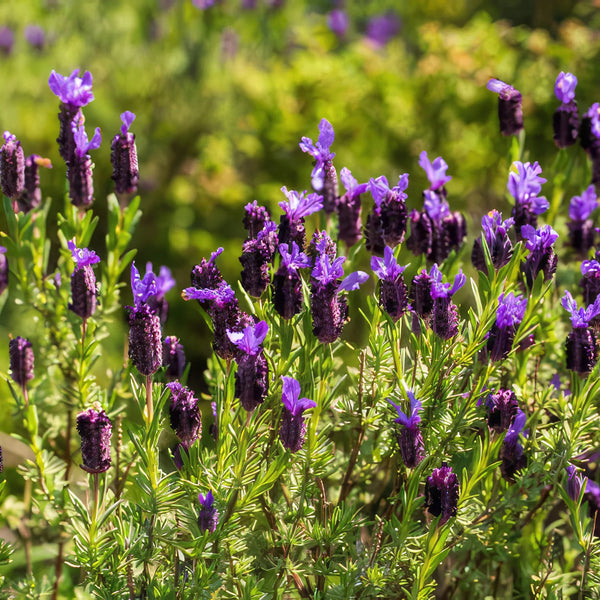
The defining feature of Lavandula stoechas is its distinctive flower heads and long bloom season. The dense, barrel-shaped blooms are topped with colorful, petal-like bracts that resemble butterfly wings or rabbit ears. These flower spikes emerge from silvery-green, narrow leaves that have a highly aromatic, piney scent when crushed.
Unlike some lavenders, the scent of Spanish Lavender is more camphorous with a hint of eucalyptus, adding variety to its aromatic profile. The foliage remains evergreen, providing year-round interest, while its drought-tolerant nature makes it low-maintenance once established.
The flowers of Lavandula stoechas bloom from late spring through summer, showcasing vibrant shades of purple, pink, and occasionally white. The true flowers are small and tubular, emerging from a dense, rounded spike. However, the most eye-catching part of the plant is the colorful bracts that sit atop the flower spikes.
These bracts are often bright purple or pink, resembling butterfly wings in shape and movement, hence one of its common names, Butterfly Lavender. The long-lasting blooms add striking visual appeal to gardens, and they are often used in dried arrangements or crafts due to their aromatic scent.
When and How to Water Your Spanish Lavender
The drought-tolerant Spanish lavender is known for its ability to thrive in dry conditions, but establishing proper watering routines is essential for promoting healthy growth. During the first year after planting, stoechas lavender needs regular watering to establish a strong root system. Once established, Spanish lavender becomes highly drought-tolerant, and overwatering should be avoided.
During spring and summer, the plant is in its active growth phase and may require more frequent watering, especially in hotter climates. Once established, water once every two weeks during this period, ensuring the soil is completely dry between waterings. In hotter regions or during heatwaves, you might need to increase watering to once a week but avoid overwatering as lavender thrives in drier conditions. Each watering should be deep, with 1-1.5 inches of water to allow the roots to absorb moisture.
In autumn, as temperatures cool and growth slows down, you should gradually reduce watering. By late autumn, Spanish lavender will enter its dormant phase in winter. During this time, the plant requires very minimal water, typically only when the soil is completely dry. In regions with mild winters, watering once every 4 to 6 weeks should be sufficient, depending on the amount of natural rainfall. Avoid watering if the ground is frozen or excessively wet to prevent root rot.
Light Requirements – Where to Place Your Spanish Lavender
For indoor placement, it is essential to replicate the bright conditions of the outdoors. Position Spanish lavender near a south- or west-facing window where it can receive the most direct sunlight. If natural light is insufficient, especially during the winter months, consider using a grow light to supplement. Without enough light, indoor lavender may become leggy and fail to flower properly. Ensure the plant is rotated occasionally to promote even growth on all sides.
For outdoor Spanish lavender, it flourishes in full sun exposure. Plant it in a location that receives direct sunlight for most of the day, ideally 6-8 hours of sunlight. This ensures optimal blooming and keeps the plant strong and healthy. In cooler climates, place it in the sunniest spot in the garden, while in hotter, more arid regions, ensure some afternoon shade if the sun becomes too intense, though Spanish lavender generally handles heat well. Avoid placing it in shady or low-light areas, as this will lead to weak growth and fewer flowers. Adequate light exposure encourages dense foliage, vibrant blooms, and the production of essential oils that give lavender its distinctive fragrance.
Optimal Soil & Fertilizer Needs
Spanish lavender thrives in well-draining soil. A sandy or gravely soil mix that allows excess water to drain freely is ideal for this plant. You can improve soil drainage by adding perlite or coarse sand to the planting mix.
Ideally, you want to use our specialized potting mixGo to planetdesert.com that contains 5 natural substrates and organic mycorrhizae to promote the development of a strong root system that helps your Lavender plant to thrive.
When it comes to fertilizing Spanish lavender, it is a low-maintenance plant that doesn't require frequent feeding. Fertilize Spanish lavender sparingly to avoid overstimulating growth, which can result in fewer blooms and weaker plants.
A balanced, slow-release fertilizer with an NPK ratio of 10-10-10 or similar can be applied once a year in the spring as new growth emerges.
Avoid fertilizing in late summer or fall to prevent stimulating new growth that may be susceptible to frost damage. Remember to water the plant thoroughly after applying fertilizer to help distribute the nutrients evenly in the soil.
Hardiness Zones & More
When growing indoors thrives in temperatures between 60-75°F. It is essential to provide a well-ventilated area with good air circulation to prevent humidity buildup around the plant. Spanish lavender prefers moderate humidity levels, ideally between 40-60%. To maintain the right humidity, you can use a humidifier in drier indoor environments or place a tray of water near the plant to increase moisture in the air.
For outdoor cultivation, Spanish lavender is well-suited for USDA hardiness zones 8-9. In these zones, Spanish lavender can withstand temperatures as low as 10°F but may benefit from protection during extreme cold snaps. It is important to plant Spanish lavender in well-drained soil and provide adequate air circulation to prevent humidity-related issues such as fungal diseases.
By ensuring the right temperature range and humidity levels for Spanish lavender, whether indoors with controlled conditions or outdoors in suitable USDA hardiness zones, you can create an environment where this aromatic plant can flourish and bring beauty to your space.
How to Propagate Spanish Lavender
When it comes to propagating Spanish lavender, one common method is through stem cuttings. To propagate Spanish lavender from cuttings, select a healthy stem with no flowers and cut a 4-6-inch piece just below a leaf node. Remove the lower leaves to expose the nodes where roots will develop. Dip the cut end in a rooting hormone to encourage root growth, then plant the cutting in a well-draining potting mix.
Keep the soil consistently moist but not waterlogged, and place the pot in a warm, bright location with indirect sunlight. With proper care and attention, the cutting should develop roots in a few weeks and can be transplanted into a larger container or garden bed once established.
Wildlife - Spanish Lavender attracts the following Friendly-Pollinators
One of the most attractive aspects of Spanish Lavender is its ability to attract pollinators. The rich nectar of its flowers is particularly favored by bees, butterflies, and even hummingbirds, making it an excellent plant for supporting local wildlife. By including Lavandula stoechas in your garden, you create a pollinator-friendly environment, which contributes to a healthier ecosystem.
Toxicity: While lavender is generally considered safe for humans, including its use in teas and aromatherapy. Additionally, lavender is non-toxic to birds, making it a safe plant for bird-friendly gardens.
Key Takeaways
- Spanish Lavender blooms profusely, producing vibrant purple flowers with distinctive "ears" or "wings" on top from late spring to early summer.
- Its striking, silvery-gray foliage provides year-round interest and contrasts beautifully with the plant's vibrant blooms.
- Spanish Lavender attracts pollinators, such as bees, butterflies, and hummingbirds, with its fragrant, nectar-rich flowers.
- This lavender species boasts exceptional heat resistance, thriving in temperatures up to 90°F and tolerating intense sunlight.
- It is extremely drought-tolerant, requiring minimal watering and making it an ideal choice for water-conscious gardeners.
- Its compact, shrub-like growth habit makes Spanish Lavender perfect for borders, containers, or small gardens.
The Bottom Line
Overall, the Spanish Lavender (Lavandula stoechas) is an ideal choice for gardeners seeking a drought-tolerant, low-maintenance plant with striking blooms and a unique fragrance. Its compact size, butterfly-like bracts, and aromatic, evergreen foliage make it a standout in borders, containers, or Mediterranean-style landscapes. For optimal growth, plant it in full sun and well-draining soil, and water sparingly once established. Lavandula stoechas thrives in USDA zones 8-9, tolerating hot, dry conditions, and requires minimal pruning aside from deadheading spent blooms. With its ability to attract pollinators and provide year-round interest, Spanish Lavender is both an ornamental and ecological asset to any garden.
***HOW WE PREPARE YOUR PLANTS FOR SHIPPING***
Before sending your plants, we often trim the leafy parts and remove flowers or buds. This helps them survive shipping and adjust to transplanting better. Don't worry - these hardy plants have strong roots and should settle in quickly once planted.
If you plant in fall, you might not see much growth above ground at first. This is normal for perennials planted in autumn. They focus on developing a robust root system first. You'll enjoy well-established plants in the next growing season.
Shipping Notes
- Free Standard Shipping on $100+ Orders to the USA.
- Except Preorder products are shipped in 48 hours.
- Delivery to the USA:
- Standard Shipping : 3-10 business days
- If time is of the essence, please consider selecting expedited delivery for faster service.
Exchange/Return Notes
- We offer a 30-day return/exchange service after receiving.
- Final sale items are not eligible for returns or exchanges.
- To process your return/exchange, please contact us at [email protected]
- Please click here for more details>>> Return & Exchange Policy