Pay in installments of $6.54 with
 ,
,
 and
and

Shipping Estimate
USA
- USA
- CAN
- USA
- CAN
Ships within 48 hours · Estimated delivery Aug 4 - Aug 9
 Promo Codes Available:
For Your Every Summer RSVP, with Code: SUMMER15
Description
philodendron billietiae for sale 20Philodendron billietiae is a rare and striking tropical aroid treasured for its elongated, strap like leaves and vivid orange petioles. Native to the rainforests of French Guiana, Brazil, and Suriname, this climbing Philodendron is one of the most iconic species in modern plant collections loved for its minimalist yet dramatic form. The leaves are long and narrow, reaching up to 6090 cm in maturity, with a leathery texture and deep green hue that
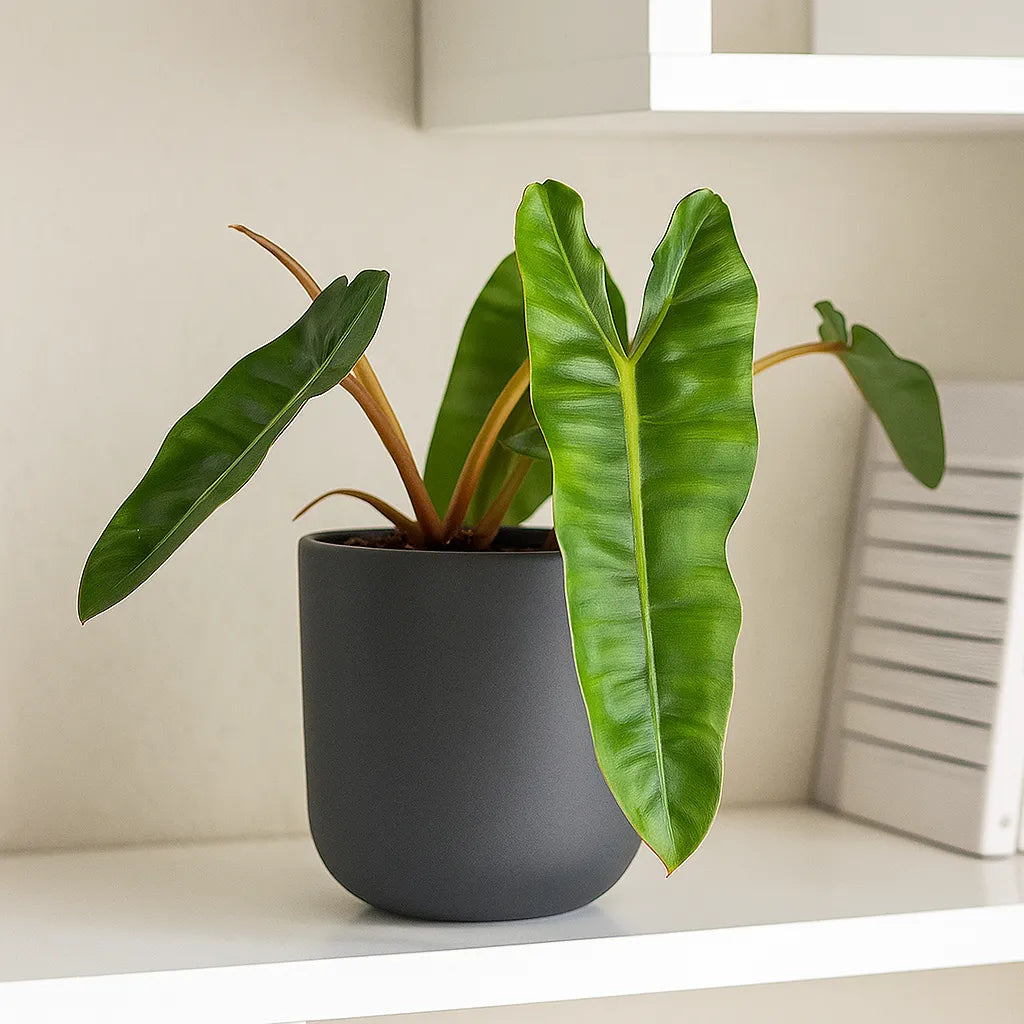
Philodendron billietiae is a rare and striking tropical aroid treasured for its elongated, strap-like leaves and vivid orange petioles. Native to the rainforests of French Guiana, Brazil, and Suriname, this climbing Philodendron is one of the most iconic species in modern plant collections — loved for its minimalist yet dramatic form.
The leaves are long and narrow, reaching up to 60–90 cm in maturity, with a leathery texture and deep green hue that contrasts beautifully against the bright, coral-orange petioles. The plant’s linear silhouette and sculptural growth habit give it a graceful, architectural appeal. When supported with a moss pole or climbing board, Philodendron billietiae produces even larger, more elongated leaves that cascade elegantly, embodying the wild beauty of the tropical forest canopy.
Refined, exotic, and instantly recognisable, Philodendron billietiae is a collector’s essential — a living sculpture that captures the balance between simplicity and grandeur.
Philodendron billietiae – Care Guide
Light
Thrives in bright, indirect light. Adequate light ensures healthy leaf elongation and maintains the rich green colouring and vivid orange petioles. Avoid harsh direct sunlight, which can burn the leaves, or very low light, which can stunt growth and reduce leaf size.
Watering
Keep the soil lightly moist but never waterlogged. Water when the top 3–4 cm of soil feels dry. During spring and summer, maintain consistent moisture; in autumn and winter, reduce watering slightly. Overwatering can quickly lead to root rot, especially in dense soil.
Temperature and Humidity
-
Temperature: Prefers warmth between 22–30 °C; avoid temperatures below 16 °C.
-
Humidity: Requires high humidity (60–80%) to maintain supple foliage and encourage vigorous growth. Mist occasionally, use a humidifier, or grow in a greenhouse cabinet for best results.
Soil and Potting
Use a loose, airy aroid mix made from compost, orchid bark, perlite, and coco coir. This provides airflow and moisture retention while preventing compaction. Repot every 1–2 years in spring to refresh nutrients and give space for root expansion. Provide a moss pole or climbing support to promote upright growth and larger leaves.
Feeding
Feed every 4–6 weeks during the growing season with a diluted, balanced liquid fertiliser or one designed for aroids. Avoid over-fertilising, which can cause salt build-up and leaf burn. Suspend feeding during cooler months.
Pruning and Maintenance
Remove any yellowing or aged leaves at the base to maintain a clean, upright appearance. Wipe the leaves gently with a soft, damp cloth to remove dust and highlight their natural sheen. Rotate regularly for even light exposure and balanced growth.
Growth and Maturity
A moderate to fast-growing climber, Philodendron billietiae can reach 1.5–2 metres in height indoors with support. The leaves elongate dramatically as the plant matures, developing into their signature narrow shape with smooth, wavy edges. Mature specimens can produce leaves up to 1 metre long in optimal conditions, making them a true tropical centrepiece.
Common Issues
-
Yellow leaves: Overwatering or poor drainage.
-
Brown edges: Low humidity or inconsistent watering.
-
Faded colour on petioles: Insufficient light.
-
Pests: Occasionally thrips or mealybugs; treat promptly with neem oil or insecticidal soap.
Background and Benefits
Philodendron billietiae was first described in the late 20th century and has since become a must-have species among rare plant enthusiasts. Its unique combination of long, elegant foliage and bright orange petioles distinguishes it from all other Philodendrons.
In its native environment, it grows as an epiphyte or hemi-epiphyte, clinging to trees in the rainforest understory. This natural climbing behaviour is best replicated in cultivation with a moss pole or totem. Beyond its striking appearance, P. billietiae also acts as a natural air purifier, improving indoor air quality and introducing an unmistakable touch of wild tropical energy to contemporary interiors.
Quick Care Summary
Light: Bright, indirect light; avoid harsh direct sun
Water: Keep soil lightly moist; allow top 3–4 cm to dry between watering
Temperature: 22–30 °C; avoid below 16 °C
Humidity: High (60–80%)
Soil: Airy, free-draining mix – compost, bark, perlite, coco coir
Feed: Every 4–6 weeks in spring/summer
Growth: Climbing habit, 1.5–2 m; elongated green leaves with vivid orange petioles
⚠️ Toxicity note: Contains calcium oxalate crystals and is toxic if ingested. Keep away from pets and children.
Styling Tip
Display Philodendron billietiae in a tall ceramic planter or climbing up a moss pole, allowing its narrow leaves to fan out gracefully. Its sleek lines and orange petioles pair beautifully with darker tropicals like Anthurium luxurians or variegated foliage such as Philodendron ‘Ring of Fire’. Perfect for modern interiors, conservatories, or greenhouse collections, this Philodendron brings both structure and movement — an embodiment of pure tropical elegance.
Shipping Notes
- Free Standard Shipping on $100+ Orders to the USA.
- Except Preorder products are shipped in 48 hours.
- Delivery to the USA:
- Standard Shipping : 3-10 business days
- If time is of the essence, please consider selecting expedited delivery for faster service.
Exchange/Return Notes
- We offer a 30-day return/exchange service after receiving.
- Final sale items are not eligible for returns or exchanges.
- To process your return/exchange, please contact us at [email protected]
- Please click here for more details>>> Return & Exchange Policy