Pay in installments of $7.26 with
 ,
,
 and
and

Shipping Estimate
USA
- USA
- CAN
- USA
- CAN
Ships within 48 hours · Estimated delivery Aug 2 - Aug 7
 Promo Codes Available:
For Your Every Summer RSVP, with Code: SUMMER15
Description
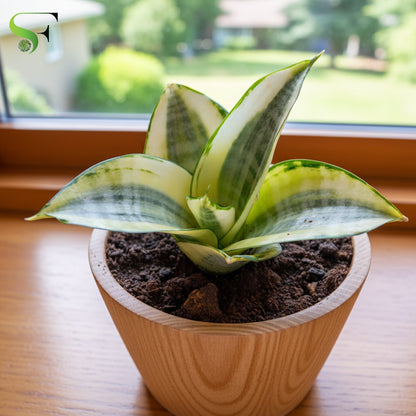
sansevieria golden hahnii care Sansevieria Trifasciata Golden Hahnii Dwarf – Succulent Factory IndiaThe Sansevieria trifasciata 'Golden Hahnii' Dwarf, often known as the Golden Bird's Nest Snake Plant or Dwarf Golden Snake Plant, is a highly sought after succulent renowned for its compact size, striking variegated foliage, and incredibly low maintenance nature. It's a fantastic choice for both seasoned plant enthusiasts and absolute beginners. Description of Sansevieria trifasciata 'Golden Hahnii' Dwarf This charming dwarf cultivar stands out from
The Sansevieria trifasciata 'Golden Hahnii' Dwarf, often known as the Golden Bird's Nest Snake Plant or Dwarf Golden Snake Plant, is a highly sought-after succulent renowned for its compact size, striking variegated foliage, and incredibly low-maintenance nature. It's a fantastic choice for both seasoned plant enthusiasts and absolute beginners.
Description of Sansevieria trifasciata 'Golden Hahnii' Dwarf
This charming dwarf cultivar stands out from its taller Sansevieria relatives with its unique growth habit. Instead of vertical, sword-like leaves, the 'Golden Hahnii' forms a dense, compact rosette of short, broad leaves that spread outwards, resembling a bird's nest.
Key Features:
-
Size: As a dwarf variety, it typically reaches only about 6 to 8 inches (15-20 cm) in height and spreads to a similar width, making it perfect for desks, shelves, windowsills, and small spaces.
-
Foliage: The most captivating feature is its striking variegation. The thick, succulent-like leaves are primarily dark green, but they are beautifully edged with bold, bright golden-yellow margins. Some leaves may also display subtle horizontal striations, adding to their visual appeal. This vibrant contrast brightens any indoor space.
-
Growth Habit: It grows in a tight, spiraling rosette, giving it a neat and architectural appearance. It's a slow grower, maintaining its size and shape with minimal intervention.
-
Flowers: While rare indoors, mature plants can produce small, fragrant, greenish-white flowers on a slender spike in spring under optimal conditions, sometimes followed by small orange berries. However, the foliage is its main attraction.
-
Air Purification: Like other Sansevierias, the 'Golden Hahnii' is renowned for its air-purifying qualities, effectively removing toxins like formaldehyde, benzene, xylene, and trichloroethylene from the air, and uniquely, converting CO2 to oxygen at night, making it ideal for bedrooms.
-
Toxicity: It's important to note that the plant is mildly toxic if ingested, so keep it out of reach of children and pets.
Tips to Grow Sansevieria trifasciata 'Golden Hahnii' Dwarf
The 'Golden Hahnii' is incredibly forgiving and resilient, earning it the nickname "indestructible plant." Here's how to ensure it thrives:
1. Light:
-
Ideal: Bright, indirect light is preferred for the best color variegation. An east-facing window or a few feet away from a south or west-facing window is usually perfect.
-
Tolerance: It's highly adaptable and can tolerate low-light conditions, but growth will be slower, and the golden margins might become less vibrant. Avoid direct, harsh afternoon sun, which can scorch the leaves.
2. Watering:
-
Less is More: This is crucial. Sansevierias are succulents and are highly susceptible to root rot from overwatering.
-
When to Water: Water only when the soil has completely dried out, typically every 2-4 weeks, depending on light, humidity, and pot size. In winter, reduce watering significantly, perhaps to once a month or even less.
-
How to Water: Water thoroughly until water drains from the bottom of the pot. Ensure no standing water remains in the saucer. It's better to underwater than to overwater. Yellowing or mushy leaves are a sign of overwatering.
3. Soil:
-
Well-Draining is Key: Use a well-draining potting mix. A cactus or succulent potting mix is ideal. You can also create your own by mixing regular potting soil with perlite, coarse sand, or pumice to improve drainage.
-
Potting: Choose a pot with drainage holes. Terracotta pots are excellent as they wick away excess moisture, further preventing root rot. Sansevierias prefer to be slightly root-bound.
4. Temperature & Humidity:
-
Temperature: Thrives in average room temperatures between to ( to ). Protect it from cold drafts and temperatures below (), as frost can be fatal.
-
Humidity: It tolerates average household humidity well and does not require high humidity or misting.
5. Fertilizer:
-
Minimal Feeding: Sansevierias are not heavy feeders.
-
When to Fertilize: Feed sparingly, once or twice during the growing season (spring and summer), with a balanced liquid fertilizer diluted to half strength. Avoid fertilizing in fall and winter.
6. Pruning:
-
Only when necessary: Generally, pruning isn't required. Remove any yellow, damaged, or rotting leaves at the base using a clean, sharp knife. A cut leaf will not grow back, so avoid trimming the tips.
7. Pests:
-
Sansevierias are generally pest-resistant. Occasionally, they might encounter mealybugs or spider mites. Inspect your plant regularly and treat any infestations promptly with neem oil or insecticidal soap.
Propagation of Sansevieria trifasciata 'Golden Hahnii' Dwarf
Propagating 'Golden Hahnii' is relatively easy, but it's important to note that leaf cuttings of variegated Sansevierias may not retain their variegation and might revert to plain green. For the best chance of retaining the golden edges, propagation by division of rhizomes or pups is recommended.
1. Propagation by Division (Recommended for retaining variegation):
-
When: Best done during repotting in spring or summer.
-
Method:
-
Carefully remove the entire plant from its pot.
-
Gently brush off excess soil from the root ball to expose the rhizomes (underground stems) and any "pups" (baby plants) that have formed.
-
Using a clean, sharp knife or shears, divide the plant into sections, ensuring each section has at least three rhizomes or a healthy pup with its own roots attached.
-
Allow the cut ends to air dry and callous over for a day or two to prevent rot.
-
Plant each division into its own pot with well-draining succulent potting mix.
-
Water lightly after a few days.
-
2. Propagation by Leaf Cuttings (May result in plain green plants):
-
When: Can be done anytime, but roots faster in warmer months.
-
Method (in water):
-
Select a healthy, mature leaf and cut it horizontally into 2-4 inch (5-10 cm) sections. Make sure to note which end is "down" (closer to the parent plant).
-
(Optional but recommended) Make a small "V" cut at the bottom of each segment to increase the rooting surface.
-
Allow the cuttings to callous over for 2-3 days (or even up to a week) to prevent rot when placed in water.
-
Place the calloused end of each cutting into a jar of clean water, ensuring only the bottom 1 inch (2.5 cm) is submerged.
-
Place in bright, indirect light.
-
Change the water every few days to keep it fresh and prevent bacterial growth.
-
Roots should start to appear in 1-4 months. Once roots are about 1 inch long, you can transfer them to well-draining soil.
-
-
Method (in soil):
-
Follow steps 1-3 from the water propagation method.
-
Plant the calloused cutting about 1 inch deep into a pot filled with well-draining succulent potting mix. Ensure the correct end is facing down.
-
Keep the soil barely moist (not wet) until roots establish. A propagation mat can help speed up the process.
-
New growth (pups) will eventually emerge from the base of the cutting.
-
Important Note for Leaf Cuttings: While leaf cuttings are a viable way to propagate Sansevierias, the resulting plant from a variegated 'Golden Hahnii' leaf cutting often loses its golden margins and reverts to the plain green form of the species. To ensure the new plant retains the characteristic golden variegation, propagation by division is the most reliable method.
SEO Friendly Hashtags:
#SansevieriaGoldenHahnii #DwarfSnakePlant #GoldenBirdNestSnakePlant #SnakePlantCare #EasyCarePlants #IndoorPlants #LowMaintenancePlants #Houseplants #AirPurifyingPlants #SucculentCare #PlantPropagation #Sansevieria #GoldenHahnii #ContainerPlants #HomeDecor #PlantLove #GreenThumb #PlantTips #BeginnerFriendlyPlants #CompactPlants #DroughtTolerant
Shipping Notes
- Free Standard Shipping on $100+ Orders to the USA.
- Except Preorder products are shipped in 48 hours.
- Delivery to the USA:
- Standard Shipping : 3-10 business days
- If time is of the essence, please consider selecting expedited delivery for faster service.
Exchange/Return Notes
- We offer a 30-day return/exchange service after receiving.
- Final sale items are not eligible for returns or exchanges.
- To process your return/exchange, please contact us at [email protected]
- Please click here for more details>>> Return & Exchange Policy