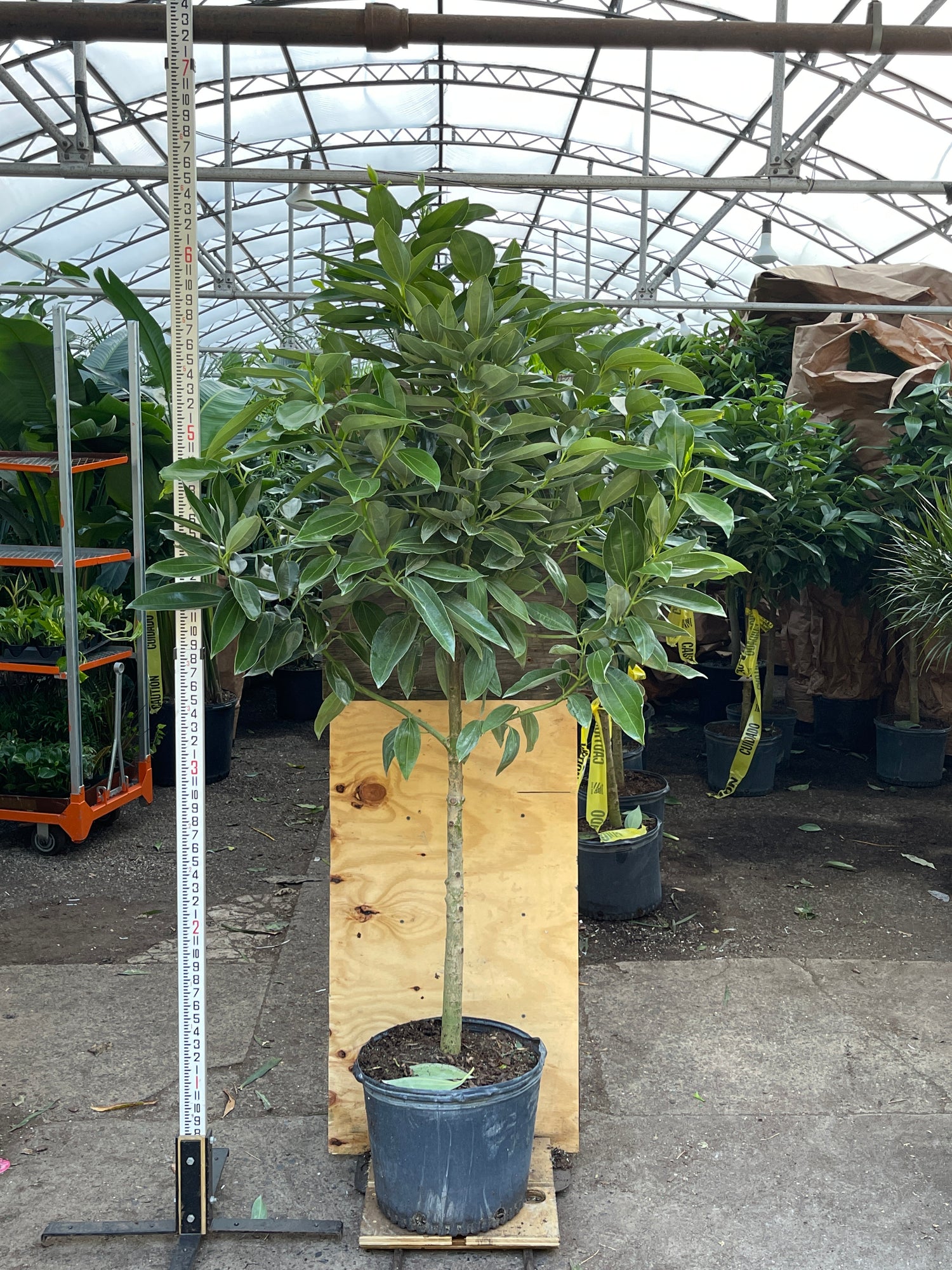
SKU: 41861498102
cinnamon water plants

cinnamon water plants Full Size Cinnamon Plant

Sale price$19.54 Regular price$21.71
Save 10%

Shipping Estimate
USA
  • USA
  • CAN

Ships within 48 hours · Estimated delivery Jul 13 - Jul 18

Promo Codes Available:

For Your Every Summer RSVP, with Code: SUMMER15

Description

cinnamon water plants Full Size Cinnamon PlantDescription The Cinnamon Plant brings the warm, sweet fragrance of your favorite spice right into your living space. This beautiful Cinnamomum verum has traveled from native Sri Lanka to become your newest botanical companion, and you're going to love it. The cinnamon tree fills your home with that gentle, comforting scent that makes every day feel a little more special, quietly perfuming your space with those cozy, familiar notes that bring back

Description

The Cinnamon Plant brings the warm, sweet fragrance of your favorite spice right into your living space. This beautiful Cinnamomum verum has traveled from native Sri Lanka to become your newest botanical companion, and you're going to love it.

The cinnamon tree fills your home with that gentle, comforting scent that makes every day feel a little more special, quietly perfuming your space with those cozy, familiar notes that bring back memories of holiday baking and warm kitchens. Beyond being gorgeous to look at, this cinnamon tree plant connects you to centuries of spice trade history - and maybe one day, you'll even be able to harvest a bit of that precious cinnamon tree bark for your own culinary adventures.


Care 

How do you care for a cinnamon plant? 

Your cinnamon plant thrives with bright, direct sunlight and well-draining soil that stays consistently moist during growing seasons. It prefers warm temperatures between 68-86°F. Re-pot annually and use gentle, balanced fertilization for optimal health and aromatic development.

Place your cinnamon tree less than a foot from your brightest window (south-facing is perfect) and water every 1-2 weeks when the top inch of soil feels dry. She's wonderfully forgiving, but like many tropical plants, she has strong preferences about her lighting needs. We're always here to help you get the balance just right.


What climate does cinnamon grow in? 

The cinnamon plant naturally flourishes in hot, humid tropical climates with temperatures between 68-86°F and high humidity levels, preferring abundant rainfall while tolerating brief temperature drops to near freezing when necessary for winter survival and healthy dormancy periods.

You can mimic this climate by keeping your home 68° and above, watering regularly, and misting often. 


Do cinnamon trees like sun or shade? 

Cinnamon trees absolutely need full sun, requiring 6-8 hours of direct sunlight daily for optimal growth and the development of those wonderful aromatic oils that make their foliage so beautifully fragrant and appealing to indoor plant lovers everywhere.

If you don’t have 6 hours of direct sunlight indoors, 12-14 hours of indirect sunlight also works. You may need to supplement with full-spectrum LED grow lights. Young plants can manage some partial shade at first, but as your cinnamon tree plant matures, it really craves bright, abundant sunshine to reach its full potential.


Do cinnamon trees need a lot of water? 

Cinnamon plants prefer consistently moist but well-draining soil, needing water every 1-2 weeks depending on temperature, humidity, and how much bright sunlight they're receiving daily in your home environment throughout the growing season for healthy development.

More warmth and brightness mean your plant will drink more frequently, while cooler conditions call for backing off the watering to prevent any root issues. It's all about reading your plant's signals and adjusting accordingly - something that becomes second nature once you get to know each other.


What is the lifespan of a cinnamon tree? 

Cinnamon trees can live 20-30 years with proper care, reaching maturity for potential bark harvesting after approximately 5-7 years of loving cultivation and optimal growing conditions. That would include adequate sunlight, consistent watering, and appropriate temperatures for healthy development.

This makes your cinnamon plant a wonderful long-term companion that will grow alongside you through the years. With consistent care including adequate sunlight, proper watering, and suitable temperatures, you're investing in a relationship that can span decades of aromatic enjoyment.


What fertilizer should I use on my cinnamon plant? 

Cinnamon plants benefit from balanced, slow-release fertilizer applied at half strength during spring and summer growing seasons. Most quality potting soils provide adequate nutrients for healthy development, growth, and aromatic oil production throughout their lifetime.

Skip feeding entirely during fall and winter months when your plant naturally slows down its growth. We find that less is often more with these beauties - they prefer gentle, consistent nutrition rather than heavy feeding that might overwhelm their roots.


Where’s the best place to put my cinnamon plant indoors? 

Position your cinnamon plant less than one foot from your brightest, sunniest window, ideally south-facing, since these tropical beauties cannot tolerate low-light conditions and absolutely need maximum brightness for healthy growth and aromatic foliage development indoors.

Your cinnamon tree really does need that prime spot with the best light in your home. Think of it as giving her the room with the best view - she'll reward you with healthy growth and that wonderful fragrance that makes having a cinnamon plant so special.


How tall can a cinnamon plant get? 

Cinnamon plants reach 10-15 feet indoors, though they can grow up to 60 feet in their natural wild habitat, growing at a moderate pace that won't overwhelm your space. You can enjoy watching it develop over time.


Pet-friendly?

Your Cinnamon Plant is generally safe around pets in small amounts, but eating too much can cause vomiting and diarrhea. While not highly toxic, it's wisest to keep this aromatic beauty where curious pets can't turn it into a snack.


Are cinnamon plants toxic to cats?

Cinnamon plants pose minimal toxicity risk to cats, though felines lack the liver enzymes needed to properly process cinnamon compounds found in the plant's foliage, so positioning plants away from curious cats is always recommended for safety.

Eating larger amounts could potentially cause vomiting, diarrhea, weakness, and liver stress in cats. The safest approach is positioning your cinnamon plant where curious paws can't reach - maybe on a high shelf or in a room your kitty doesn't frequent.


Are cinnamon plants poisonous to dogs? 

Cinnamon plants aren't poisonous to dogs, but eating large quantities of leaves could cause mild mouth irritation and digestive upset, though the overall risk remains quite low for most healthy pets in typical household situations and environments.

While there's minimal danger, it's always good practice to discourage pets from treating your houseplants like their personal salad bar. A little prevention keeps both your furry friends and your beautiful plants happy and healthy.


Factoids

Are cinnamon trees invasive? 

Some cinnamon tree varieties can become invasive in tropical regions like Hawaii where birds and water spread seeds quickly, though Cinnamomum verum grown indoors rarely flowers or produces fruit. Indoor cinnamon plants pose no invasive risk.


How much cinnamon do you get from one tree?

A mature cinnamon tree can produce several kilograms of usable bark over its lifetime, though indoor cinnamon plants rarely reach the size needed for meaningful harvest. Instead you get to smell cinnamon all year round without the work!


Can you harvest cinnamon without killing the tree? 

You can harvest cinnamon without killing the tree, but it’s tricky. Carefully remove the branches and peel off the inner bark while leaving the main tree intact. This keeps the plant healthy so new branches can grow for future harvests.


What part of a cinnamon tree is used as a spice? 

The beloved cinnamon spice comes from the inner bark of the cinnamon tree, which is carefully peeled, dried, and naturally curls into those familiar quills we see in stores. Your new tree will share some DNA with your spice cabinet!


Buy a cinnamon plant

Your home deserves that warm, welcoming fragrance that makes everyone ask "what smells so wonderful in here?" Our Cinnamon Plant is more than another houseplant - it's your daily dose of aromatic comfort that fills every room with the cozy scent of your favorite spice, naturally and beautifully.

Through our personalized video shopping calls, you can meet your Full Size or Huge cinnamon tree plant before it arrives at your door. No surprises - just the perfect aromatic companion chosen specifically for you, delivered with care by our own team who understands how special these plants truly are.


Shipping Notes
  • Free Standard Shipping on $100+ Orders to the USA.
  • Except Preorder products are shipped in 48 hours.
  • Delivery to the USA:
  1. Standard Shipping : 3-10 business days
  • If time is of the essence, please consider selecting expedited delivery for faster service.
Exchange/Return Notes
  • We offer a 30-day return/exchange service after receiving.
  • Final sale items are not eligible for returns or exchanges.
  • To process your return/exchange, please contact us at [email protected]
  • Please click here for more details>>> Return & Exchange Policy
SKU: 41861498102

Discover Niche Categories That Outsell cinnamon water plants

Top-Converting Item to Boost Your Average Order

4.3 ★★★★★
Based on 560 reviews
Sort
Highest Rating
Newest First
Oldest First
Product Reviews
A
Verified Purchase
arch_reviews
Fort Morgan, US
★★★★★ 4
A Cheeky Novel about writing cheeky novels
Format: Paperback
Wired for Story is a book full of solid, albeit basic, advice for story tellers, and in particular writers trying to develop their craft. It succeeds in some areas while falls down in others, however I found it solid and well written overall. Where it succeeds is in its brevity and clarity. The author gets right to the point and even provides short lists at times of what to do and how to do it. Her writing is also peppered with cheeky humor which is humorous in a thats-almost-funny kind of way that is refreshing compared to the textbook style adopted by many how-to-write books. Where the book fell down, for me, was in its limited examples and scope. It really felt like the author was addressing romance writers, for the most part. I could think of a few counter examples to some of her rules, although one would have to leave the romance genre for those to work. But for a 230 page book, that is minor discrepancy. The second thing I noticed, which has already been pointed out by others, is that the brain science was limited. In fact, it was mostly only refereed to in footnote. Personally, that was fine with me, but I could see why it made others feel misled (it is in the title, after all).
WAS THIS REVIEW HELPFUL?YesReportShare
Reviewed in the United States on December 5, 2014
M
Verified Purchase
Martijn13Maart1970
Lowell, US
★★★★★ 5
Unfortunately yet another one to add on the pile of writing books!
Format: Paperback
I say 'unfortunately another good book on writing' since I have been reading many books on the topic and each time I think I have read it all by now, pfff, but then another one like this comes along. But hey, it is fun to read about writing and especially if you get something useful and new out of it. Always worth the money. Why the accolades for this book? All the information on characters, plot, details etc, how they work and why they are important, is not new. You find them in many reading books, especially from Reader's and Writer's Digest series. I would especially recommend the books on plot and structure by James Scott Bell. Yet this book Wired For Story is not redundant, since it is unique in both the focus on the familiar subjects like what story is, the importance of details, details versus generics, how events affect a character etc. The approach of using brain science shows in a compelling way why all the stuff in the book (and for that matter, the classic theory on writing) is there for a reason, since it has evolved out of how we humans seem to perceive a story. Interesting though, a lot of rules like 'write about what you know' are shown to be myths. Of course, in the end it is you as a reader that has to decide what works for you, but you will find new things here and that is always good. If you are thinking about writing a story, this book can give you a very sharp focus on what to think about before you start. Or, like me, when you have a draft, and you want to get to the 'real story' behind it to come forward, this work gives you a very transparent way to get better clues as to what stays and what has to go. It is also entertaining and easy to read, so, all I can say is, yet again a book on writing you cannot afford to miss! I just added some extra information: I loved the humor and wisdom of the writer. She has worked for years reading manuscripts and she does know her stuff, and I liked her tone, which was both realistic but also fun! How many times have you read a reference work and actually had to laugh? But this book was also profound on many story issues. Many common writing rules are, as I said before, shown to be myths and more importantly, why this is so. I have read for instance so often that you should have some sensory info on every page, but, as I thought myself and I am not the only one: although this makes things more lively, it should only be there if the story would dictate it! The book has many more things like these. I have compiled a collection of notes I took from all the many many books on writing so I measure new books on writing in how much text I copied and pasted to look at again and this book has given me lots, so 5 stars and I hope we will see more of this author again! I also recommend the book by James Scott Bell on plot and structure which you can find here
WAS THIS REVIEW HELPFUL?YesReportShare
Reviewed in the United States on October 28, 2012
C
Verified Purchase
C. F. King
Alexandria, US
★★★★★ 5
Great book
Format: Kindle
I have been an author for decades and published 4 books. I've been an editor for over a decade and this book is perfect for seasoned and new writers. It certainly made me take a new, long look at the latest book I'm busy with. I think it's great for getting one focused on the important points. I loved it. There wasn't too much about how the brain works to bore one or make it feel like a technical book on neuroscience. I found her writing style amusing and entertaining. I will definitely recommend it to all my clients and writing friends. There was nothing in the book I didn't know, but this book forces one to focus on the bigger picture. It doesn't matter how accomplished one is as a writer, one can always learn more. And I certainly did with this book. So, thank you, Ms. Cron. I saw the negative three or fewer star comments and can only think the commentators didn't see what the author was actually trying to convey. It's a classic lesson in the KISS method (keep it simple stupid) and I loved it. This isn't a full-on, in-depth analysis of every part of the craft of writing, as many seemed to expect, that would take 12 full books or more. This is also not only for beginners as some suggest. To them I would say, don't let hubris cloud your ability to write better--think beyond that--read the book again. I think the book serves as an excellent reference to keep us on track when we lose the plot, so to speak. Seasoned writers can get quite jaded and write almost on auto-pilot at times--not good. Thank you, Ms. Cron, for putting me back on track and making me excited to re-write and re-edit my latest book, my first YA fantasy, for the zillionth time. I was out of my comfort zone with this book and feeling a bit overwhelmed and unsure. Wired for Story has me fired up to go forth and do this. I highly recommend this book, especially for seasoned writers.
WAS THIS REVIEW HELPFUL?YesReportShare
Reviewed in the United States on January 26, 2018
R
Verified Purchase
robert lanier
Birmingham, US
★★★★★ 5
Quality writing information
Format: Paperback
A book that was fun to read and informative. I feel as though I have a better understanding of writing fiction now.
WAS THIS REVIEW HELPFUL?YesReportShare
Reviewed in the United States on February 11, 2026
R
Verified Purchase
Ron Mahon
Alexandria, US
★★★★★ 5
Thanks to a great new book ”Wired for story
Format: Kindle
I’ve written many books over the years, and published 40 or so. Once I started writing my first novel, I found out that all the old techniques just didn’t work. Thanks to a great new book ”Wired for story. The writer’s guide to using brain science. By Lisa Cron” Lisa studied and cataloged the works of several Neuro scientists. She explained all of that, plus how it applied to writing a novel. Better yet, she then shows us how to apply these techniques to where it counts. In addition, This changes the hierarchy of your novel. Ensuring that it’s focusing on what’s important to the brain. Using this new brain science, she proposes a completely new hierarchy of needs for your book. Moreover, the fact that the brain is trying to solve the problem of the protagonist. • “What happens” is the plot • “Someone” is the protagonist • The “goal” is what’s known as the story question • “How are he or she changes” is what the story itself is actually about. As counterintuitive as it may sound, the story is not about the plot or even what happens in it. Stories are about how we, rather than the world around us, change. The more your reader discovers the missing pieces to solving the protagonist's problem the more interesting if it is. It seems as the mind creates a mental stimulation of events described in the story. But he goes much deeper than that Details about actions and sensations that are captured from the text and integrated with personal knowledge from past experiences these data are then run through mental stimulation using brain regions a closely mirror those involved when people perform, imagine, or observe similar real-world activities. Haven’t you ever come home from a movie, reenacting that movie in your own mind? When the events of the story of filtering through the protagonist's point of view, allowing us to watch as she makes sense of everything. Seeing it in her eyes. This is not just like we see things. It’s that we grasp what they mean to her. Other words the reader must be aware of the protagonist personal effect on everything that happens. This is exactly where I fell apart on my novel is should be a first person third person. Lisa explains all these points of view, their advantages, and their disadvantages… My personal choices third person, omniscient. It also fixes another problem about tags. This technique is so powerful the third person doesn’t have to be bothered with he said;​ she said it’s so intuitive, it needs no explanation. It also settles a big dispute that I’ve always had the use of italic, quotes, and indented text. None are necessary. Some of the best examples that I’ve ever seen for show rather than tell. All the points that the author makes are demonstrated and explained with real examples from published articles. It’s like a five-year writing course that you can complete in three or four days. I bookmarked it extensively so that I can get back to those important points. Neuroscience also explains why social proof works so well. And a few hints on how to customize it, for your particular problem or opportunity. As a copywriter, one who writes advertising copy? I have long been aware of how to write directly to the subconscious mind. These techniques have been known for almost 100 years. We just didn’t know why they worked. Only that they did work. Thanks to Lisa for this fantastic book, I now know why they work.
WAS THIS REVIEW HELPFUL?YesReportShare
Reviewed in the United States on April 19, 2015

recommand products