Pay in installments of $5.54 with
 ,
,
 and
and

Shipping Estimate
USA
- USA
- CAN
- USA
- CAN
Ships within 48 hours · Estimated delivery Jun 29 - Jul 4
 Promo Codes Available:
For Your Every Summer RSVP, with Code: SUMMER15
Description
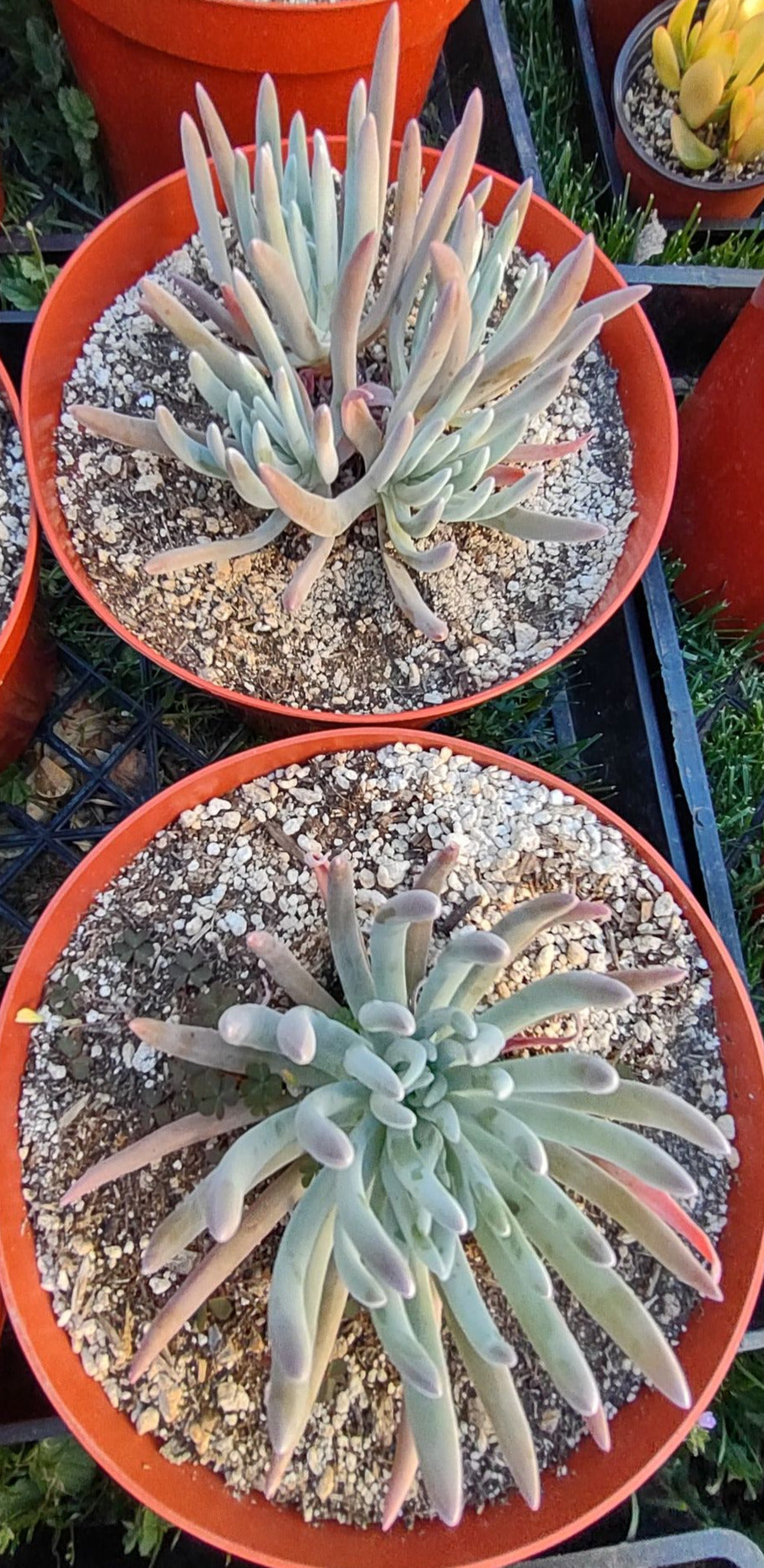
live succulent plant Dudleya virens in 8 Inch Pot Live Succulent – Phoenix Rising SucculentsThese are a fairly rare Dudleya that originated from San Clemente Island and Santa Catalina Island off the coast of Southern California. These specimens are seed grown from domestic stock. This is for one large plant growing in a 8" inch container shipped bare root. All of our plants are grown in the beautiful Temecula Valley in sunny Southern California, and we ship within the United States. Shipping is done Monday, Tuesday, and Wednesday so plants
Origin and Habitat: Dudleya virens is native to several coastal southern California and Baja California (Mexico) locations, comprising Palos Verdes Hills on the Palos Verdes Peninsula coast in Los Angeles County; on several of the Channel Islands in California (San Clemente, San Nicolas, Santa Catalina islands); and on Guadalupe Island off the northwestern Baja California Peninsula, Mexico. The subspecies virens is endemic to the San Clemente Island (California)
Altitude range: Less than 400 meters above sea level.
Habitat and ecology: This species grows in the coastal bluff shrub community of San Clemente Island on rock cliffs and slopes. Hummingbirds visit the flowers for their nectar.
Description: Dudleya virens is a species of perennial, succulent plant in the Stonecrop family (Crassulaceae) branched and forming cushions of densely clustered rosettes to at least 40 cm in diameter. The leaves are fleshy strap-shaped, flattened and non-viscid and, 8–20 cm long and 1.5–3 cm broad, tapering from the base (or from near middle) and are green or greyish with red-dish tips. Thick leafy red flower stems rise from the center of the plant to support candelabras of fragrant white or rosy flowers, with five petals that spread from near the middle.
Stem: Caudices to 1 meter long, 1-4(-8) cm wide, erect, with up to 100 (or more) branches, later decumbent.
Rosettes: 5-10(-25) cm in diameter, with (15-)20-50(-55) leaves.
Leaves: Linear to triangular-lanceolate, strap-shaped to almost cylindrical, without resinous smell, (5-)8–20(-25) cm long, (6-)15–30 mm wide, 2-8 mm thick, 2-5 times wider than thick, base 8-40 mm wide, whitish or light green, surfaces sometimes glaucous farinose, not viscid, not oily; tip acute.
Inflorescences (cymes): Densely 2-5-branched and obpyramidal 6-15 cm in diameter, or wit up to15 (or more) -branched and cylindrical, main branches forked 1–2(-3) times; terminal scorpioid branches (cincinni) 3-12(-20)-flowered, 1-10 cm long; Scape reddish 20–45(-70) cm long, 4–7(-15) mm wide with 12-45 oblong leaves up to 5 cm long and 0.5-1.5 cm wide. Pedicels 2–4(-6) mm long.
Flowers: Sepals 2–4 mm, deltate-ovate, acute. Corolla 14-23 mm in diameter. Petals wide spreading or slightly reflexed from middle, 7–10(-11) mm, 2–3(-3.5) mm wide, fused 1–2(-2.5) mm, triangular-ovate or elliptic, acute, white or somewhat marked with red (then appearing pink), keel greenish, tube 1.5 - 2.5 mm, lobes divaricate or somewhat recurred from near the middle. Pistils close together, suberect to ascending, 6-10 mm long, (base tapering); styles 2-4 mm.
Blooming season: The flowers are produced in April, May, and June.
Cultivation and Propagation: This slow growing specie is seldom grown and forms colonies and thus makes an attractive small-scale ground perennial cover where winters are mild and summers dry. It is also grown as a house or conservatory plant in a porous mix. Dudleyas are hardy in USDA Zoned 9-12, the plant is highly heat and drought tolerant during the summer months and prefers moist cool winters. Powdery white leaves make these plants standouts, but avoid touching them as they are easily and permanently marked by finger marks. All of the plants in the Dudleya genus are known to live up to 100 years.
Soil: They do best in very well-drained, sandy or gravely soil. As an ornamental it is also grown in containers where it stays smaller than its outdoor brethren. In pots they need a very porous mix soil. It is typically found on coastal bluffs and has been found to be tolerant of heavy soils in garden settings.
Exposure: It requires ample sun, but provide midday shade where summers are hot. The quality of light is much more important than the quantity, the plants contain farinose powder which makes them really effective for ultraviolet reflectivity. Low light situations might be stressful and create a susceptibility to mealy bug infestation.
Watering: Dudleya are summer-dormant winter growers that require fresh air, exceptionally well- drained soil, and no summer water—even though they may appear drought stressed because their outer leaves dry and curl inward. (provide water in spring and autumn). In the summer the roots are unable to absorb the water so any excess of water simply rots them because of their dormant state.
Maintenance: Remove spent flower stems for appearance. The older leaves of Dudleya wither but remain attached to the stem. Whether or not they should be removed is disputed, but they provide a hiding place for pests and some grower’s prefer to remove them.
Uses: It will last a long time with little care and can become a beautiful pot plant with pretty inflorescences with the right care. It is a beautiful addition to a rock garden or any place with limited soil depth.
Propagation: Dudleya have been found to be propagated through both seed and vegetative, although vegetative propagation by offsets in spring or early summer is not only more popular but it is much easier to do. Dudleya should be planted at an angle. This prevent s the buildup of water in the leaves, which may lead to the leaves rotting. The vegetative propagation process needs to be done with temperatures reaching 70 degrees F. Let the cutting dry for about five to ten days and put the the cutting into the rooting compost (2 parts perlite and 1 part cactus potting mix). After finishing this you then place the pot in a warm, sheltered, but very bright filtered light area with no direct sunlight, you do not want the leaves to dehydrate. During the rooting period make sure to limit water, the rooting will take around 2 weeks, after roots form transplant into the growing container. One thing to remember when rooting cuttings, overhead watering is not good for it, apply only to the soil line. The seeds do not need to be covered but do need a moistened soil for germination. Placing them into a mist house at an optimal 70 degrees F with sufficient lighting will result in germination. Germination occurs in just two weeks.
Shipping Notes
- Free Standard Shipping on $100+ Orders to the USA.
- Except Preorder products are shipped in 48 hours.
- Delivery to the USA:
- Standard Shipping : 3-10 business days
- If time is of the essence, please consider selecting expedited delivery for faster service.
Exchange/Return Notes
- We offer a 30-day return/exchange service after receiving.
- Final sale items are not eligible for returns or exchanges.
- To process your return/exchange, please contact us at [email protected]
- Please click here for more details>>> Return & Exchange Policy