SKU: 51794208807
citrus mitis calamondin-miniature orange tree

citrus mitis calamondin-miniature orange tree Citrus × microcarpa

Sale price$26.22 Regular price$29.13
Save 10%

Pay in installments of $7.28 with ShopPay, AfterPay and Klarna

Shipping Estimate
USA
  • USA
  • CAN

Ships within 48 hours · Estimated delivery Jul 16 - Jul 21

Promo Codes Available:

For Your Every Summer RSVP, with Code: SUMMER15

Description

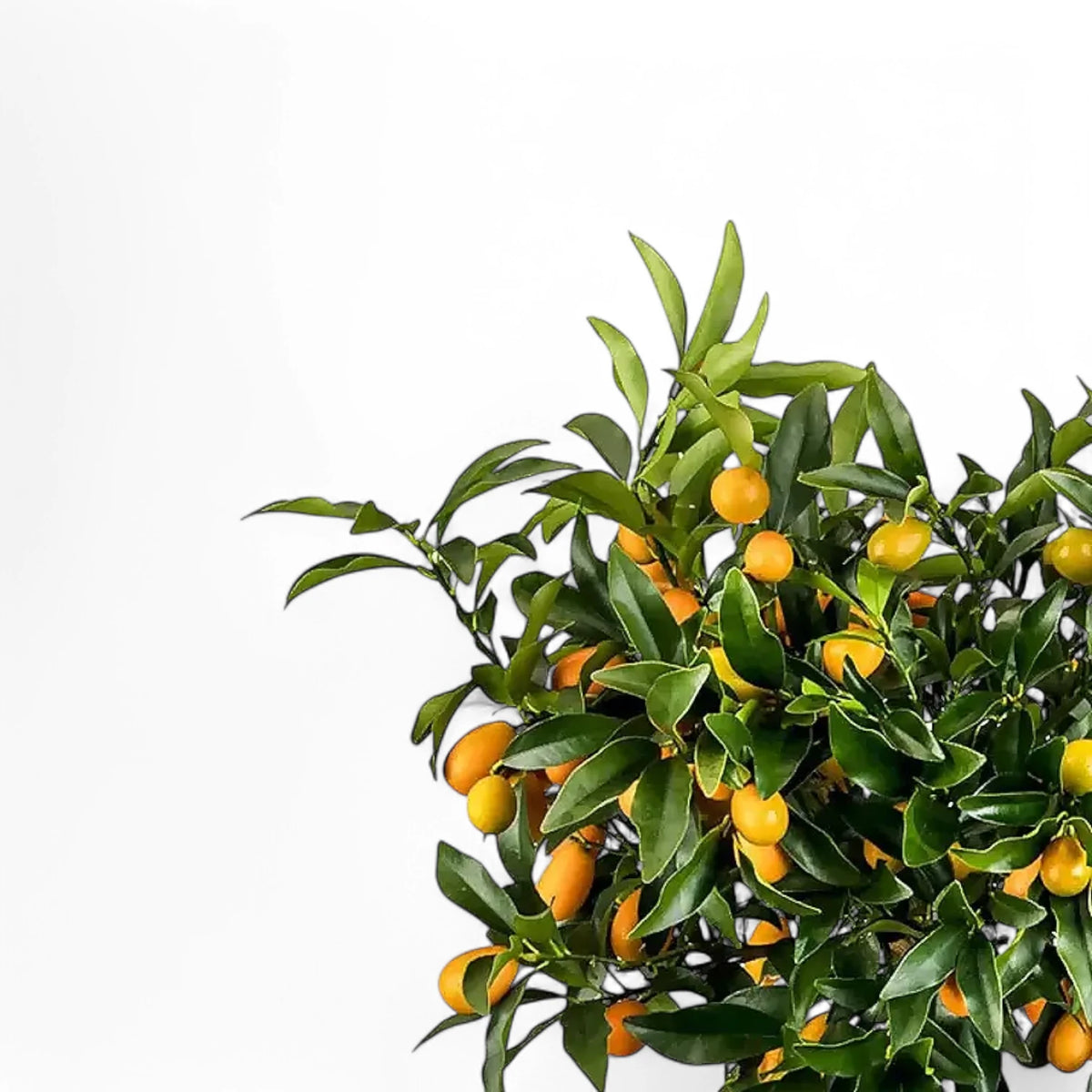
citrus mitis calamondin-miniature orange tree Citrus × microcarpaCitrus microcarpa Calamondin Citrus microcarpa, commonly known as calamondin or calamansi, is a compact evergreen citrus with glossy foliage, scented flowers and small orange fruit. Its branching crown stays manageable in a pot, while mature plants can carry flowers, green fruit and ripe fruit during the same season when light and watering remain steady. The fruits are small, round and aromatic, with a thin orange peel and sharp acidic juice.

Citrus × microcarpa – Calamondin

Citrus × microcarpa, commonly known as calamondin or calamansi, is a compact evergreen citrus with glossy foliage, scented flowers and small orange fruit. Its branching crown stays manageable in a pot, while mature plants can carry flowers, green fruit and ripe fruit during the same season when light and watering remain steady.

The fruits are small, round and aromatic, with a thin orange peel and sharp acidic juice. Calamondin is both an ornamental potted tree and a culinary acid citrus, especially for seasoning, drinks, marinades and preserves when the plant has been grown and treated as an edible crop.

Calamondin orange fruit and dense crown

  • Growth habit: Compact evergreen citrus with glossy leaves and a naturally branching crown.
  • Flowers: White scented flowers followed by small round orange fruit.
  • Fruit: Sharp acidic juice and aromatic peel, with calamondin and calamansi both used as common names.
  • Fruit profile: Small orange fruit with sour aromatic pulp and thin peel.
  • Pot habit: Compact citrus for strong light, seasonal warmth and protected wintering above about 13°C.

Small orange fruit and dense branching

Citrus × microcarpa is an accepted hybrid citrus in the Rutaceae family involving kumquat and mandarin ancestry, commonly linked with Citrus japonica and Citrus reticulata. Older names include × Citrofortunella microcarpa, × Citrofortunella mitis and Citrus × mitis.

The plant forms slender woody shoots, oval glossy leaves and starry white flowers. Fruit ripens from green to orange and usually stays much smaller than a mandarin. The pulp is sour, so the fruit is mainly used for juice and flavour.

Calamondin container routine

  • Light: Give very bright light with direct sun where possible. Strong light improves flowering and fruiting.
  • Water: Water deeply once the upper part of the substrate has dried. Keep moisture more even during warm active growth, then water more carefully in winter.
  • Substrate: Use a free-draining citrus substrate with mineral particles. Calamondin roots need both moisture and air, especially in a container.
  • Wintering: Keep bright and protected above about 13°C. Mild winter temperatures need enough light and measured watering.
  • Feeding: Use citrus fertiliser from spring into autumn. Regular nutrition keeps foliage green and improves flower and fruit formation in a long-term pot.
  • Dry air: Heated dry air can increase spider mite pressure and leaf drop. A modest humidity lift plus regular foliage checks lowers winter pest pressure.
  • Flowering under cover: Flowers are self-fertile. Indoors, gently brushing open flowers can improve fruit set where insect activity is low.
  • Repotting: Repot when the pot is well rooted, moving up by one modest pot size. Oversized pots stay wet too long around citrus roots.
  • Pruning: Prune lightly after fruiting or before strong spring growth. Remove shoots from below the graft point if they appear.

Calamondin foliage and crop checks

  • Leaf drop after moving: Check light, draughts, dry air and watering changes. Calamondin reacts quickly when moved from bright outdoor conditions into warmer, darker winter conditions.
  • Yellowing foliage: Inspect the rootball first. Cold wet substrate can damage roots, while pale new growth can point to nutrient shortage in an exhausted mix.
  • Flower drop: Low light, dry air, heat stress or irregular watering can interrupt fruit set. Stabilise the growing conditions before increasing fertiliser.
  • Small or shedding fruit: Young plants may reduce part of their crop naturally. Keep watering even and avoid swings between dry and saturated substrate.
  • Sticky stems or leaves: Look along stems and leaf backs. Remove scale, aphids or mealybug early because honeydew builds quickly on glossy citrus foliage.

Calamondin fruit peel, pets and name

Calamondin peel, leaves and stems contain aromatic oils and psoralens. Clear dropped fruit, loose leaves and cut stems where pets can reach them, and handle small thorns carefully during pruning or repotting.

The generic name Citrus is tied to Latin citron naming and the wider group of aromatic citrus plants. The hybrid sign in Citrus × microcarpa reflects its hybrid origin, while microcarpa means small-fruited. Calamansi is widely used in the Philippines for the fruit and juice.

Shipping Notes
  • Free Standard Shipping on $100+ Orders to the USA.
  • Except Preorder products are shipped in 48 hours.
  • Delivery to the USA:
  1. Standard Shipping : 3-10 business days
  • If time is of the essence, please consider selecting expedited delivery for faster service.
Exchange/Return Notes
  • We offer a 30-day return/exchange service after receiving.
  • Final sale items are not eligible for returns or exchanges.
  • To process your return/exchange, please contact us at [email protected]
  • Please click here for more details>>> Return & Exchange Policy
SKU: 51794208807

Discover Niche Categories That Outsell citrus mitis calamondin-miniature orange tree

Top-Converting Item to Boost Your Average Order

4.4 ★★★★★
Based on 6 reviews
Sort
Highest Rating
Newest First
Oldest First
Product Reviews
D
Verified Purchase
Donna
Massapequa, US
★★★★★ 5
Great read about naval history
Format: Hardcover
Great book completing a Trilogy ofBritish Naval history. Great read!
WAS THIS REVIEW HELPFUL?YesReportShare
Reviewed in the United States on July 11, 2025
J
Verified Purchase
Jeffrey A. Ribner
Charlottesville, US
★★★★★ 5
Magisterial
Format: Hardcover
Magisterial. A superb scholar at work and well written The sections on World War Two are a critical masterpiece
WAS THIS REVIEW HELPFUL?YesReportShare
Reviewed in the United States on January 19, 2026
A
Verified Purchase
Adrianna Randall
Carnegie, US
★★★★★ 4
The Details of the Height of British Naval Power
Format: Hardcover
This is the final volume in Rodger's three part series. This coves a lot of ground that includes Britain's height of imperial/naval hegemony and then its exhaustion after two world wars. Read this book if you want to learn about the details that actually go into an important national organization like the Royal Navy. Things like politics, administration, logistics, ship design, talent pipelines, engineering difficulties, etc. Rodgers goes deep. Things like: 1) Fire control on big guns on warships is a very hard technical challenge and wasn't really solved until the 2nd World War with more advanced electronics. 2) In the coal fired age of ships, most of the navy were coal stokers. The limit of range was actually their exhaustion, not how much coal was on board. 3) Twice the number of bombs were dropped on Malta in WW2 as on London during the Blitz! 4) Britain's naval dominance was tied to economic dominance and was sea power/trading based. Sea based trade is so powerful and economical that it was cheaper to ship a ton of coal by sea than train within Britain itself! 5) Britain had a monopoly over undersea cables for global communications. They used this as a weapon to spy on enemy communications and to cut off others access to the network. Sound familiar to the SWIFT banky network today? 6) Welsh coal was the best coal. So good that the Austo-Hungarian navy stockpiled before the war enough that they used it exclusively throughout WW1.
WAS THIS REVIEW HELPFUL?YesReportShare
Reviewed in the United States on November 16, 2025
J
Verified Purchase
J. Armstrong
Pawtucket, US
★★★★★ 5
A clear and concise book
Format: Hardcover
Fascinating book. Berntsen provides some interesting insights and recommendations on how we should fix problems at the CIA and in the national security apparatus. At a time when most critics want to destroy the Agency, Berntsen provides some plain spoken sanity. Human Intelligence, Counterterrorism and National Leadership needs to be read by anyone entering into defense, foreign affairs or intelligence - and anyone else with an interest in how the CIA works. It is a fast and enjoyable read.
WAS THIS REVIEW HELPFUL?YesReportShare
Reviewed in the United States on November 17, 2008
R
Verified Purchase
Retired Reader
Lexington, US
★★★★★ 4
Skimming the Surface
Format: Hardcover
The essence of this book is to succinctly explain the role of CIA's National Clandestine Service (Directorate of Operations) in formulating and more importantly executing a coherent counter-terrorism strategy. Gary Berntsen is a retired CIA intelligence officer (clandestine service) with an impressive record of field assignments to his credit. He also clearly knows the ways of Washington D.C. in that this book is designed for those suffering from attention deficit disorder. While he raises several interesting point in the book, he also reveals an astonishing narrowness of view and tendency to reduce everything to its simplest terms. In his introductory `background' chapter Berntsen makes the dubious claim that the collection of intelligence from human sources (HUMINT) is the "primary mission of CIA." Apparently he is unaware that CIA was originally founded to produce all source finished intelligence and that the National Intelligence Council (NIC), until recently under CIA, was the final word in the U.S. Intelligence System. Nothing reveals the sorry state of CIA's Directorate of Intelligence better than this claim. In the same manner Berntsen is apparently oblivious to the availability and uses of intelligence collected by technical means. To his credit he does recognize that the best intelligence is more often available from open (non-classified) sources than from secret sources. Yet he neither expands nor follows up this observation. Berntsen more or less follows this pattern through out this book. For example he provides a brief discussion of the traditional Islamic Banking System called Hawalla, but is apparently unaware that the system is based on a recognized credit not cash and that money does not move across international borders. The system is widely trusted and is widely used by Muslim expatriates in the West and Saudi Arabia to send money home. For this reason Hawalla credit transfers providing money to terrorists are easily lost in a world wide mass of transactions. Yet it is possible to track Hawalla transactions and it has been done without "intensive manpower" allocations. Berntsen deserves a good deal of respect and credit for his obvious service to the U. S. and his dedication to the cause of clandestine intelligence operations and its hand maiden covert operations. Yet this book is a terminally superficial and ill-considered work by someone who not only should know better, but could have produced a first rate `practical guide' to a counter-terrorism strategy.
WAS THIS REVIEW HELPFUL?YesReportShare
Reviewed in the United States on October 30, 2008

recommand products