Pay in installments of $5.11 with
 ,
,
 and
and

Shipping Estimate
USA
- USA
- CAN
- USA
- CAN
Ships within 48 hours · Estimated delivery Aug 5 - Aug 10
 Promo Codes Available:
For Your Every Summer RSVP, with Code: SUMMER15
Description
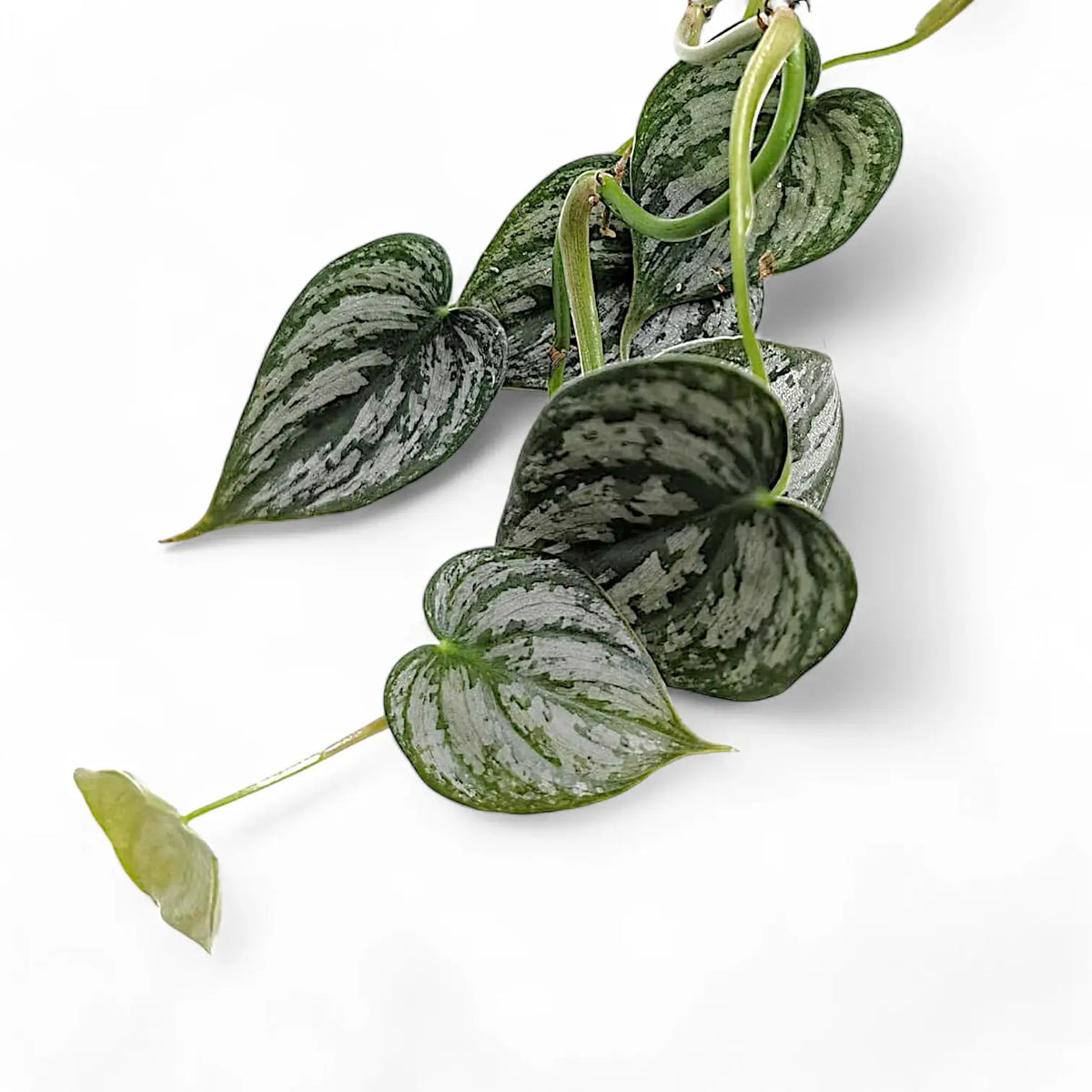
philodendron brandtianum price Philodendron brandtianum – Foliage FactoryPhilodendron brandtianum Philodendron brandtianum is a climbing species with small, heart shaped juvenile leaves marked in strong silver grey between the veins. It can trail when young, but its natural habit is appressed climbing, with stems growing close to trunks or other vertical surfaces. Juvenile leaves stay smaller and strongly silver marked, with green showing around the veins and margins. Older climbing growth may produce larger, greener
Philodendron brandtianum
Philodendron brandtianum is a climbing species with small, heart-shaped juvenile leaves marked in strong silver-grey between the veins. It can trail when young, but its natural habit is appressed climbing, with stems growing close to trunks or other vertical surfaces.
Juvenile leaves stay smaller and strongly silver-marked, with green showing around the veins and margins. Older climbing growth may produce larger, greener leaves with a lighter silver pattern than the juvenile growth usually sold as a houseplant.
Philodendron brandtianum juvenile leaf pattern
- Leaf pattern: Heart-shaped juvenile leaves with strong silver-grey marking between the veins.
- Growth habit: An appressed climber that grows close to trunks and branches in habitat.
- Native range: Native to southern Colombia, northern Brazil and Bolivia.
- Biome: Recorded from the seasonally dry tropical biome.
Philodendron brandtianum adult leaf change
Philodendron brandtianum was published by K. Krause in 1913. The species is native to southern Colombia, northern Brazil and Bolivia.
The juvenile leaves are green, heart-shaped and overlaid with silver. Older climbing growth may become larger and greener, with less of the heavy silver pattern seen on juvenile leaves. On support, the plant can make a denser column of juvenile growth; left to hang, stems often stay thinner and leaves smaller.
Philodendron brandtianum support and leaf care
- Support: Use a slim pole, plank, or textured stake for its smaller leaves and close-climbing habit.
- Light: Give bright, diffused light to support denser growth. Direct sun can mark the thinner juvenile leaves.
- Temperature: Keep warm, ideally around 18–28°C, and avoid cold draughts or chilled windows.
- Watering: Let the top 25–40% of the pot dry before watering. This species tolerates slight drying better than a constantly wet root zone.
- Substrate: Use a loose mix with bark, perlite, and a moisture-holding organic base so fine roots get both air and even moisture.
- Humidity: Average indoor humidity is often tolerated, but higher humidity reduces dry tips and helps fresh leaves open smoothly.
- Repotting: Move up one pot size when roots fill the container, the mix dries very quickly, or the support needs a steadier base.
- Feeding: Feed lightly during active growth with a balanced houseplant fertilizer, avoiding strong doses on dry roots.
- Propagation: Propagate from stem cuttings with at least one node; rooted tips and sections with aerial roots establish fastest.
- Pruning: Trim long stems above a node to encourage fuller growth, then root the cuttings to thicken the pot.
- Semi-hydroponics: Suitable for mineral or semi-hydro setups if transitioned gradually and kept with airflow around the crown.
Philodendron brandtianum pattern and stem issues
- Weak silver pattern: Check light first. Very low light can make growth thinner and less defined.
- Crispy tips: Often linked to dry air, irregular watering, or salt buildup. Flush the mix occasionally and avoid overfeeding.
- Thin, stretched stems: Move the plant closer to bright filtered light and give it a surface to climb.
- Yellowing after watering: Inspect the roots and lower stem. Fine or compacted soil can stay wet long enough to cause root stress.
- Pests: Check leaf undersides, petioles and stem nodes for spider mites, thrips, scale or mealybugs, especially on dense growth.
Philodendron brandtianum is harmful if eaten and may irritate skin or eyes through sap contact. Keep it away from pets and rinse your hands after pruning.
Philodendron brandtianum etymology and description history
The genus name Philodendron comes from Greek roots meaning “tree-loving”. Philodendron brandtianum was described by K. Krause in Das Pflanzenreich in 1913.
Order Philodendron brandtianum online for silver-marked heart-shaped leaves on a compact climbing Philodendron.
Shipping Notes
- Free Standard Shipping on $100+ Orders to the USA.
- Except Preorder products are shipped in 48 hours.
- Delivery to the USA:
- Standard Shipping : 3-10 business days
- If time is of the essence, please consider selecting expedited delivery for faster service.
Exchange/Return Notes
- We offer a 30-day return/exchange service after receiving.
- Final sale items are not eligible for returns or exchanges.
- To process your return/exchange, please contact us at [email protected]
- Please click here for more details>>> Return & Exchange Policy