Shipping Estimate
USA
- USA
- CAN
- USA
- CAN
Ships within 48 hours · Estimated delivery Jul 13 - Jul 18
 Promo Codes Available:
For Your Every Summer RSVP, with Code: SUMMER15
Description
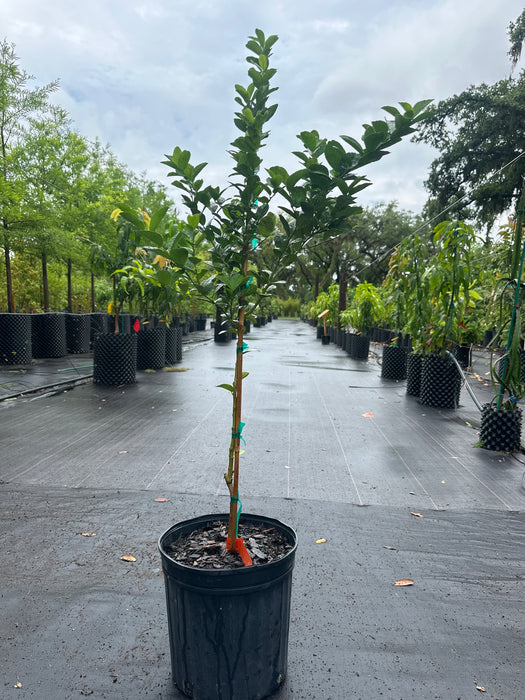
key lime potted plant LimeThe Key Lime tree (Citrus aurantiifolia), also known as the Mexican Lime or West Indian Lime, is a compact citrus variety celebrated for its intensely tart, aromatic fruit. Popular for culinary uses like pies and beverages, this evergreen tree is well suited for warm climates and container gardening. Below is a detailed guide to its characteristics and care requirements. Taste Key Limes are renowned for their sharp, tangy flavor with a distinctive
The Key Lime tree (Citrus aurantiifolia), also known as the Mexican Lime or West Indian Lime, is a compact citrus variety celebrated for its intensely tart, aromatic fruit. Popular for culinary uses like pies and beverages, this evergreen tree is well-suited for warm climates and container gardening. Below is a detailed guide to its characteristics and care requirements.Taste
Key Limes are renowned for their sharp, tangy flavor with a distinctive zesty and slightly floral note. The small, round fruits have thin, smooth, greenish-yellow skin and juicy, pale yellow flesh packed with seeds. Their bold acidity and aromatic quality make them a favorite for desserts, cocktails, and savory dishes, offering a more intense tartness than Persian limes.Best Growing Environment
Key Lime trees thrive in hot, tropical to subtropical climates with well-drained, slightly acidic soil (pH 5.5 to 6.5). They prefer high humidity and warm temperatures, ideally between 70F and 90F (21°C to 32°C). While adaptable to sandy or loamy soils, excellent drainage is crucial to prevent root rot. These trees benefit from a sheltered location to protect against strong winds, which can damage their delicate branches or fruit.Common Names
Key Lime trees are known by several names, reflecting their cultural and regional significance:
Key Lime trees typically grow to 6 to 12 feet tall with a spread of 6 to 8 feet when planted in the ground. Dwarf varieties, often grown in containers, reach 4 to 6 feet in height. Their naturally compact size and bushy growth make them ideal for small gardens, patios, or indoor cultivation with proper care.Growth Rate
Key Lime trees have a moderate growth rate, adding approximately 1 to 1.5 feet per year under optimal conditions. They establish quickly and can produce fruit within 1 to 3 years of planting, with consistent yields by 4 to 5 years. Adequate sunlight, water, and fertilization promote faster growth and fruiting.Sun Requirements
Key Lime trees require full sun, needing at least 6 to 8 hours of direct sunlight daily to support healthy growth and maximize fruit production. Insufficient sunlight can lead to reduced flowering, smaller fruit yields, or leggy growth. A south-facing, unshaded location is ideal for optimal performance.Cold Hardiness
Key Lime trees are among the least cold-hardy citrus varieties, thriving in USDA Zones 9b to 11. They can tolerate brief dips to 28F to 30F (-2°C to -1°C) but are highly susceptible to frost damage, especially when young. In cooler regions like Zone 9, they require winter protection (e.g., frost blankets or indoor relocation for potted trees) to survive cold snaps.Water Requirements
Key Lime trees have moderate water needs. Young trees should be watered 2 to 3 times per week, providing 1 to 2 inches of water to establish roots. Mature trees need deep watering once or twice weekly during the growing season (spring and summer) and every 10 to 14 days in fall and winter, depending on rainfall. Ensure soil dries slightly between waterings to avoid root rot, particularly in containers or heavy soils.Planting Guide
To plant a Key Lime tree:
Fertilize Key Lime trees to encourage vigorous growth and fruiting:
Key Limes are renowned for their sharp, tangy flavor with a distinctive zesty and slightly floral note. The small, round fruits have thin, smooth, greenish-yellow skin and juicy, pale yellow flesh packed with seeds. Their bold acidity and aromatic quality make them a favorite for desserts, cocktails, and savory dishes, offering a more intense tartness than Persian limes.Best Growing Environment
Key Lime trees thrive in hot, tropical to subtropical climates with well-drained, slightly acidic soil (pH 5.5 to 6.5). They prefer high humidity and warm temperatures, ideally between 70F and 90F (21°C to 32°C). While adaptable to sandy or loamy soils, excellent drainage is crucial to prevent root rot. These trees benefit from a sheltered location to protect against strong winds, which can damage their delicate branches or fruit.Common Names
Key Lime trees are known by several names, reflecting their cultural and regional significance:
- Mexican Lime
- West Indian Lime
- Bartender’s Lime
- Florida Key Lime
- Bilolo Lime
Key Lime trees typically grow to 6 to 12 feet tall with a spread of 6 to 8 feet when planted in the ground. Dwarf varieties, often grown in containers, reach 4 to 6 feet in height. Their naturally compact size and bushy growth make them ideal for small gardens, patios, or indoor cultivation with proper care.Growth Rate
Key Lime trees have a moderate growth rate, adding approximately 1 to 1.5 feet per year under optimal conditions. They establish quickly and can produce fruit within 1 to 3 years of planting, with consistent yields by 4 to 5 years. Adequate sunlight, water, and fertilization promote faster growth and fruiting.Sun Requirements
Key Lime trees require full sun, needing at least 6 to 8 hours of direct sunlight daily to support healthy growth and maximize fruit production. Insufficient sunlight can lead to reduced flowering, smaller fruit yields, or leggy growth. A south-facing, unshaded location is ideal for optimal performance.Cold Hardiness
Key Lime trees are among the least cold-hardy citrus varieties, thriving in USDA Zones 9b to 11. They can tolerate brief dips to 28F to 30F (-2°C to -1°C) but are highly susceptible to frost damage, especially when young. In cooler regions like Zone 9, they require winter protection (e.g., frost blankets or indoor relocation for potted trees) to survive cold snaps.Water Requirements
Key Lime trees have moderate water needs. Young trees should be watered 2 to 3 times per week, providing 1 to 2 inches of water to establish roots. Mature trees need deep watering once or twice weekly during the growing season (spring and summer) and every 10 to 14 days in fall and winter, depending on rainfall. Ensure soil dries slightly between waterings to avoid root rot, particularly in containers or heavy soils.Planting Guide
To plant a Key Lime tree:
- Select a sunny, well-drained site, at least 15 feet from structures or other trees.
- Dig a hole twice as wide and as deep as the root ball.
- Amend soil with compost or aged manure to improve drainage and fertility.
- Place the tree in the hole, ensuring the bud union (graft) is 2 to 4 inches above the soil line.
- Backfill with soil, tamp gently, and water deeply.
- Apply 2 to 3 inches of organic mulch (e.g., bark or wood chips), keeping it 6 inches from the trunk to prevent rot.
- For containers, use a pot at least 15 gallons with drainage holes and a well-draining, citrus-specific potting mix.
Fertilize Key Lime trees to encourage vigorous growth and fruiting:
- Early Spring (February/March): Apply a citrus-specific fertilizer (e.g., 6-6-6 or 8-8-8 NPK) as new growth emerges. Use 1 to 2 cups for young trees or 3 to 4 cups for mature trees, spread around the drip line and watered in thoroughly.
- Early Summer (May/June): Apply a second dose of the same fertilizer to support fruit development, using half the spring amount to prevent over-fertilization.
- Late Summer (August): Apply a light dose of a potassium-rich fertilizer (e.g., 5-5-10) to enhance fruit quality and prepare the tree for dormancy.
- Container Trees: Fertilize every 6 to 8 weeks during the growing season with a liquid citrus fertilizer (e.g., 5-1-3), diluted per package instructions. Avoid fertilizing in late fall or winter to prevent frost-sensitive growth.
Shipping Notes
- Free Standard Shipping on $100+ Orders to the USA.
- Except Preorder products are shipped in 48 hours.
- Delivery to the USA:
- Standard Shipping : 3-10 business days
- If time is of the essence, please consider selecting expedited delivery for faster service.
Exchange/Return Notes
- We offer a 30-day return/exchange service after receiving.
- Final sale items are not eligible for returns or exchanges.
- To process your return/exchange, please contact us at [email protected]
- Please click here for more details>>> Return & Exchange Policy
4.8 ★★★★★
Based on 1024 reviews
Sort
Product Reviews
★★★★★ 5
Puppy loves it! Great activity.
Size: For Medium Dog, Color: Grassgreen
My 5 month old puppy absolutely loves this toy. She spends hours chewing on it and squeaking. It’s heavy enough duty that she can’t bite the side parts off but she can munch on it at the back of her teeth. Great for cleaning teeth! She did bite some of the little nubs off but I expected some of that. It’s really the perfect hardness for her. Worth buying!
WAS THIS REVIEW HELPFUL?YesReportShare
Reviewed in the United States on April 30, 2026
★★★★★ 5
Incredibly durable
Size: For Medium Dog, Color: Grassgreen, Size: For Medium Dog, Color: Grassgreen
I bought this for my malinois mix when i got her last august. She's 10 months old and plays with this toy every day. This is such a durable toy! I strongly suggest this for everyone
WAS THIS REVIEW HELPFUL?YesReportShare
Reviewed in the United States on May 3, 2026
★★★★★ 4
He loves it! It will probably be destroyed soon though...
Size: For Medium Dog, Color: Green, Size: For Medium Dog, Color: Green
Update! This toy has definitely withstood my boy's daily chewing! It's lost some pieces for sure, but overall it's holding up and I'm very happy about it. The only downside is the squeaker is rather difficult to get to make noise. Will still definitely invest in another when this one finally goes.
Original review: I bought this for my handsome pitbull/boxer mix -- the boy loves to chew toys up! He's an aggressive chewer and he was bored with the current toys we had.
This toy is advertised for chewers, and I imagine if my boy wasn't such a great chewer, it would be amazing! We've had it three days now and he's already gotten a few big chunks off of it. It is definitely entertaining him though! He loves it and he seems like he's chewed himself into a daze. There is a squeaker in the bottom that seems difficult for him to get to so it doesn't squeak often -- when it does though he freaks and it's hilarious.
Overall I'm very happy with this purchase. My boy is a very aggressive chewer and I know pretty much anything we get him will be destroyed soon after he gets it. With how much he is enjoying this toy, I will be buying it again for him.
WAS THIS REVIEW HELPFUL?YesReportShare
Reviewed in the United States on November 18, 2023
★★★★★ 5
Outstanding Chew Toy
Size: For Large Dog, Color: Green
My dog is beyond an aggressive chewer. Toys are in pieces in minutes no matter what the manufacturer says. The squeaker? Forget it gone immediately. She has had this toy for two days and not only is it intact but she hasn’t been able to remove the squeaker!! Great product!!!
WAS THIS REVIEW HELPFUL?YesReportShare
Reviewed in the United States on March 27, 2026
★★★★★ 3
Be careful. Prices come off
Size: For Medium Dog, Color: Grassgreen
My dog loves it but it does come apart. He’s not a dog that destroys things but he bit prices off of it.
WAS THIS REVIEW HELPFUL?YesReportShare
Reviewed in the United States on February 13, 2026