Pay in installments of $6.34 with
 ,
,
 and
and

Shipping Estimate
USA
- USA
- CAN
- USA
- CAN
Ships within 48 hours · Estimated delivery Aug 8 - Aug 13
 Promo Codes Available:
For Your Every Summer RSVP, with Code: SUMMER15
Description
pink leaf house plant Hypoestes 'Pink'Hypoestes phyllostachya Pink Hypoestes phyllostachya Pink is a compact, bushy foliage plant with small oval green leaves heavily marked in soft pink. The pattern appears as spots, freckles and irregular patches across fresh growth. Branching stems respond well to light pinching, which keeps new shoots forming from several points instead of letting single stems stretch. This tender Acanthaceae plant can produce small lilac toned blooms on spikes.
Hypoestes phyllostachya ‘Pink’
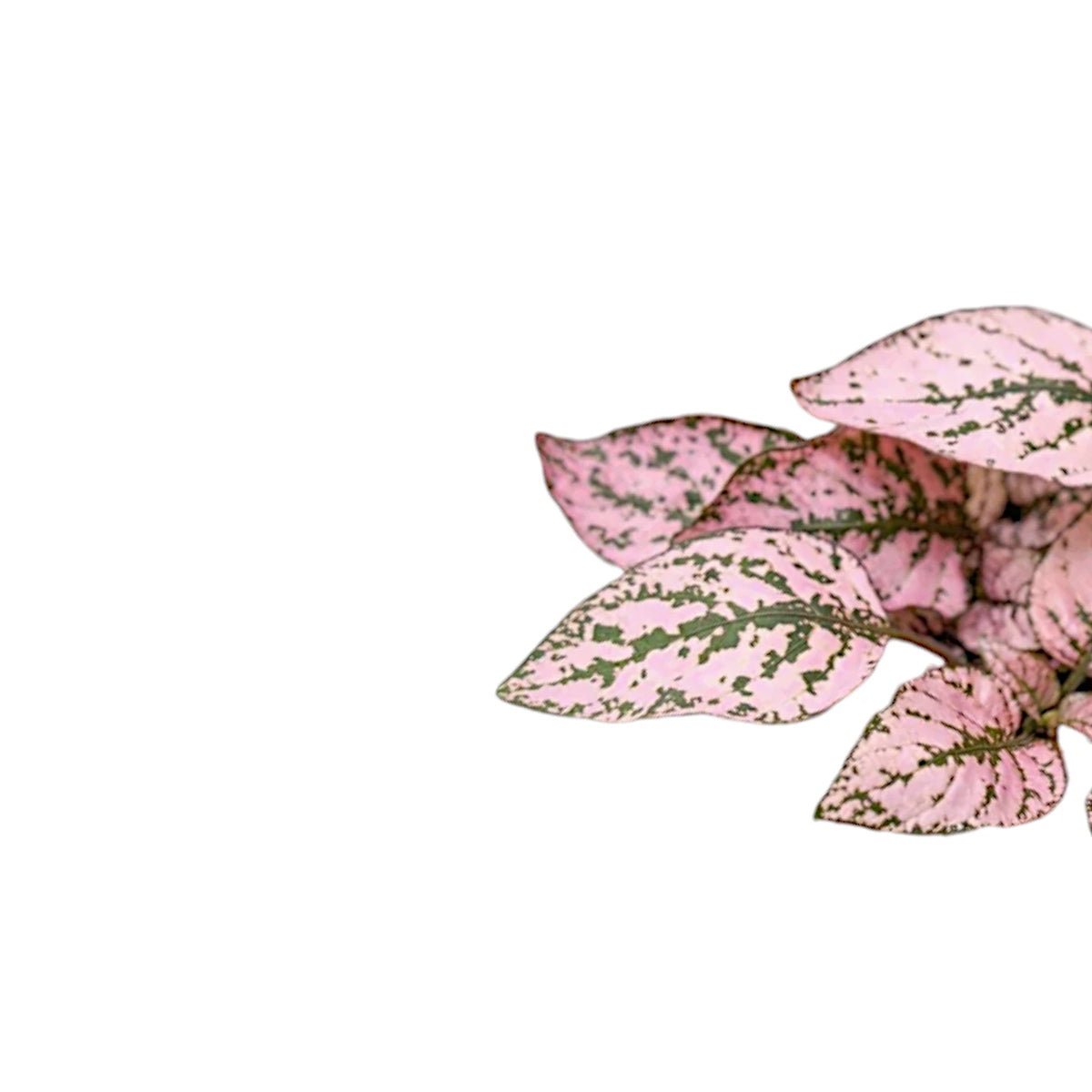
Hypoestes phyllostachya ‘Pink’ is a compact, bushy foliage plant with small oval green leaves heavily marked in soft pink. The pattern appears as spots, freckles and irregular patches across fresh growth. Branching stems respond well to light pinching, which keeps new shoots forming from several points instead of letting single stems stretch.
This tender Acanthaceae plant can produce small lilac-toned blooms on spikes. Indoor plants are usually maintained for dense, patterned growth, and removing flower spikes redirects growth back into new leaves and side shoots.
Pink-spotted leaves and branching stems
- Leaf pattern: Green leaves marked with pink spots, freckles and irregular colour patches.
- Growth habit: Bushy, branching stems that stay fuller with occasional tip pruning.
- Plant type: Tender herbaceous perennial to subshrub, commonly kept as a compact indoor foliage plant.
- Origin: The species is native to Madagascar and grows in wet tropical conditions.
- Pet safety: Listed by the ASPCA as non-toxic to cats and dogs.
Madagascar species background behind pink polka dot plant
Hypoestes phyllostachya belongs to Acanthaceae and is native to Madagascar, where the species grows as a wet-tropical subshrub. The leaves are oval, softly textured and carried on slender branching stems. Pink-marked plants show the contrast between green tissue and coloured spotting across each small leaf.
The thin leaves react quickly to dry substrate, hot sun and weak light. Hypoestes phyllostachya ‘Pink’ grows best with even moisture, warmth and bright filtered light. Strong direct sun can scorch the soft leaves, while weak light can make growth looser and the leaf pattern less clear.
Light, pruning and moisture for pink Hypoestes
- Light: Give bright, indirect light. Morning or very gentle filtered sun can be tolerated after acclimation, but hot midday sun can damage the leaves.
- Watering: Water when the upper 20–30% of the substrate has dried. The plant wilts quickly when too dry, but roots still need air around them.
- Substrate: Use a light, moisture-retentive houseplant mix with added perlite or pumice for drainage.
- Humidity: Moderate to higher humidity keeps soft new leaves expanding evenly when airflow remains good.
- Temperature: Keep warm, ideally around 18–27 °C. Avoid cold windowsills and sudden night drops.
- Pruning: Pinch stem tips above leaf nodes to encourage branching. Remove flower spikes after they appear to reduce stem stretch and keep the pot tidier.
- Feeding: Feed lightly during active growth. Too much fertiliser can push soft, stretched growth.
Wilting, leggy stems and crisp leaf edges
- Wilting: Usually caused by dry substrate. Water evenly, then check that the plant perks up within a few hours.
- Leggy stems: Often linked to low light or missed pruning. Move to brighter indirect light and pinch back long shoots.
- Crisp leaf edges: Can come from drying out, hot sun or low humidity. Check light intensity and watering rhythm.
- Pale or dull growth: Usually a sign of weak light, exhausted substrate or old stems. Refresh care and prune to promote new shoots.
- Powdery mildew risk: Crowded, damp leaves with poor airflow can develop fungal issues. Water the substrate and keep leaves from staying wet.
Refreshing an older pink polka dot plant
Hypoestes phyllostachya ‘Pink’ naturally ages into longer stems if left untrimmed. Regular small pinches create a fuller plant than one hard cut after the base has become bare. Stem cuttings root easily in a warm, bright setup, so trimmings can be used to refresh the pot.
Pet safety for Hypoestes phyllostachya
Hypoestes phyllostachya is listed as non-toxic to cats and dogs. Chewing any houseplant can still cause mild stomach upset, so keep it away from pets that repeatedly nibble leaves.
Hypoestes phyllostachya name background
Hypoestes is commonly explained from Greek roots meaning under and house, referring to floral bracts. The species epithet phyllostachya means with a leaf spike. The quoted colour name ‘Pink’ refers to the visible pink spotting of this product selection.
Hypoestes phyllostachya ‘Pink’ stays small, branches readily and carries soft pink-speckled leaves on fresh green growth.
Shipping Notes
- Free Standard Shipping on $100+ Orders to the USA.
- Except Preorder products are shipped in 48 hours.
- Delivery to the USA:
- Standard Shipping : 3-10 business days
- If time is of the essence, please consider selecting expedited delivery for faster service.
Exchange/Return Notes
- We offer a 30-day return/exchange service after receiving.
- Final sale items are not eligible for returns or exchanges.
- To process your return/exchange, please contact us at [email protected]
- Please click here for more details>>> Return & Exchange Policy