Pay in installments of $6.99 with
 ,
,
 and
and

Shipping Estimate
USA
- USA
- CAN
- USA
- CAN
Ships within 48 hours · Estimated delivery Aug 8 - Aug 13
 Promo Codes Available:
For Your Every Summer RSVP, with Code: SUMMER15
Description
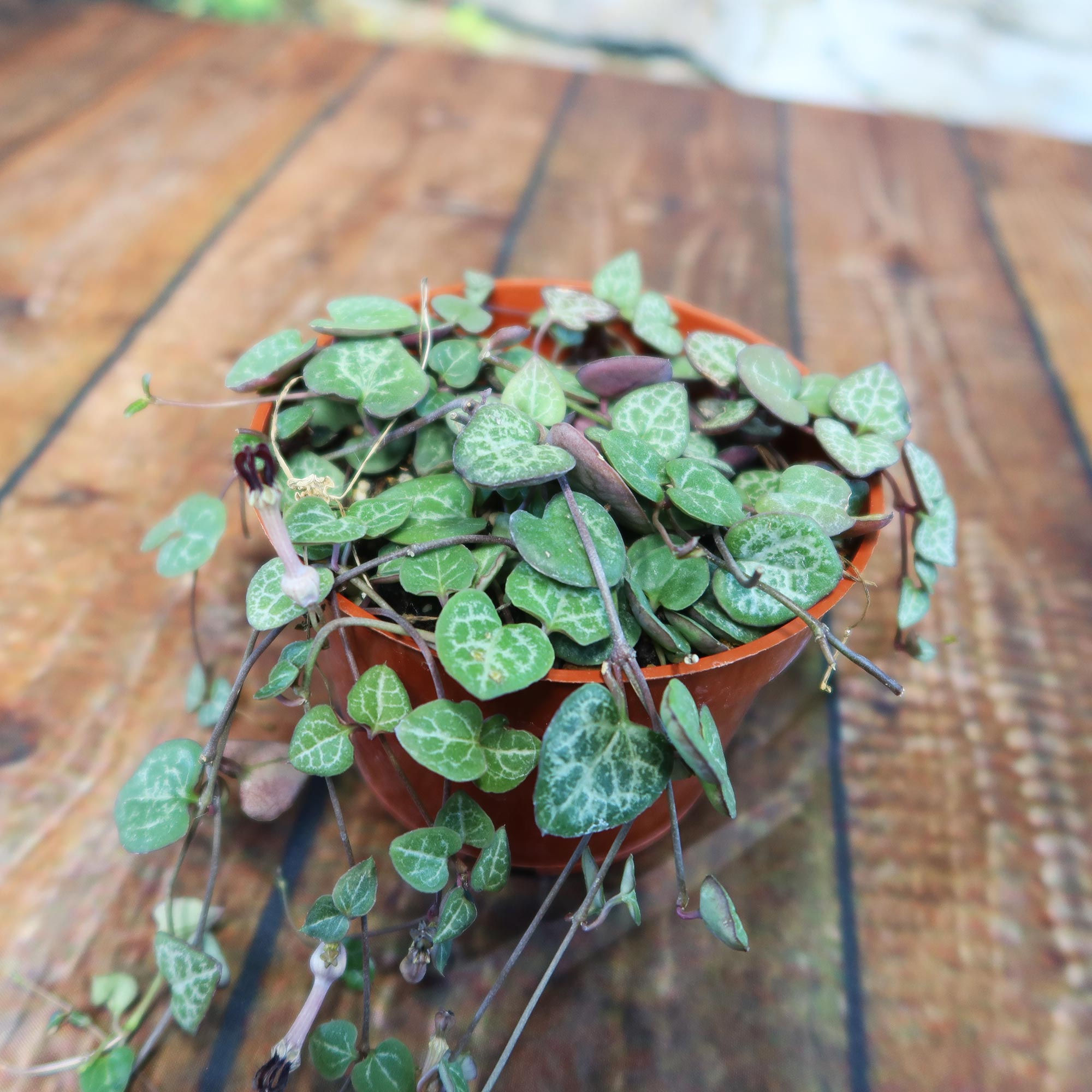
succulent heart shaped leaves String of Hearts Plant – Ceropegia woodii 4" PotIntroducing the string of hearts, known as Ceropegia woodii, which is a charming trailing succulent that belongs to the CeropegiaGo to search results page? q=ceropegia genus. The string of hearts plant has several other common names such as sweetheart vine, rosary vine, line of hearts, and chain of hearts. These names reflect the unique appearance of its leaves and growth habit. Native to South Africa, the string of hearts plant can be found in the
Introducing the string of hearts, known as Ceropegia woodii, which is a charming trailing succulent that belongs to the CeropegiaGo to search-results-page?q=ceropegia genus. The string of hearts plant has several other common names such as sweetheart vine, rosary vine, line of hearts, and chain of hearts. These names reflect the unique appearance of its leaves and growth habit.
Native to South Africa, the string of hearts plant can be found in the drier regions of the country. It's well-adapted to survive in arid conditions, making it a great choice for those who may forget to water their plants from time to time.
The name "string of hearts" comes from the shape and arrangement of its leaves.
This chain of heart plants features heart-shaped, fleshy, gray-green foliage with a striking marbled pattern and thin, string-like vines with a distinctive purple shade, which can be enhanced by periodic pruning.
The string of hearts plant is easy to care for, especially during warmer months, and can grow up to 12 feet long, making it a lovely addition to hanging baskets or trailing over shelves.
However, it goes dormant in cooler weather, slowing its growth.
The string of hearts flowers are small and tubular, with shades of pink and purple. They have an interesting mechanism to attract pollinators - small hairs inside the flower trap insects, which then have to crawl out through a small opening, ensuring they carry pollen with them.
For string of hearts propagation, you can propagate it through stem cuttings by snipping off a healthy stem and placing it in well-draining soil. The cuttings root easily and can develop into new plants within a few weeks. It's a fun and rewarding way to expand your collection or share the plant with friends.
Although the string of hearts is most commonly grown as a houseplant, it can also be grown as a sprawling ground cover, in rock gardens, or tumbling down walls in warm Mediterranean climates.
Additionally, its variegated variety, which is known as a variegated string of hearts is a unique plant with leaves in cream or white, alongside the usual silver-green color. This plant adds visual interest to any space and is highly sought after by plant enthusiasts.
Watering Needs
When it comes to watering your string of hearts plant, it's important to find the right balance. You don't want to overwater or underwater your chain of heart plant. When watering, give it a thorough soak, allowing the water to flow through the drainage holes. Then, let the top inch or so of the soil dry out before watering again. It's better to underwater than overwater, as the plant is more tolerant of dry conditions.
In the spring and summer, during the growing season, the string of hearts plant may need more frequent watering. As the weather cools down in fall and winter, you can reduce the watering frequency. Remember, it's always best to check the soil moisture level before watering to avoid overdoing it.
Additionally, keep an eye on the leaves. If they start to look wrinkled or droopy, it's a sign that the plant is thirsty. On the other hand, if the leaves turn yellow or feel mushy, it may be a sign of overwatering. Adjust your watering routine accordingly.
Light Requirements
When growing indoors, the string of hearts plant prefers bright, indirect light. It thrives in a spot with plenty of bright, filtered sunlight. You can place it near a north or east-facing window where it can receive gentle morning or afternoon sunlight. Avoid placing it in direct sunlight as it can scorch the delicate leaves.
If you don't have a well-lit spot indoors, you can also grow a string of hearts under fluorescent lights. Position the lights about 6-12 inches above the plant and keep them on for about 12-14 hours a day.
If you are growing them outdoors, your string of hearts can handle some direct sunlight, especially during the morning or late afternoon. However, it's still best to provide it with some shade during the hottest parts of the day to prevent leaf burn. A partially shaded area with dappled sunlight is ideal. You can place it on a patio, balcony, or in a garden where it can receive bright, indirect light. Just make sure to protect it from strong winds and extreme temperatures.
Remember, the string of hearts is a versatile plant that can adapt to different light conditions, but it generally prefers bright, indirect light. Keep an eye on your plant's leaves—if they start to look pale or bleached, they may be getting too much light, and if they become dark green, they may need more light.
Optimal Soil & Fertilizer Needs
The string of hearts plant prefers sandy, well-drained soil, as excess moisture can promote root and stem rot. Planet Desert specializes in succulents and has specialized succulent potting soil that includes an organic substrate with mycorrhizae to help with the growth of a healthy root system to help your succulents thrive. As an okay alternative, you can create your own potting mix by combining equal portions of perlite, coarse sand, and good natural potting soil.
When it comes to fertilizing your string of hearts, it doesn't require a lot of nutrients. During the growing season, typically spring, you can feed it with a balanced (5-10-5), water-soluble NPK fertilizer diluted to half the recommended strength. Apply the fertilizer once a year to provide a gentle boost of nutrients. However, during the dormant period in fall and winter, you can reduce or even stop fertilizing altogether. The string of hearts doesn't require as much energy during this time, so it's best to let it rest.
Remember, it's important not to over-fertilize your Ceropegia woodii, as this can lead to salt buildup in the soil, which can be harmful. Always follow the instructions on the fertilizer packaging and err on the side of caution.
Hardiness Zones & More
When growing indoors, the string of hearts plant thrives in average room temperatures ranging from 60°F to 75°F. It's important to keep it away from drafts and extreme temperature fluctuations. The string of hearts plant prefers moderate humidity levels, but it can tolerate lower humidity as well. You can provide a slightly more humid environment by misting the leaves occasionally or placing a tray with water near the plant. However, it's not a high-maintenance plant when it comes to humidity.
For outdoor cultivation, your Ceropegia woodii string of hearts plant is generally suited for USDA zones 10 to 12, which are characterized by mild to warm climates. These zones typically have minimum average temperatures ranging from 30°F to 60°F.
If you live in a colder climate, you can still enjoy the string of hearts as an outdoor plant during the warm summer months. However, it's important to bring it indoors or provide protection when temperatures drop below its tolerance level.
RELATED ARTICLE:
For full care instructions - Please See our article - String of Hearts Plant ‘How to Care and Grow’ for more details on how to take care of and discover interesting characteristics.
Final Thoughts
Overall, the string of hearts plant (Ceropegia woodie) is a delightful trailing succulent with heart-shaped leaves that cascade beautifully from long stems. It's native to South Africa and can tolerate drier conditions. With its tubular flowers and easy propagation, it's a popular choice for plant lovers. As for care, it prefers bright indirect light, well-draining soil, and moderate watering. Just remember not to overwater it. Additionally, the string of hearts plant is a low-maintenance and visually appealing addition to any plant collection.
Be sure to add a string of hearts plant to your home or garden and enjoy its low maintenance care, while admiring its impressive display year after year.
Shipping Notes
- Free Standard Shipping on $100+ Orders to the USA.
- Except Preorder products are shipped in 48 hours.
- Delivery to the USA:
- Standard Shipping : 3-10 business days
- If time is of the essence, please consider selecting expedited delivery for faster service.
Exchange/Return Notes
- We offer a 30-day return/exchange service after receiving.
- Final sale items are not eligible for returns or exchanges.
- To process your return/exchange, please contact us at [email protected]
- Please click here for more details>>> Return & Exchange Policy