SKU: 76609512033
pothos ovatifolius

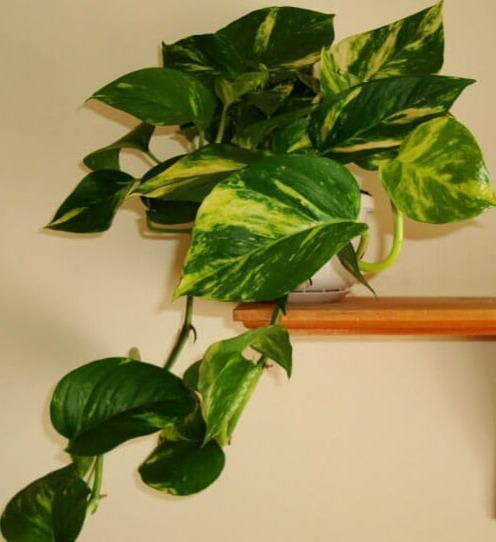
pothos ovatifolius Golden Pothos (Devil's Ivy) Epipremnum Aureum

Sale price$18.84 Regular price$20.93
Save 10%

Pay in installments of $5.23 with ShopPay, AfterPay and Klarna

Shipping Estimate
USA
  • USA
  • CAN

Ships within 48 hours · Estimated delivery Sep 3 - Sep 8

Promo Codes Available:

For Your Every Summer RSVP, with Code: SUMMER15

Description

pothos ovatifolius Golden Pothos (Devil's Ivy) Epipremnum AureumLooking for an easy, reliable indoor vine with classic variegation? Golden Pothos (Devils Ivy) is a forgiving, fast growing climber trailer with heart shaped leaves marbled in green, cream, and yellow. This starter arrives as a healthy 56" plant in a compact 2. 5" nursery potideal for desks, shelves, and small spaces. Why choose Golden Pothos? Attractive, variegated heart shaped foliage that suits home or office Adaptable to a wide light rangebest

Looking for an easy, reliable indoor vine with classic variegation? Golden Pothos (Devil’s Ivy) is a forgiving, fast-growing climber/trailer with heart-shaped leaves marbled in green, cream, and yellow. This starter arrives as a healthy 5–6" plant in a compact 2.5" nursery pot—ideal for desks, shelves, and small spaces.

Why choose Golden Pothos?

  • Attractive, variegated heart-shaped foliage that suits home or office
  • Adaptable to a wide light range—best color in bright, filtered light
  • Beginner-friendly and low maintenance; tolerant of occasional missed watering
  • Vigorous vine—trails or climbs with support (can reach 20–40 ft over time)
  • Ships as a 5–6" live plant in a 2.5" nursery pot

What you’ll receive

  • Botanical name: Epipremnum aureum
  • Plant size: approx. 5–6" tall (starter)
  • Pot size: 2.5" nursery pot with well-draining medium
  • Leaf size: typically 2×4" to 3×5"
  • Growing zone (outdoors): USDA 10–12; indoors nationwide

Planting & Care

  • Light: Bright, indirect light is ideal; tolerates medium to low light. Avoid harsh midday sun.
  • Water: Keep evenly moist for the first two weeks. Thereafter, water when the top 1–2" of soil is dry. Do not leave soil soggy.
  • Soil: Use a well-draining potting mix; add perlite or bark for extra aeration.
  • Temperature: 65–85°F (18–29°C). Protect from cold drafts.
  • Humidity: Average home humidity is fine; appreciates higher humidity.
  • Feeding: Apply balanced houseplant fertilizer in spring and summer; reduce in fall/winter.
  • Pruning/Training: Pinch tips for a bushier plant. Provide a moss pole or trellis to climb, or let vines trail.
  • Outdoor use: Suitable year-round only in Zones 10–12; acclimate in partial shade for one week.
  • Growth potential: Vines can exceed 20–40 ft in ideal conditions.
  • Pet safety: Not pet-safe if chewed (contains calcium oxalate). Keep away from pets and children.

FAQs

What is the growing zone?

Outdoors, Golden Pothos is perennial in USDA Zones 10–12. In cooler regions, grow it indoors year-round as a houseplant.

How much light does it need?

Bright, indirect light keeps variegation strong. It tolerates lower light but may grow more slowly and produce greener leaves.

How often should I water?

After the first two weeks, water when the top 1–2" of soil is dry. Avoid waterlogged soil and empty excess water from the saucer.

Can I train it to climb?

Yes. Guide vines onto a moss pole, trellis, or frame. Pinching tips encourages fuller growth.

Where to buy Golden Pothos for sale?

At Seeds World, multiple verified sellers offer healthy Golden Pothos with fast U.S. shipping. Compare options on the product page and choose the seller that suits you.

Shipping Notes
  • Free Standard Shipping on $100+ Orders to the USA.
  • Except Preorder products are shipped in 48 hours.
  • Delivery to the USA:
  1. Standard Shipping : 3-10 business days
  • If time is of the essence, please consider selecting expedited delivery for faster service.
Exchange/Return Notes
  • We offer a 30-day return/exchange service after receiving.
  • Final sale items are not eligible for returns or exchanges.
  • To process your return/exchange, please contact us at [email protected]
  • Please click here for more details>>> Return & Exchange Policy
SKU: 76609512033

Discover Niche Categories That Outsell pothos ovatifolius

Top-Converting Item to Boost Your Average Order

4.3 ★★★★★
Based on 9 reviews
Sort
Highest Rating
Newest First
Oldest First
Product Reviews
L
Verified Purchase
Larry Dieli
West Palm Beach, US
★★★★★ 5
First Aid for Writers Seeking to Tell Stories
Format: Paperback
This is such a wonderful tool for anyone who has a yearning to write fiction. Gardner's voice is challenging, nurturing and extremely informative for those who have a passion to jump on the path for mastering the art of story telling. He can be curt and dismissive for those who get 'lazy,' even taking to task some very skilled and famous writer's more feeble attempts (Hello, Mr. Faulkner). Gardener is a strong advocate of W.W. Watt's masterpiece for beginning writer's "An American Rhetoric," a book that is out of print , but can be found in many larger public libraries.
WAS THIS REVIEW HELPFUL?YesReportShare
Reviewed in the United States on March 31, 2016
M
Verified Purchase
Molly
Fort Morgan, US
★★★★★ 5
” shows what it is like to be young and irresponsible
Format: Paperback
This book offers relatable poems about youth all the way up to adulthood. No matter the readers’ age, they can find something relatable in this book. One of the first poems, “River Gods,” shows what it is like to be young and irresponsible. This poem describes an instance where two young guys are walking on top of a railroad trestle, which is above the Tennessee River. “Since no one wants to cheat a foolish death alone, / I convinced my friend to leave his satchel on the bank / and we stepped out a hundred feet over the night” (“River Gods,” 13-15). This stanza shows that the two guys knew that what they were doing was dangerous and potentially deadly. This poem in comparison with other poems in this book really demonstrates recklessness in youth. While in that poem readers see the recklessness associated with youth, “Piano Key,” a later poem in the book, provides an insight into a more serious adulthood. In this poem, the narrator is dealing with the memories associated with his grandmother’s piano. I plunk my way left to right, up from the deep-forest Bass notes toward the bright high registers, Just past middle C, a dead spot I remember as a child, A crucial note that will not sing. (“Piano Key,” 13-16) The narrator does not provide much insight into his emotions, besides the fact the narrator is remembering something from when he was a child, but there is a sense of longing created because his grandmother is likely dead, which is why he is reminiscing about the piano. Going from “River Gods” to “Piano Key” provides different narrators. The first narrator does not care about his future; he only cares about what he is doing right at that moment. The narrator in “Piano Key” is thinking about the future and the past. If these narrators are the same, readers can definitely see how the narrator has changed and grown up. In “Digging the Pond,” there is a notable shift where the narrator, a young teenager, notices that him and his dad are different. He can name every species of tree, wild root, the compounds of the soil in every field, and knows that I stood off to the side too often to learn what he was born knowing. (“Digging the Pond,” 21-24) In this part of the poem, the narrator is realizing that he does not know something that his dad knows really well. When a child notices that they are different than their parent, it is usually a significant moment in that child’s life. The narrator in this poem seems to be realizing that he is growing up and changing; he knows he is no longer doing everything his parents are doing or enjoying it. Tennessee Landscape with Blighted Pine is a great book for poems about growing up and changing. This book grows with readers as the readers grow. I highly recommend this book.
WAS THIS REVIEW HELPFUL?YesReportShare
Reviewed in the United States on November 30, 2017
L
Verified Purchase
L. Moyse
Natrona Heights, US
★★★★★ 5
A fine performance
Format: Paperback
You see an old pocket knife on the cover, maybe a Case; it may have even belonged to Jesse Graves, but he has certainly used it in sculpting his poetry. "Tennessee Landscape" is pure plain speech, and all the more evocative for it. Graves uses language not to shock, not incite and not to transgress; he uses it to bring home simple and time worn truths that never go away. In the poem that is the book's title, Graves recounts his family history and ends telling us "The dead move through us at their will, their voices chime/just beyond our hearing...alone in the field, and never alone." He pays homage to a farming tool"(Elegy for a Hay Rake), not with a tone of jaundiced cynicism, speaking to it instead in a voice filled with thanks and appreciation, as if the hay rake, too,knew how worthwhile its job had been. The second part of the volume expands Graves' geography from East Tennessee to New Orleans, North Carolina, points beyond, and the cast of subjects becomes a little broader as well, but the language remains firm and precise. "The Night Cafe: North Rendon, New Orleans": diction so perfect I feel I was there that night too. "My Sister at Sea": likely my favorite here. It feels personal, a short glimpse into a private heart; the glimpse is snatched away in a hurry but not before Graves tells us "...wishing I could bring/ you to this shore...Make your illness a small boat we could burn/Sailing out in ashes on the current." Whether it is a landscape, a hay rake, a bar or a loved one, Jesse Graves is a poet of things that last, one who writes quiet confessions with confidence in a spare quiet and sure voice. Very highly recommend this book.
WAS THIS REVIEW HELPFUL?YesReportShare
Reviewed in the United States on February 24, 2013
T
Thomas A. Holmes
Birmingham, US
★★★★★ 5
Fine Contemporary Poetry--Just Happens to Be Appalachian
Format: Paperback
The poems in Jesse Graves' TENNESSEE LANDSCAPE WITH BLIGHTED PINE express an indebtedness to a way of life that we contemporary Appalachians have watched transform at an accelerated pace over the past few decades, as we see the beloved old ways of our culture adapt to the demands of a society marked with the pervasiveness of media, the incursion of corporate demands, and the poignant recognition that as much as family prepares us to face the world outside our community, the impact of that world can blur the impressions our homes have made on us. Graves' work approaches these themes from various directions, as a son looking to the legacy of his family, as a youth and young man balancing education--both formal and that gleaned from personal experience--and as a family man weighing what he shares and offers in embodying those values. In this consistently fine volume, it is difficult to select favorites, but there are "River Gods," where an inebriated student and his companion cross the high railway trestle over the Tennessee River in Knoxville, Tennessee, "Deep Corner," where the speaker contemplates how his life has turned out differently than his brother's, "Mother's Milk," where the speaker weighs how much his mother has contributed to his life (including, sweetly, "an ear for slightly off-pitch singing"), and "Digging the Pond," where the speaker and his father silently acknowledge that the son will not preserve all his father's values: . . . I stood off to the side too often to learn what he was born knowing. The doing and the undoing. I can find in his face what he reads about the future in the tea-colored water, his eyes and mine trying to avoid it. Graves' love for these gifts, those accepted and those only acknowledged, resonates throughout TENNESSEE LANDSCAPE WITH BLIGHTED PINE. Graves' appreciation for lyric poetry, his talent for finding the expressiveness of everyday language, and his offering scenes with great depth of meaning and feeling make this collection memorable, worthy of high recommendation.
WAS THIS REVIEW HELPFUL?YesReportShare
Reviewed in the United States on December 30, 2011
J
jwriter
Chelsea, US
★★★★★ 5
Extraordinary Journey
Format: Paperback
Jesse Graves conducts the reader on an intimate journey from childhood to manhood. Rooted deep in the rich red clay of East Tennessee, the narrative provides fresh insights about the ties of land and family. "Johnson's Ground" describes an annual homecoming at the family cemetery: "they never let us go, even the ones/Laid under before our births continue to make their claims." The poems express both nostalgia for the past as well as forward-looking hopes for a fresh life in the future. Daughter, Chloe often becomes a bridge from present to past as in "Water Washing Away": "A fair price for the vision of a girl/ who has warped the ancient spell of time,/ who has turned back my eyes." Tennessee Landscape with Blighted Pine is an enchanting read for poet and non-poet alike.
WAS THIS REVIEW HELPFUL?YesReportShare
Reviewed in the United States on February 10, 2013

recommand products