SKU: 8268295306
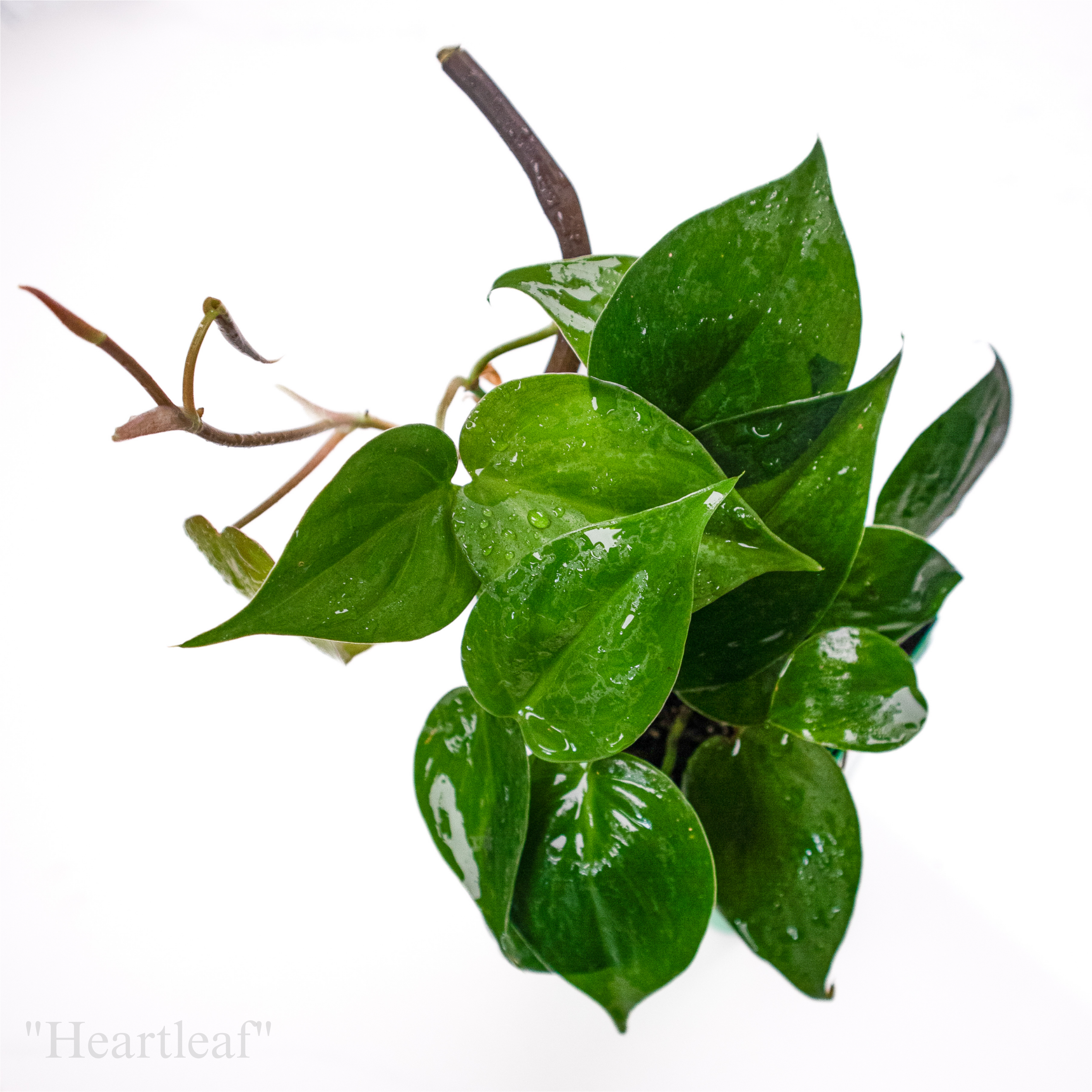
philodendron heartleaf plant

philodendron heartleaf plant Philodendron hederaceum “Heartleaf”

Sale price$20.43 Regular price$22.70
Save 10%

Pay in installments of $5.67 with ShopPay, AfterPay and Klarna

Shipping Estimate
USA
  • USA
  • CAN

Ships within 48 hours · Estimated delivery Aug 13 - Aug 18

Promo Codes Available:

For Your Every Summer RSVP, with Code: SUMMER15

Description

philodendron heartleaf plant Philodendron hederaceum “Heartleaf”The Heartleaf Philodendron (Philodendron hederaceum) is a popular, low maintenance vining plant known for its glossy, heart shaped, solid green leaves. It is perfect for adding a lush, tropical feel to any space and makes a fantastic addition to bioactive setups for terrariums, vivariums, or paludariums due to its easy care nature and ability to thrive in various conditions. Care Instructions LIGHT. Prefers bright, indirect light but can tolerate

The Heartleaf Philodendron (Philodendron hederaceum) is a popular, low-maintenance vining plant known for its glossy, heart-shaped, solid green leaves. It is perfect for adding a lush, tropical feel to any space and makes a fantastic addition to bioactive setups for terrariums, vivariums, or paludariums due to its easy-care nature and ability to thrive in various conditions.

Care Instructions

LIGHT. Prefers bright, indirect light but can tolerate lower light levels. However, its growth may slow, and the leaves might lose some of their vibrancy in low light. In a bioactive setup, place it near a light source but avoid direct sunlight, which could scorch the leaves.

SOIL. A well-draining, loose soil mix is ideal. A blend of coconut coir, perlite, and orchid bark will help maintain aeration and proper drainage, which is essential for healthy root growth. In a bioactive environment, this mix will also allow decomposers like isopods and springtails to thrive by breaking down organic matter and enriching the substrate.

WATERING. Keep the soil consistently moist but not soggy. Let the top 1-2 inches dry out between waterings. In bioactive setups, the decomposers (springtails and isopods) will help balance moisture levels by consuming excess organic matter, which helps prevent over-watering. Avoid leaving the soil overly wet for extended periods.

HUMIDITY. Being a tropical plant, the Heartleaf Philodendron thrives in high humidity, making it ideal for bioactive setups. Aim to keep humidity levels above 60% to encourage healthy, lush growth.

TEMPS. Prefers warm temperatures between 65°F and 80°F (18°C to 27°C). Avoid placing it in drafty areas or areas with cold temperatures to prevent stress.

FERTILIZATION. During the growing season (spring and summer), feed with a balanced liquid fertilizer every 4-6 weeks. You can also use our dissolvable Mealworm Frass, produced by our mealworm colonies and enriched with a variety of vegetation, as a nutrient-pumped fertilizer. In the winter, reduce feeding as growth slows down.

Cohabitation with Bioactive Organisms

ISOPODS. Isopods are ideal for a Heartleaf Philodendron setup. These decomposers will break down dead plant matter, fallen leaves, and uneaten food, helping to maintain soil health and nutrient levels. The plant also benefits from the organic material provided by the isopods.

SPRINGTAILS. Springtails are great companions for Heartleaf Philodendron in bioactive setups. They help maintain soil health by consuming mold, fungi, and decaying organic matter. Their constant activity helps keep the environment clean while benefiting the plant by breaking down organic matter into nutrients.

Soil and Maintenance Tips

SUBSTRATE. A loose, well-draining mix is crucial. Use a combination of coconut coir, orchid bark, and perlite to allow for root aeration while ensuring that decomposers have the proper environment to thrive. You can also add a layer of activated charcoal at the bottom for better filtration and odor control.

HUMIDITY CONTROL. If needed, increase humidity by incorporating a shallow water dish or misting lightly once a day. The springtails and isopods will help keep the soil moist, and your plant will benefit from the additional humidity.

TRIMMING. Heartleaf Philodendron grows quickly and can be easily trimmed to maintain a neat appearance or encourage fuller growth. Periodically trim the vines to keep them in shape. You can propagate cuttings in water or soil, which is a great way to expand your collection.

PEST CONTROL. This plant is generally pest-resistant, but in a bioactive environment, springtails and isopods will help control minor pests such as mealybugs or aphids by feeding on their eggs or larvae.


With its vibrant, glossy, heart-shaped leaves, the Heartleaf Philodendron is a beautiful and resilient addition to any bioactive setup. It thrives alongside decomposers like isopods and springtails, which contribute to a healthy, nutrient-pumped environment. By mimicking its tropical habitat with proper humidity, light, and well-draining soil, you’ll create a thriving ecosystem where both your plants and bioactive creatures can flourish.

Shipping Notes
  • Free Standard Shipping on $100+ Orders to the USA.
  • Except Preorder products are shipped in 48 hours.
  • Delivery to the USA:
  1. Standard Shipping : 3-10 business days
  • If time is of the essence, please consider selecting expedited delivery for faster service.
Exchange/Return Notes
  • We offer a 30-day return/exchange service after receiving.
  • Final sale items are not eligible for returns or exchanges.
  • To process your return/exchange, please contact us at [email protected]
  • Please click here for more details>>> Return & Exchange Policy
SKU: 8268295306

Discover Niche Categories That Outsell philodendron heartleaf plant

Top-Converting Item to Boost Your Average Order

4.2 ★★★★★
Based on 14 reviews
Sort
Highest Rating
Newest First
Oldest First
Product Reviews
V
Verified Purchase
Victor Vögel
Draper, US
★★★★★ 5
Mesmerizing; shows the butterfly effect in action
Format: Paperback
Charles Mann’s “1493” is about globalization and the Homogenocene epoch. Unlike the plenitude of other recent books about globalization, however, “1493” is about biological globalization rather than economic globalization. The book traces the results of the Columbian Exchange, with chapters devoted to tobacco, the earthworm, malaria, silver, potatoes and sweet potatoes, guano and rubber. The book is in four parts, and is written in an accessible, non-academic style. I found the first three parts of the book, which cover the impact of the Columbian Exchange on the Atlantic, the Pacific and Europe, respectively, to be captivating. These parts of the book demonstrated the fascinating interconnectedness of all things in a globalized society (in other words the “butterfly effect”) – for example, how transporting the sweet potato to Western China led to population migrations from Eastern to Western China, deforestation and overflowing of the Yellow River. The general result of such biological globalization is the creation of the Homogenocene epoch, a term which Mann uses to describe the biological homogenization that has replaced biological diversity since the time of Columbus. In the first three parts of the book, Mann demonstrates how history, biology and chemistry are all interrelated, and how today’s world continues to be influenced by the Columbian Exchange. I found the last part of the book to be less impressive than the first three parts. Part Four is called “Africa in the World,” but confusingly it is about South America, not Africa. Parts of it read more like travel writing than history. Still, the book deserves five stars for the first three thrilling parts, which successfully trace the mesmerizing history of various everyday biological substances.
WAS THIS REVIEW HELPFUL?YesReportShare
Reviewed in the United States on December 31, 2017
J
Verified Purchase
Jamie Barnett
San Leandro, US
★★★★★ 3
There were periods I was on the edge of my seat. There were times I just wanted to the book to end.
Format: Paperback
I recently started reading at 40 years old to make up for a lot of wasted time and missed education. This is a very informative read, but that said, I had a hard time staying focused sometimes. He gets into a lot of the science pertaining to plagues, epidemics etc which is interesting and I am reluctant to list science as a con as I did learn, but frequently found myself scrolling through several pages just to get the main idea behind the historical part. There were periods that I was on the edge of my seat and there were times I just wanted to the book to end. 1491 was similar. Both useful books, but a bit challenging to follow along especially if you are only reading small amounts at at time like on break at work etc. It jumps around from S. America, N America and China all through the book. I would have preferred that each region be separated. I get that he had his reasons. I am glad I read both books, but I probably should have gone with more of an overview vs the more in-depth content in this. I do not regret reading both books however, and recommend if you already have a good knowledge of this subject and are just trying to learn a little more. I found the information about the slave trade, the most interesting and wasn't aware that the majority of slaves shipped over from Africa went to Mesoamerica and the Caribbean. I also did not realize that plague and sickness really enabled use of African slaves as they were not prone to malaria like the Europeans. There is also some good info about ancient China and also sliver and mercury mining with South American Indians which made the book worth it for me.
WAS THIS REVIEW HELPFUL?YesReportShare
Reviewed in the United States on March 7, 2023
R
Verified Purchase
R. D. Morris
New York, US
★★★★★ 4
If you liked 1491, you'll like 1493
Format: Hardcover
I originally read the first edition of 1491, which I loved. So that's why I ordered 1493. At about the same time 1493 arrived, I found out there was a new, revised version of 1491, which my husband bought from another source. So I re-read it at the same time I read 1493 for the first time. The reason I mention this is that there are some similarities between the revised version of 1491 and the newer book, 1493 - actually some repeated material. That's ok, as the author is taking the premise of 1491 another step further. Essentially, 1491 focuses on what new studies show was really going on in the Western Hemisphere before Columbus' arrival, where native peoples were far more numerous and had more advanced cultures than Europeans previously thought possible. In 1493, Charles Mann shows not only how Columbus and Europeans changed the New World, but how the "Columbian exchange" wrought great changes in the other direction as well. And he pulls in the further exchanges with Asia, to show the trans-global linkages of the phenomenon. So, some of his exposition gets a little repetitious, but overall he's an engaging writer, and for those of us who love the history of cultural exchanges and first contact, these books are mandatory reading!
WAS THIS REVIEW HELPFUL?YesReportShare
Reviewed in the United States on October 5, 2011
I
Verified Purchase
Ian T
Boise, US
★★★★★ 5
Truly worth every penny. DS2r?
Format: Hardcover
Truly incredible documentation of the thoughtful work of a handful of artists. I'm hoping that by supporting this book we may inch ourselves closer to a Dead Space 2 remake lead by Motive studio. This book is a must for fans or the game and horror in general. Well made, good quality images, lore drops, developer letters. Its fantastic!
WAS THIS REVIEW HELPFUL?YesReportShare
Reviewed in the United States on May 15, 2025
A
Verified Purchase
Amazon Customer
Grantham, US
★★★★★ 5
Nice art
Format: Hardcover
The art is good and I love the comparisons to the og
WAS THIS REVIEW HELPFUL?YesReportShare
Reviewed in the United States on October 12, 2025

recommand products