Pay in installments of $6.62 with
 ,
,
 and
and

Shipping Estimate
USA
- USA
- CAN
- USA
- CAN
Ships within 48 hours · Estimated delivery Aug 10 - Aug 15
 Promo Codes Available:
For Your Every Summer RSVP, with Code: SUMMER15
Description
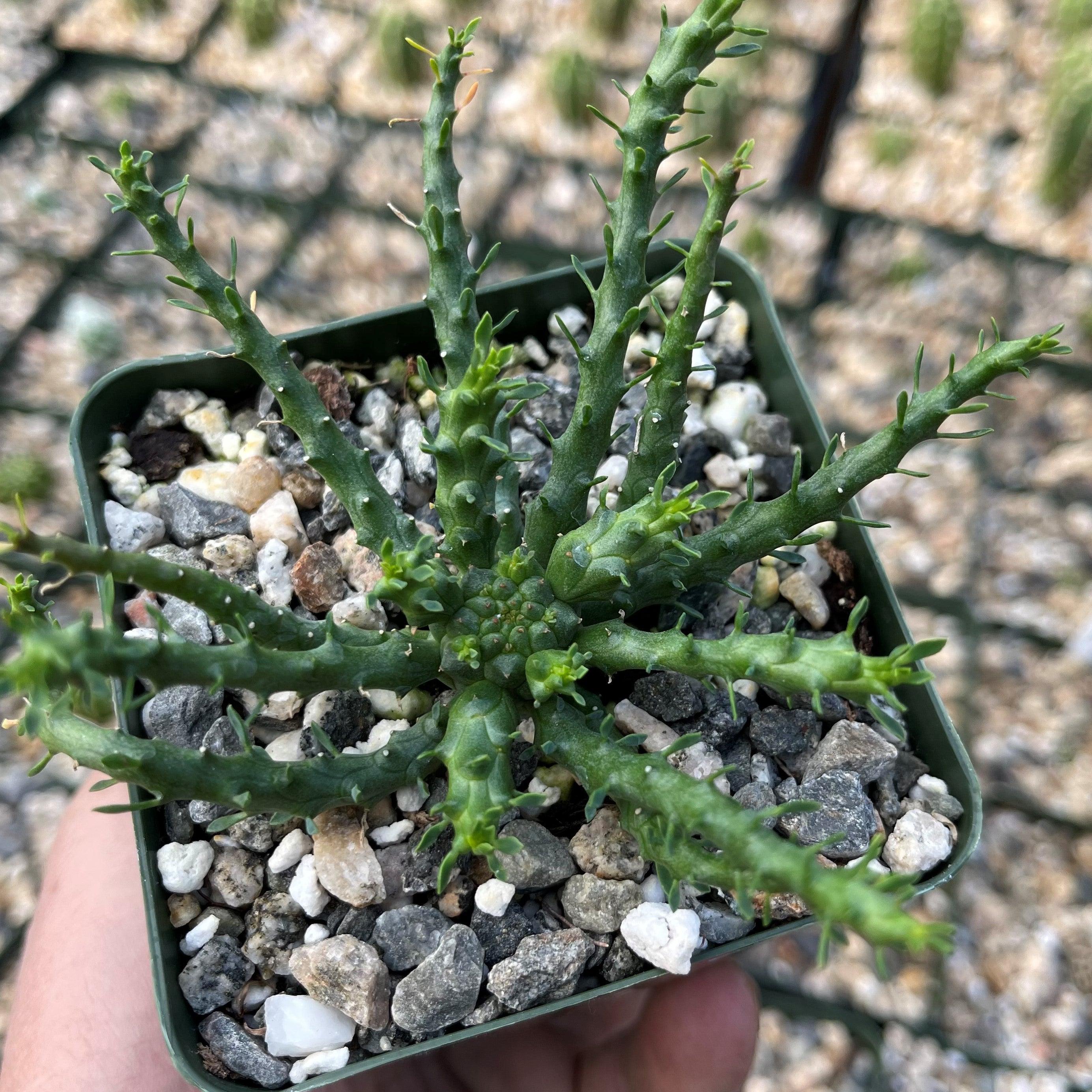
medusa succulent Medusa Head Plant 'Euphorbia flanaganii' 7 GalIntroducing the Medusa Head, also known as 'Euphorbia flanaganii', a beautiful member of the EuphorbiaGo to Euphorbia genus! In ancient Greek mythology, Medusa became a Gorgon, a female monster with snakes for hair and a gaze that could turn people into stone. The plant's unique appearance, with its twisting, snake like stems, and tufts of green leaves at the top, is said to resemble the head of Medusa, who was known for her hair made of snakes. Its
Introducing the Medusa Head, also known as 'Euphorbia flanaganii', a beautiful member of the EuphorbiaGo to Euphorbia genus!
In ancient Greek mythology, Medusa became a Gorgon, a female monster with snakes for hair and a gaze that could turn people into stone. The plant's unique appearance, with its twisting, snake-like stems, and tufts of green leaves at the top, is said to resemble the head of Medusa, who was known for her hair made of snakes.
Its snake-like branches can spread up to 16 inches in diameter, giving this stunning medusa head succulent an almost pan-like shape.
When it comes to flowers, clusters of yellow cyathium appear in the center of the plant at the tip of the stem in the summer; it's like having a tiny sun in your own home. This is definitely its most beautiful feature.
Just wait until late winter or early spring, when tiny, brilliant yellow flowers cover this Euphorbia from head to toe.
With time, new pups will appear at the tips of its tendrils and form their own caudices - it's a never-ending cycle of bizarre beauty! This weird and wild succulent will continue to amaze as it grows into an even larger Medusa-like creation.
This medusa head is exceptionally easy to propagate by divisions and cuttings so you can quickly grow your collection with just a few simple steps.
When and How to Water Your Medusa Plant
The Medusa head Euphorbia is a succulent that definitely stands out from the crowd! Unlike its desert-dwelling counterparts, this little guy doesn't do well with extended periods of drought. If you're lucky enough to be the proud owner of one of these unique plants, make sure to water it weekly during those hot summer months.
During the growing season, typically spring and summer, water thoroughly when the top inch of soil is dry. In winter, reduce watering to prevent root rot.
When the soil is dry several inches below the surface, don't hesitate to give it a good soak. And get this - when your Medusa Head is feeling parched and in need of some hydration, it'll actually start curling its arms towards the center as if to say, "I'm thirsty!" So cute and clever!
Just make sure not to overdo it and let them sit in standing water, or else they could develop root rot.
Light Requirements - Where to Place Your Euphorbia flanaganii
When growing indoors, it thrives in bright, indirect light for at least 4-6 hours daily. Place it near a window where it can receive plenty of sunlight without being directly exposed to harsh rays.
Without enough light, photosynthesis rates drop, branches become thin, colors appear dull, there is an unhealthy look to the plant, and growth is stunted.
For outdoor cultivation, the medusa head prefers full sun to partial shade. To ensure that your succulent thrives, provide 6-8 hours of bright light for healthy growth.
Remember, learn to adjust your Medusa euphorbia to avoid burns if the location where you have the plant is exposed to direct sunlight.
Optimal Soil & Fertilizer Needs
The Euphorbia head medusa prefers very airy, porous, nutrient-rich soil with a pH of 5.5 - 6.7. Succulents require fast-draining soil that dries completely between waterings. Your soil must have a sandy texture and a low water-holding capacity, just like desert soil. Ideally, you want to use our specialized succulent potting mix that contains organic mycorrhizae to promote the development of a strong root system that helps your Euphorbia succulent to thrive.
When it comes to fertilizing your medusas head plant, it only needs a small amount of fertilizer applied once a year in spring. Succulent prefers a fertilizer with lower doses of NPK, with a maximum ratio of 5-10-5 that is higher in phosphorus than nitrogen.
Hardiness Zones & More
When growing indoors, the Medusa head enjoys hot temperatures. They prefer constant temperatures above 65-70 degrees Fahrenheit and can tolerate triple digits in the summer, so don't worry if your succulent gets too hot.
It prefers moderate humidity, so misting the plant occasionally or placing a humidifier nearby can help maintain its health and appearance. Avoid placing the plant near drafty windows or heating vents, as extreme temperature fluctuations can stress the plant.
For outdoor cultivation, the medusa head grows best in USDA zones 9 - 11. It cannot handle frost, cold, or freezing temperatures, so make sure it doesn't get below 30 degrees F in its environment.
Final Thoughts
Overall, the Medusa Head Plant (Euphorbia flanaganii) is a unique succulent with thick, cylindrical stems that resemble the snakes on Medusa's head. This plant thrives in bright, indirect light and requires well-draining soil to prevent root rot. Additionally, it is important to avoid overwatering and allow the soil to dry out between waterings to keep this striking plant healthy and happy. Be sure to add Euphorbia flanaganii to your collection today and elevate the beauty of your home or garden with this stunning-looking plant.
Shipping Notes
- Free Standard Shipping on $100+ Orders to the USA.
- Except Preorder products are shipped in 48 hours.
- Delivery to the USA:
- Standard Shipping : 3-10 business days
- If time is of the essence, please consider selecting expedited delivery for faster service.
Exchange/Return Notes
- We offer a 30-day return/exchange service after receiving.
- Final sale items are not eligible for returns or exchanges.
- To process your return/exchange, please contact us at [email protected]
- Please click here for more details>>> Return & Exchange Policy