Pay in installments of $5.32 with
 ,
,
 and
and

Shipping Estimate
USA
- USA
- CAN
- USA
- CAN
Ships within 48 hours · Estimated delivery Aug 8 - Aug 13
 Promo Codes Available:
For Your Every Summer RSVP, with Code: SUMMER15
Description
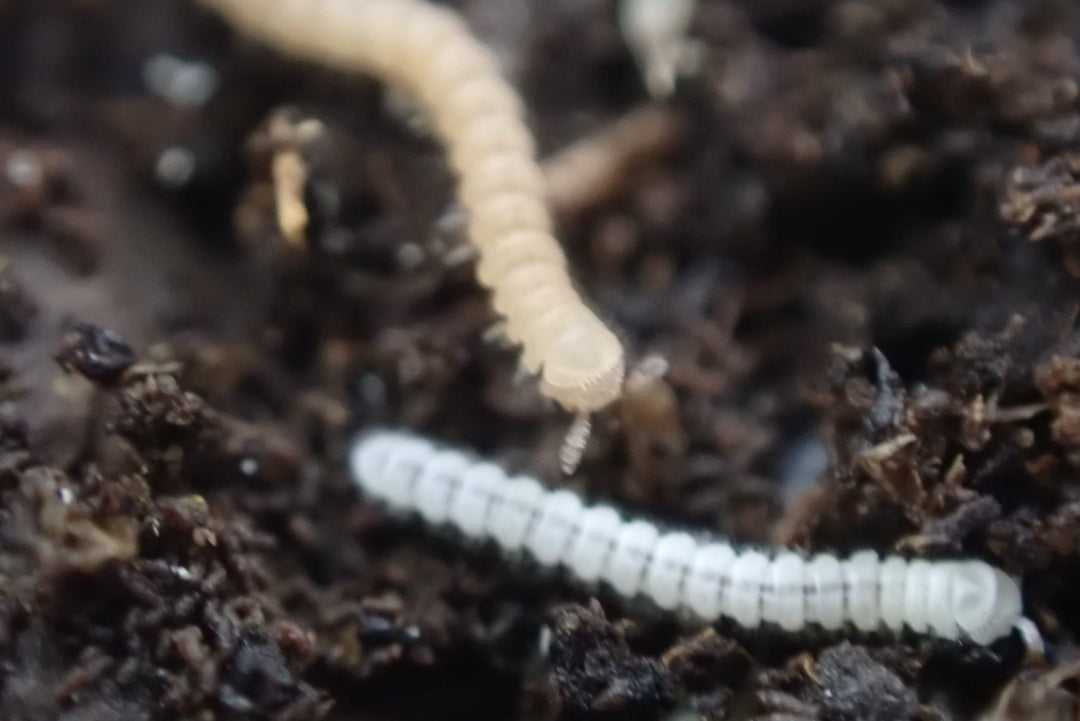
white millipedes in potted plants Tiny Millipede (Polydesmus sp.) for Sale UK | Isopods For Sale UKTiny Millipedes are properly different from most species in our millipede catalogue small flat backed millipedes in the genus Polydesmus, representing the order Polydesmida (flat backed millipedes) rather than the cylindrical species most hobby keepers are familiar with. At 2025 mm typical adult size, these are genuinely tiny compared to species like our Amber Millipede or the African Giants. But what they lack in size, they make up for in role:
Tiny Millipedes are properly different from most species in our millipede catalogue — small flat-backed millipedes in the genus Polydesmus, representing the order Polydesmida (flat-backed millipedes) rather than the cylindrical species most hobby keepers are familiar with. At 20–25 mm typical adult size, these are genuinely tiny compared to species like our Amber Millipede or the African Giants. But what they lack in size, they make up for in role: Polydesmus species are properly useful detritivores in bioactive setups, and they represent a different taxonomic order from our main millipede lineup, making them a worthwhile addition for collectors who want order-level diversity rather than just size variation.
This is part of our wider millipede collection. Our other millipedes — Red Ring Millipede, Amber Millipede, Thai Rainbow Millipede, Burmese Beauty Millipede, Ivory Millipede, and others — all belong to orders Spirobolida or Spirostreptida (the cylindrical millipedes). The Polydesmus here is the only flat-backed species we currently stock — properly distinct order Polydesmida, different morphology, different defensive chemistry, different size class. For keepers building a focused millipede collection covering the major taxonomic groups, this is the right Polydesmida representative.
Two important honest framing points up front. First, the species is sold as Polydesmus sp. rather than identified to species level for genuine taxonomic reasons — Polydesmus species are notoriously difficult to identify visually, with reliable identification requiring microscopic examination of male gonopods. We don't pretend to know the exact species. Second, like all flat-backed millipedes (Polydesmida), this species produces hydrogen cyanide as its defensive secretion when stressed — this is properly different from the benzoquinones produced by our cylindrical millipede species. The amounts are tiny and pose no danger to handlers, but it's a meaningful biological difference worth knowing. To set things up properly from the start, browse our accessories collection for substrate components, leaf litter, and other items this species depends on.
Quick Care Summary
- Scientific Name: Polydesmus sp. — the genus includes multiple visually-similar species that require microscopic examination of male gonopods for reliable identification. Common UK natives in the genus include P. angustus, P. coriaceus, P. denticulatus, and P. inconstans
- Common Names: Tiny Millipede, Flat-backed Millipede, Polydesmid Millipede
- Family: Polydesmidae (order Polydesmida); the major group of "flat-backed millipedes"
- Genus context: Polydesmus is a large genus of small flat-backed millipedes distributed primarily across Europe and Western Asia, with some introductions globally. They're properly different from cylindrical millipedes in body plan, defensive chemistry, and ecological role
- Order Polydesmida feature: 20 body segments (diagnostic — properly fewer than the 35–60 segments of Spirobolida species). Flat-backed body plan with chitin extending laterally from each segment — an adaptation for living in leaf litter and small substrate gaps
- Adult Size: 18–30 mm typical; some individuals reach up to 50 mm with optimal nutrition and humidity. Genuinely small by hobby millipede standards
- Lifespan: 1–3 years depending on conditions; properly shorter than larger millipede species
- Difficulty: Easy — among the more forgiving millipedes for general hobby setups
- Temperature: Room temperature works well (18–24 °C); no supplementary heat needed. Properly tolerant of cooler UK conditions
- Humidity: Moderate to high — substrate consistently moist; air humidity 70–80%
- Ventilation: Moderate — enough to prevent stagnation
- Activity: Nocturnal primarily; spend most time in or under leaf litter
- Appearance: Orangey-brown to mottled brown body; flat dorsal profile; segmented body with paired legs visible from above. Properly small compared to typical hobby millipedes
- Defensive secretion: Hydrogen cyanide (HCN) released through repugnatorial glands when stressed — this is properly distinct from the benzoquinones produced by Spirobolida species. Amounts are tiny and not dangerous to handlers
- Reproduction: Eggs deposited in substrate; juveniles start with only 3 pairs of legs and gain segments through successive moults
- Rarity: Common as a genus globally; specifically targeted hobby supply is uncommon
What Makes Polydesmus Millipedes Useful
The order-level taxonomic distinction. Within our millipede catalogue, this is the only species representing order Polydesmida — the flat-backed millipedes. All our other species are in orders Spirobolida or Spirostreptida (the cylindrical millipedes). For collectors building a focused millipede display, having representation across these major orders shows the actual taxonomic range of Class Diplopoda rather than just variations on a single body plan. Polydesmida is a genuinely different evolutionary lineage with distinct morphology, ecology, and defensive chemistry.
The bioactive cleanup crew role. Polydesmus species are properly competent detritivores — they process leaf litter, decaying wood, and other organic substrate components without significantly damaging live plants (when given adequate leaf litter alternatives). The small size means they coexist with isopods and springtails without competing for the same niches. For keepers building tropical or temperate bioactive vivariums, Polydesmus add useful processing capability alongside the more traditional springtail-and-isopod cleanup crew.
The compact size. At 20–25 mm typical, these are genuinely small animals. They work in enclosures where larger millipedes would be inappropriate — small bioactive setups, naturalistic display vivariums, even some larger isopod colony enclosures as ecosystem partners. The size means they don't dominate the visual scene the way a 200 mm Spirostreptus does, but they fill a niche role that larger species can't.
The native-feel aesthetic. Polydesmus species are visually unremarkable in the conventional sense — there's no dramatic colouration like our Red Ring Millipede or the chunky banding of our Amber Millipede. The orangey-brown mottled appearance is properly understated. For keepers building naturalistic vivariums that reflect temperate forest floors rather than tropical showcases, this understated aesthetic is actually a feature.
The forgiving husbandry. Unlike specialist species (Pelmatojulus rotten-wood specialists, Centrobolus heat-sensitivity), Polydesmus are properly tolerant. They handle UK room temperature without supplementary heat, accept a wide variety of substrate and leaf litter, and don't require precise environmental conditions. For keepers wanting a low-maintenance millipede that won't crash from minor husbandry inconsistencies, this is one of the easier options.
The taxonomic honesty. Selling these as "Polydesmus sp." rather than naming a specific species reflects genuine identification difficulty — multiple visually-identical species share the genus, and reliable identification requires microscopic gonopod examination. We don't pretend to know which species you're getting. Some retailers sell similar-looking animals under invented species names; we'd rather acknowledge the limitation than fake taxonomic precision.
About the Name and Taxonomy
The naming situation is worth understanding properly.
- Polydesmus: A large genus of small flat-backed millipedes in family Polydesmidae. Multiple species share the genus, distributed primarily across Europe and Western Asia with some global introductions
- The "sp." designation: Indicates the specific species hasn't been identified. Polydesmus species are notoriously difficult to identify visually — multiple species share virtually identical external morphology, and reliable identification requires microscopic examination of male gonopods (reproductive structures) or female epigyne. Our stock comes through hobby supply chains without species-level verification, so we sell it honestly as Polydesmus sp.
-
Common UK natives: If our stock is European-origin, likely species include:
- Polydesmus angustus Latzel, 1884 — the "Flat-backed Millipede"; widespread in Britain, found in damp leaf litter and rotting wood
- Polydesmus coriaceus
- Polydesmus denticulatus
- Polydesmus inconstans
- Asian "Polydesmus sp.": Some hobby retailers sell tropical Asian Polydesmidae under Polydesmus sp. designations (e.g., "Polydesmus sp. Thai," "Armored Flat Millipede"). These may or may not be in genus Polydesmus proper — the trade often uses the genus name loosely for any small flat-backed millipede regardless of actual taxonomic placement
- Order Polydesmida: The "flat-backed millipedes" — one of the largest millipede orders. Properly distinct from the cylindrical millipedes (Spirobolida, Spirostreptida) that make up most of our other catalogue. Key features: 20 body segments (vs. 35–60+ in Spirobolida); flat dorsal profile with lateral chitin extensions; hydrogen cyanide as defensive secretion (vs. benzoquinones in Spirobolida)
- "Tiny Millipede": Hobby trade name reflecting the genuinely small adult size. Not a formal common name
Setting Up the Enclosure
A modest enclosure suits these animals — a 4–10 litre plastic tub or small terrarium works for a starter group of 5–10 animals. The small adult size means floor space and substrate quality matter more than enclosure volume. Wider rather than taller is genuinely useful since these are leaf-litter dwellers rather than climbers.
Escape-proofing is straightforward. Unlike adult cockroaches or some isopods, Polydesmus aren't notable climbers — they don't typically scale smooth vertical surfaces. A properly fitting lid with normal ventilation provisions is sufficient. The small size means even tighter ventilation mesh than usual is appropriate to prevent escape.
Substrate depth and quality are properly more important than enclosure size:
- Minimum 5 cm of substrate; 8–10 cm gives more space for natural burrowing
- Surface layer of generous hardwood leaf litter — properly essential both as food and habitat
- Cork bark slabs or pieces of decaying wood on the surface — provides cover and food
- Optional: moss patches for additional moisture variation
Browse our accessories range for substrate components and leaf litter.
Important husbandry note: Skip the standing water dish. Substrate moisture provides all the hydration these animals need; standing water can encourage drowning incidents in small animals. Maintain substrate moisture through misting rather than open water.
Substrate
The right substrate mix:
- Coconut fibre (coir) as a moisture-retaining foundation
- Organic compost (pesticide-free) mixed throughout
- Crumbled decaying hardwood mixed in
- Generous surface layer of hardwood leaf litter — properly essential. Browse our accessories collection for ready-prepared leaf litter
- Springtails inoculated — work well alongside Polydesmus in bioactive setups
- Calcium sources — cuttlebone, crushed eggshell. Available throughout. Our calcium options cover the full range
Keep substrate moist throughout but never waterlogged. Maintain a slight moisture gradient — properly damp at the deeper levels, slightly drier at the surface. Surface drying between mistings is normal and acceptable.
Humidity and Temperature
Humidity should be moderate to high — 70–80% air humidity, achieved primarily through substrate moisture rather than constant misting. The species tolerates modest fluctuation around this range without distress.
Temperature should be UK room temperature — 18–24 °C. Properly no supplementary heating is needed. Polydesmus species are temperate-climate animals (or at least the European species are), and they handle UK ambient temperatures without difficulty.
Avoid overheating. Like our Red Ring Millipede, Polydesmus can suffer in prolonged heat above 26 °C. UK summer heatwaves are the main risk; keep enclosures away from direct sunlight and out of warm rooms during heat events.
Diet
Properly straightforward detritivore diet:
- Hardwood leaf litter — the dietary foundation; always available. Oak, beech, magnolia all work. Browse our accessories collection for ready-prepared leaf litter
- Decaying hardwood — both food and habitat
- Soft vegetables occasionally — cucumber, courgette, sweet potato
- Soft fruit occasionally — banana, apple
- Calcium sources — cuttlebone, crushed eggshell, limestone. Always available
Polydesmus are properly less fussy than specialist millipedes. They accept a wider variety of foods than dietary specialists like our Amber Millipede, but the leaf litter remains essential — fresh produce supplements rather than replacing the leaf-litter foundation.
Remove uneaten fresh food within 24–48 hours to prevent mould.
Breeding
Polydesmus breed reliably in captivity given proper conditions. Females deposit eggs in moist substrate; juveniles emerge with only 3 pairs of legs and gain segments through successive moults.
The breeding sequence is straightforward but properly slow:
- Mating occurs in substrate or under cover
- Females deposit eggs in moist substrate, often in small chambers
- Newly-hatched juveniles are tiny (around 1 mm) and whitish
- Juveniles gain segments and legs through successive moults — properly slow development
- Sexual maturity reached at approximately 1 year of age
For breeding success:
- Mixed-age starter group of 5–10 animals — improves odds of both sexes being represented
- Stable conditions — moisture, temperature, food availability
- Adequate substrate depth for egg deposition
- Continuous leaf litter supply
- Calcium consistently available
- Patience for the slow juvenile development
Handling and Defensive Chemistry
This is worth a dedicated section because it's properly important and different from our other millipede species.
Polydesmus can be handled gently, though they're not particularly active in hand and tend to curl when picked up. The defensive chemistry is the key consideration: like all flat-backed millipedes (order Polydesmida), Polydesmus produces hydrogen cyanide (HCN) as its primary defensive secretion when stressed. This is properly different from the benzoquinones produced by Spirobolida species (our Amber Millipede, Red Ring Millipede, Thai Rainbow Millipede, etc.).
What this means in practice:
- For handlers: The amounts of HCN produced by a single small millipede are properly tiny — not dangerous to humans. Wash hands thoroughly after handling, and the smell may be slightly almond-like (characteristic of HCN). Some keepers find the secretion mildly irritating to skin; others notice nothing
- For vivarium co-inhabitants: The HCN can be toxic to small vertebrate animals (small frogs, geckos, etc.) that might attempt to eat the millipedes. Polydesmus aren't suitable for vivariums with vertebrate inhabitants that might mistake them for prey
- For invertebrate-only setups: Coexistence with isopods, springtails, and other detritivores is fine — these animals don't try to eat millipedes
- Safe handling practice: Don't handle for extended periods; the stress causes secretion. Wash hands after contact. Don't touch eyes or eat after handling without washing
This isn't a reason to avoid the species — it's just biological context worth knowing. Properly all hobby millipedes produce defensive chemicals; the specific chemistry differs by order. Polydesmus chemistry happens to be more potent (HCN) than the more common benzoquinones, but in the practical hobby context the difference is mainly relevant for vertebrate-co-habitation decisions.
Who Should Buy Tiny Millipedes?
Ideal for:
- Keepers building bioactive vivariums wanting Polydesmida representation alongside isopods and springtails
- Collectors interested in order-level millipede diversity beyond just cylindrical species
- Display-focused keepers building naturalistic temperate forest aesthetics
- Educators interested in showing leaf-litter detritivore biology
- Anyone with UK home temperatures wanting low-maintenance millipedes that don't need supplementary heating
- Pure invertebrate setups where the cyanide defensive chemistry doesn't pose risks
Not ideal for:
- Vivariums with vertebrate co-inhabitants (frogs, geckos, etc.) that might attempt to eat millipedes — the HCN defensive secretion can be toxic to small vertebrates
- Keepers wanting visually dramatic millipedes — these are properly understated
- Anyone wanting truly large millipedes — 20–25 mm is genuinely small
- Setups with high humidity stagnation — like all millipedes, they need moderate ventilation
Realistic Expectations
These are genuinely small animals. The "Tiny Millipede" name isn't marketing — adults reach 20–25 mm typically, with exceptional individuals reaching 50 mm in optimal conditions. New keepers expecting something larger may be properly surprised by the actual size on arrival. The trade-off is real: small means they fit in modest enclosures and process small-scale leaf litter efficiently, but they don't deliver the visual impact of larger species.
The colouration is properly understated. Orangey-brown to mottled brown is the typical palette — these aren't colourful display animals. If you want vibrant millipedes, look at our Red Ring Millipede or Thai Rainbow Millipede. Polydesmus sell on biology and ecological role rather than visual appeal.
Identification to species is genuinely difficult. The "Polydesmus sp." designation isn't laziness — it's honest taxonomy. Multiple visually-identical species share the genus, and reliable identification requires microscopic examination of reproductive structures. We don't claim to know which specific species you're getting; nobody else selling these animals reliably knows either.
The cyanide defensive chemistry is real but properly manageable. The amounts produced are tiny and don't pose meaningful risk to handlers. The relevant concern is co-habitation with vertebrate animals that might attempt to eat the millipedes — frogs, small geckos, etc. For pure invertebrate setups or naturalistic displays without vertebrate inhabitants, the defensive chemistry is just biological background rather than a husbandry problem.
Development is slow. New juveniles start with only 3 pairs of legs and need to gain segments through successive moults to reach adult form. This takes months. Don't expect rapid colony establishment or visible recruitment quickly — patience is part of keeping any millipede, even small ones.
They're not climbers. Unlike our climbing Red Ring Millipede or Thai Rainbow Millipede, Polydesmus spend almost all time at substrate level or in/under leaf litter. Don't expect surface activity on cork bark or branches. Setup priorities are substrate depth and leaf litter coverage rather than vertical structure.
UK escape isn't an environmental risk. If our stock is European-native species (likely), escapees are returning to their natural habitat — no environmental concern. If our stock is tropical Asian Polydesmidae, UK outdoor conditions are unsuitable for long-term survival. Either way, no concerns about establishing harmful feral populations.
Shipping Notes
- Free Standard Shipping on $100+ Orders to the USA.
- Except Preorder products are shipped in 48 hours.
- Delivery to the USA:
- Standard Shipping : 3-10 business days
- If time is of the essence, please consider selecting expedited delivery for faster service.
Exchange/Return Notes
- We offer a 30-day return/exchange service after receiving.
- Final sale items are not eligible for returns or exchanges.
- To process your return/exchange, please contact us at [email protected]
- Please click here for more details>>> Return & Exchange Policy