Pay in installments of $5.54 with
 ,
,
 and
and

Shipping Estimate
USA
- USA
- CAN
- USA
- CAN
Ships within 48 hours · Estimated delivery Jul 15 - Jul 20
 Promo Codes Available:
For Your Every Summer RSVP, with Code: SUMMER15
Description
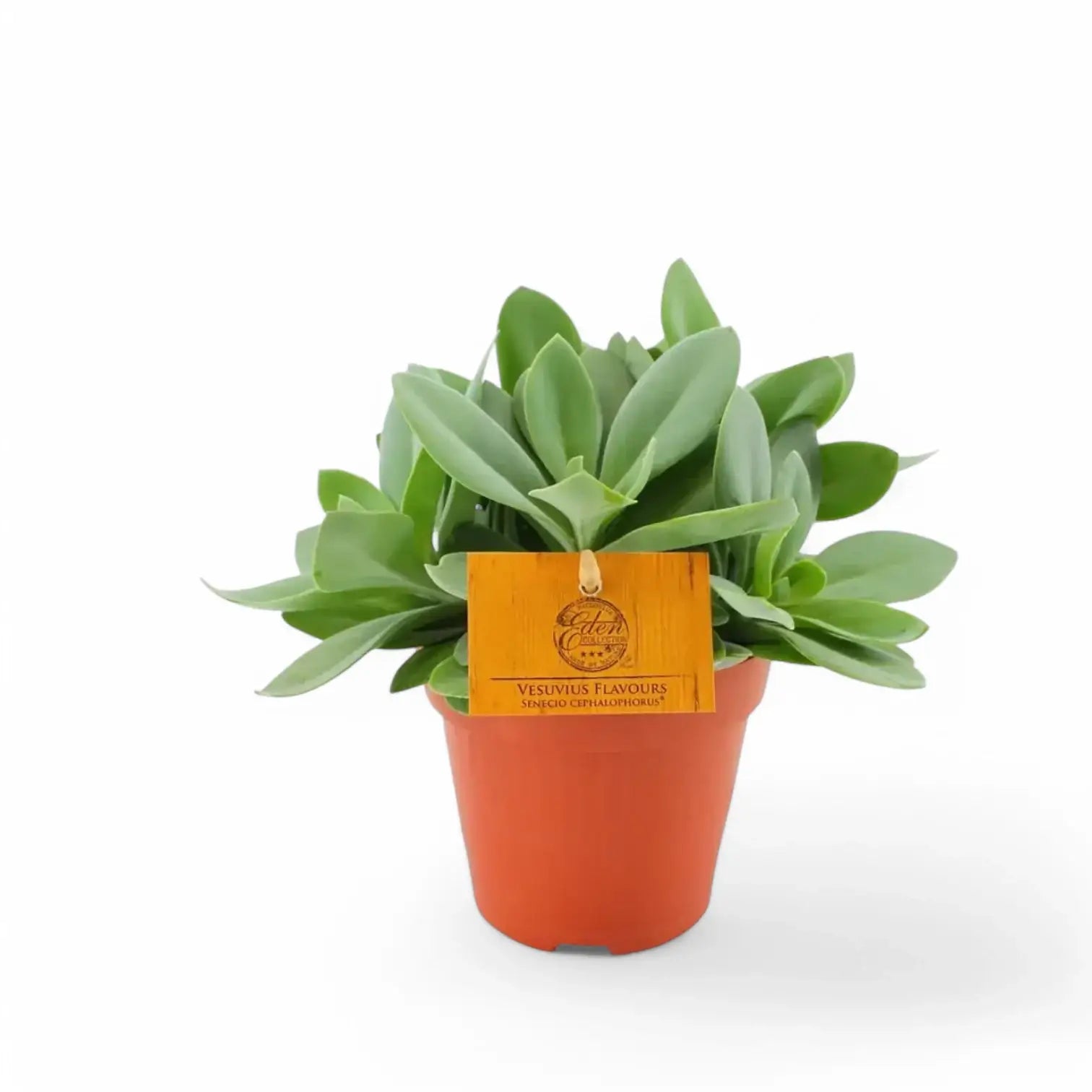
kleinia succulent Kleinia cephalophoraKleinia cephalophora Kleinia cephalophora is a compact succulent stemmed perennial from arid southern Africa. It grows with smooth blue green leaves, succulent stems and large nodding flowerheads that can open yellow to orange when the plant is mature and well grown. In a pot, it stays low and sculpted by fleshy stems, narrow leaves with strongly recurved margins and a need for bright, dry, sharply drained conditions. Kleinia cephalophora comes from
Kleinia cephalophora
Kleinia cephalophora is a compact succulent-stemmed perennial from arid southern Africa. It grows with smooth blue-green leaves, succulent stems and large nodding flowerheads that can open yellow to orange when the plant is mature and well grown. In a pot, it stays low and sculpted by fleshy stems, narrow leaves with strongly recurved margins and a need for bright, dry, sharply drained conditions.
Kleinia cephalophora comes from rocky slopes in dry regions, including southern Namibia and South Africa’s Northern Cape. Its roots need air, its stems store water and its care should lean toward mineral drainage, full to partial sun and careful watering.
Kleinia cephalophora highlights
- Growth habit: Evergreen succulent-stemmed perennial shrublet, usually compact in pots.
- Leaf detail: Blue-green, slightly succulent lance-shaped leaves with strongly recurved margins.
- Flowers: Large terminal nodding flowerheads, yellow to orange, mainly in autumn to winter in its native seasonal rhythm.
- Native range: Namibia to the Cape Provinces, especially rocky slopes in arid regions.
- Care: Bright light, lean drainage and careful watering match its dryland habitat.
Rocky-slope growth and dryland roots
Kleinia cephalophora Compton is accepted as a species in Asteraceae, first published in the Journal of South African Botany in 1949. It is described as an evergreen succulent-stemmed perennial shrub up to about 400 mm tall, with leaves 30–100 mm long and flowerheads around 30 mm across. The species occurs from southern Namibia through the Richtersveld and Northern Cape, on rocky slopes around 600–800 m elevation.
The plant should never sit in a dense, wet potting mix, especially during cool or low-light periods. In strong light, the blue-green leaves and compact stem growth stay firmer. In weak light with too much water, growth becomes soft and the lower stem is more likely to rot.
Bright, dry care for Kleinia cephalophora
- Light: Give full sun to very bright indirect light indoors. Acclimate gradually before exposing it to stronger direct sun.
- Watering: Water thoroughly, then let the substrate dry out completely or almost completely before watering again.
- Substrate: Use a sharply draining succulent mix with plenty of mineral material such as pumice, grit or lava rock.
- Pot choice: A drainage hole is essential. Avoid oversized pots, as excess substrate holds water around a relatively compact root system.
- Humidity: Low to average indoor humidity is suitable. Good airflow matters more than added humidity.
- Temperature: Keep frost-free and protect from temperatures below about 5 °C. Cool wet roots are more dangerous than cool dry conditions.
- Feeding: Feed lightly in active growth with a diluted cactus fertiliser. Heavy feeding can make growth too soft.
- Propagation: Stem cuttings can root freely. Let cut ends callus before placing them into a dry, mineral substrate.
Stem softness, leaf shrivelling and pest checks
- Soft stem base: Usually caused by wet substrate, cool conditions or poor drainage. Stop watering and inspect the base before rot spreads.
- Shrivelling leaves: The plant may need water if the substrate is fully dry and stems remain firm. Water thoroughly, then return to a drying cycle.
- Pale, stretched stems: Increase light gradually and avoid feeding until growth firms up.
- Leaf drop: Check for sudden cold, prolonged drought or root damage. Some older lower leaves can shed naturally.
- Mealybugs: Inspect leaf bases and stem joints. Remove pests early and isolate the plant during treatment.
Seasonal slowing in a pot
Kleinia cephalophora may rest or slow down during unfavourable periods. When growth is slow, keep the plant brighter, drier and cooler rather than pushing it with water. New growth should be firm and compact before normal watering and feeding resume.
Handling Kleinia cephalophora safely
Kleinia cephalophora may cause minor toxicity if consumed, and sap from bruised or broken plant parts can irritate skin. Keep the plant away from pets and children, and wash hands after taking cuttings or handling damaged stems.
Kleinia cephalophora name background
Kleinia honours Jacob Theodor Klein, the German naturalist. The epithet cephalophora refers to the conspicuous head-like flowerheads, which were important in the species description. The synonym Senecio cephalophorus may still appear in older horticultural references, but Kleinia cephalophora is the accepted name.
Kleinia cephalophora develops as a compact dryland succulent with blue-green recurved leaves, fleshy stems and nodding yellow to orange flowerheads on mature plants.
Shipping Notes
- Free Standard Shipping on $100+ Orders to the USA.
- Except Preorder products are shipped in 48 hours.
- Delivery to the USA:
- Standard Shipping : 3-10 business days
- If time is of the essence, please consider selecting expedited delivery for faster service.
Exchange/Return Notes
- We offer a 30-day return/exchange service after receiving.
- Final sale items are not eligible for returns or exchanges.
- To process your return/exchange, please contact us at [email protected]
- Please click here for more details>>> Return & Exchange Policy