SKU: 89609601229
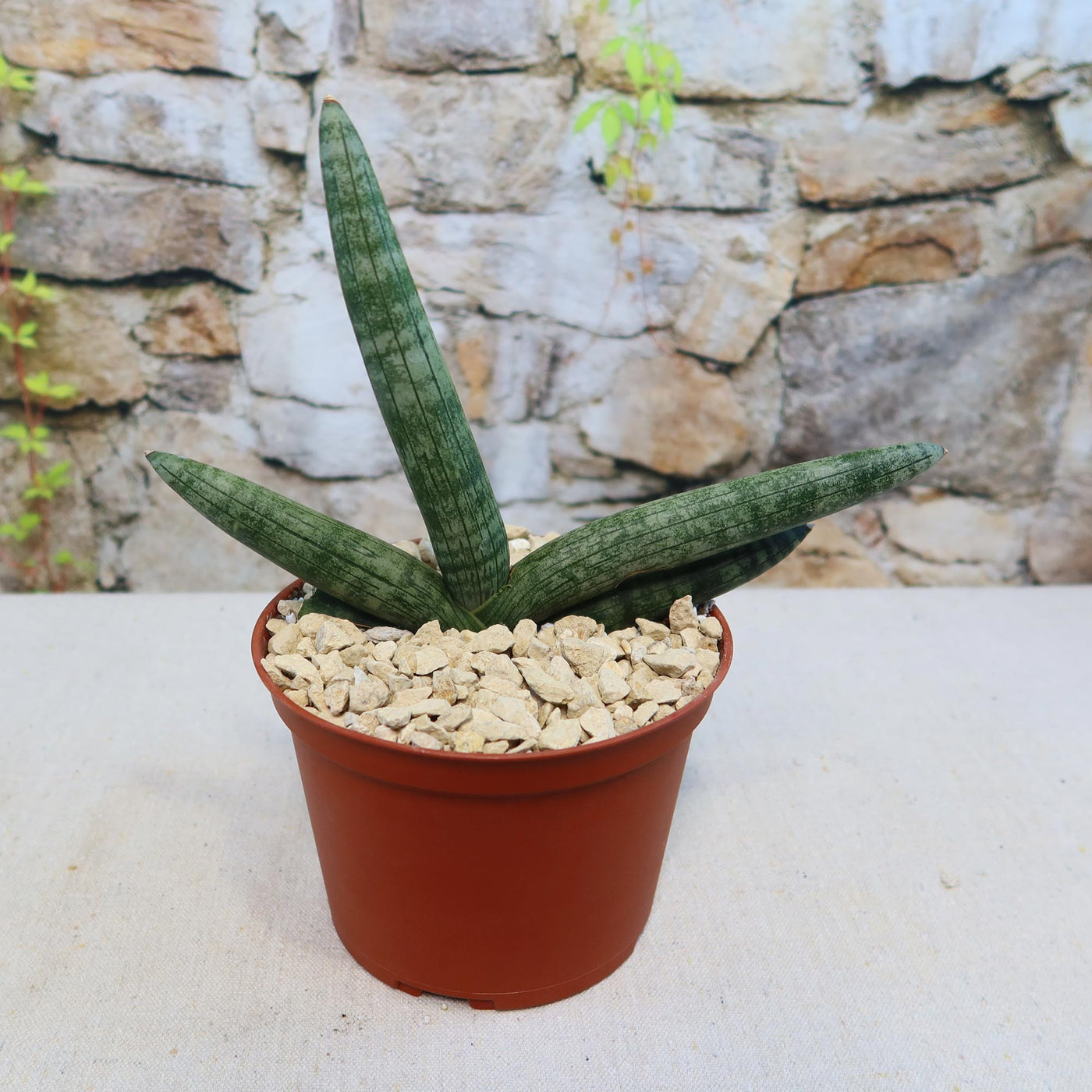
sansevieria cylindrica cylindrical snake plant

sansevieria cylindrica cylindrical snake plant African Spear Plant 'Sansevieria cylindrica' - Shop Online

Sale price$18.63 Regular price$20.70
Save 10%

Shipping Estimate
USA
  • USA
  • CAN

Ships within 48 hours · Estimated delivery Jul 10 - Jul 15

Promo Codes Available:

For Your Every Summer RSVP, with Code: SUMMER15

Description

sansevieria cylindrica cylindrical snake plant African Spear Plant 'Sansevieria cylindrica' - Shop OnlineGet ready to be amazed by the African Spear plant, also known as Sansevieria cylindrica (Dracaena angolensis), one of the snake plant varieties and a vibrant member of the Sansevieria genus! It has many other common names, including cylindrical sansevieria, the cylindrical snake plant, the Starfish sansevieria, the bow string hemp, dragon fingers, and pencil Sansevieria. This snake plant does not have ordinary upright, dark green leaves; they are

Get ready to be amazed by the African Spear plant, also known as Sansevieria cylindrica (Dracaena angolensis), one of the snake plant varieties and a vibrant member of the Sansevieria genus! It has many other common names, including cylindrical sansevieria, the cylindrical snake plant, the Starfish sansevieria, the bow-string hemp, dragon fingers, and pencil Sansevieria. 

This snake plant does not have ordinary upright, dark-green leaves; they are horizontally striped and have an extraordinary cylindrical fan shape that tapers to a fine point at its tips.The single leaf of this spear sansevieria can grow up to 7 feet tall and up to 1.4 inches wide. 

In the right conditions, these extraordinary Sansevieria plants might surprise you with a small creamy-white flower spike shooting up from their center. While the cylindrical snake plant flower is not the largest or most colorful among its succulent family, it does have a distinct, sweet-smelling, and pleasing fragrance. These delicate white blooms dance in the air like tiny fairies spreading joy and enchantment everywhere they go. It's simply magical! 

Remember, these cylindrical snake plants are mildly toxic for humans and pets, so, it's important to keep them away from children and pets. It is the simplest way to multiply and propagate Sansevieria cylindrica plants. You can either adopt the division or the leaf-cuttings method of Sansevieria cylindrica propagation. While this slow-growing succulent is known to live longer than most other succulents provided it is kept in a warm and well-lit position. 

Watering Needs 

Native to Africa, the African spear succulent plant doesn't need much water to thrive. In fact, it's best to water the Sansevieria cylindrica plant only when the soil is completely dry, which can be once every two to three weeks. When you do water your Sansevieria plants, be sure to do so thoroughly, allowing the water to soak into the soil. Be careful not to overwater it, as this can cause root rot, which can be fatal to the plant. 

But come wintertime (dormant period), you can cut back to every two weeks or less. And get this - any type of water (except hard water) will work just fine! So, whether you use tap or filtered, or even rainwater, your cylindrical snake plant will thrive in no time. Just remember to avoid hard water since this African spear plant doesn't like lime very much. 

Light Requirements 

The African spear plant, or Sansevieria cylindrica survives in bright full sunlight but can also tolerate low light conditions. It's best to avoid direct afternoon sunlight, as this can burn the leaves. 

If you're growing the African spear indoors, place it near a north-facing window that gets plenty of bright, indirect light. If you're growing it outdoors, be sure to provide it with some shade during the hottest part of the day. Without enough light, photosynthesis rates drop, leaves become thin, colors appear dull, there is an unhealthy look to the plant, and growth is stunted. 

Optimal Soil Needs 

The Sansevieria cylindrica prefers soil that's well-drained and rich in organic matter. A good potting mix for this African spear should be a combination of peat moss, perlite, and sand. You can also add some compost or aged manure to the soil to provide additional nutrients. Planet Desert has got your back with our specialized succulent potting mix that includes 5 natural substrates with organic mycorrhizae perfect for promoting healthy roots and happy plants. 

When it comes to fertilizing this Sansevieria, it's best to use a slow-release fertilizer that's high in nitrogen. You can fertilize the plant once a year during the growing season, which is typically from spring to fall. Avoid over-fertilization as it can lead to the death of your stunning succulent. 

Hardiness Zone & More 

Typically grown in hot, arid desert regions, the Sansevieria cylindrica thrives indoors in warm, dry surroundings. If you live in USDA regions 9 to 11, you can also grow these Sansevieria plants outdoors year-round, but they are not cold- or frost-tolerant, so you should plant them indoors or put them in a pot and move them indoors during the winter if you live outside of these regions. 

Keep your African spear plants away from cold, drafty windows and air vents if you are growing them indoors in a cold climate. 

We think you will love this Sansevieria plant order your very own Sansevieria cylindrica - African spear or cylindrical snake plant today and start enjoying its beauty in no time! 

Shipping Notes
  • Free Standard Shipping on $100+ Orders to the USA.
  • Except Preorder products are shipped in 48 hours.
  • Delivery to the USA:
  1. Standard Shipping : 3-10 business days
  • If time is of the essence, please consider selecting expedited delivery for faster service.
Exchange/Return Notes
  • We offer a 30-day return/exchange service after receiving.
  • Final sale items are not eligible for returns or exchanges.
  • To process your return/exchange, please contact us at [email protected]
  • Please click here for more details>>> Return & Exchange Policy
SKU: 89609601229

Discover Niche Categories That Outsell sansevieria cylindrica cylindrical snake plant

Top-Converting Item to Boost Your Average Order

4.3 ★★★★★
Based on 1081 reviews
Sort
Highest Rating
Newest First
Oldest First
Product Reviews
P
Verified Purchase
PhiloX
Carnegie, US
★★★★★ 4
A Lost Book doesn't Make Up for Lost Time
Format: Paperback
I bought the hard back copy of this book years ago & what an interesting read with great time lines & beautiful color photos. Someone borrowed the book & I forgot who I loaned it to. After years of trying to remember where it went, I at last bought it again as a paper back through Amazon.com. It's a used book with no marks & only a slight indentation on a few pages on the side. Now that I am looking into it & remembering it once again, I am over loaded with too many historical theories. Maybe it's my fault for being a book reader rather than an Egyptologist. I am going to write down some simple time frame theories & you will see what this book is about: General View: The Hebrews came into Egypt through reuniting Joseph & his brothers. They experienced the Amarna period of primitive Monotheism. Akhenaton was over thrown & polytheism was reinstated as the Hebrews were enslaved. Moses came during Rameses II & the Exodus was during the last years of Rameses II or the Pharaoh Marneptah. Amarna period of Akhenaton 1352-1337/1334 BC Rameses II 1279-1213 BC Exodus last years of Rameses II or Marneptah. Problems: Biblical History is off by 180 years if counted back from the creation of Solomon's temple. Rameses II was a great conquer, & both he & his son Marneptah never wrote of 10 plagues or an Exodus. Both died as old men & their mummys are still with us. David Rohl's Theory: revised Egyptian history by shortening the 3rd Intermediate Period by almost 300 years. Tutimaios known as Dudimose is the Pharaoh of the Exodus Exodus 1447 BC Amarna period of Akhenaton = time of King David approx. 1000 BC. Proof: letters written between an Egyptian Pharaoh & King of Israel during that period. Rameses II = Shishak of 921 BC sack of Jerusalem. Proof: Rameses II used a monogram that comes close to Shishak. Problems: goes against establish Egyptian time frames or "If the Bible doesn't fit the Egyptian time frames then make the Egyptian time frames fit the Bible". Akhenaton is no longer the 1st political monotheist & seems out of place not influencing Moses & writing letters to King David. From Another Book I Read - "Akhenaton & Moses" by Ahmed Osman Ahmed Osman's Theory: Akhenaton is the same person as Moses Amarna period of Akhenaton 1352-1337/1334 BC Exodus after the overthrow of Akhenaton by Rameses I Problems: Moses doesn't die overlooking the Promise land of Canaan as stated in Deuteronomy 34 but dies without a known grave as did Akhenaton. Moses monotheism doesn't deal with a solar disc as a symbol of the one God or a replacement of a lesser Egyptian God, but is from an inherited convent. Other Dates of the Exodus: Josephus 1552 BC Sedar Olam Rabbah 1440 BC Book of Jubilees 2410 BC Early Church Fathers 1570 to 1320 BC I need to research Immanuel Velikovsky ideas on this subject matter. I just bought the book & will review it.
WAS THIS REVIEW HELPFUL?YesReportShare
Reviewed in the United States on January 23, 2013
A
Verified Purchase
Amazon Customer
Lowell, US
★★★★★ 5
Correcting the Biblical Chronology
Format: Hardcover
When I first begin my study of the Bible, I had purchased another book on archaeology and the first thing I realized is that nothing fit. The time of Solomon was impoverishment in Israel. When you read the Bible Solomon was the richest king ever. David Rohl's book Pharaohs and Kings changed all that. He persuasively shows where the chronology is wrong and when corrected things fall into place. What is commonly called the old testament comes to life. It is the greatest book on Biblical Archaeology ever written. Thank you David !!!
WAS THIS REVIEW HELPFUL?YesReportShare
Reviewed in the United States on March 10, 2019
T
Verified Purchase
The Weez
Omaha, US
★★★★★ 5
High quality for a slightly used book!!!!!
Format: Hardcover
Lots of pics and charts ... Egyptologists will love it
WAS THIS REVIEW HELPFUL?YesReportShare
Reviewed in the United States on March 12, 2024
M
Verified Purchase
Meow Meema
Cuba, US
★★★★★ 5
Long expected and now explained mystery of Israels sojourne in Egypt
Format: Hardcover
Beautiful, detailed and well explained text book. Very hard for the history of the Bible to be accepted by so many scholars. However, archeology and history just keeps proving it totally reliable over and over again. If you want to see the pieces of the puzzle of ancient mid-east and Bible history fall in place - get this incredible book. The highly credentialed and acclaimed archeologist, David Rohl has really done an outstanding job in this presentation. Read and learn!
WAS THIS REVIEW HELPFUL?YesReportShare
Reviewed in the United States on November 5, 2013
E
Verified Purchase
Eman
Draper, US
★★★★★ 5
An addictive read
Format: Paperback
A friend loaned me his copy and I couldn't put it down. Very well written and extremely informative. Why conventional Egyptology doesen't attempt to adhere to the obvious evidences I will never understand. After returning my friends copy to him I not only bought one for myself but have purchased others for friends and family. This book is especially helpful for one who is interested in understanding which Old Testament persons are being referenced in various accounts.Moses did not deal with Raamses the Great
WAS THIS REVIEW HELPFUL?YesReportShare
Reviewed in the United States on February 7, 2014

recommand products