SKU: 89670627241
mexican succulent plant

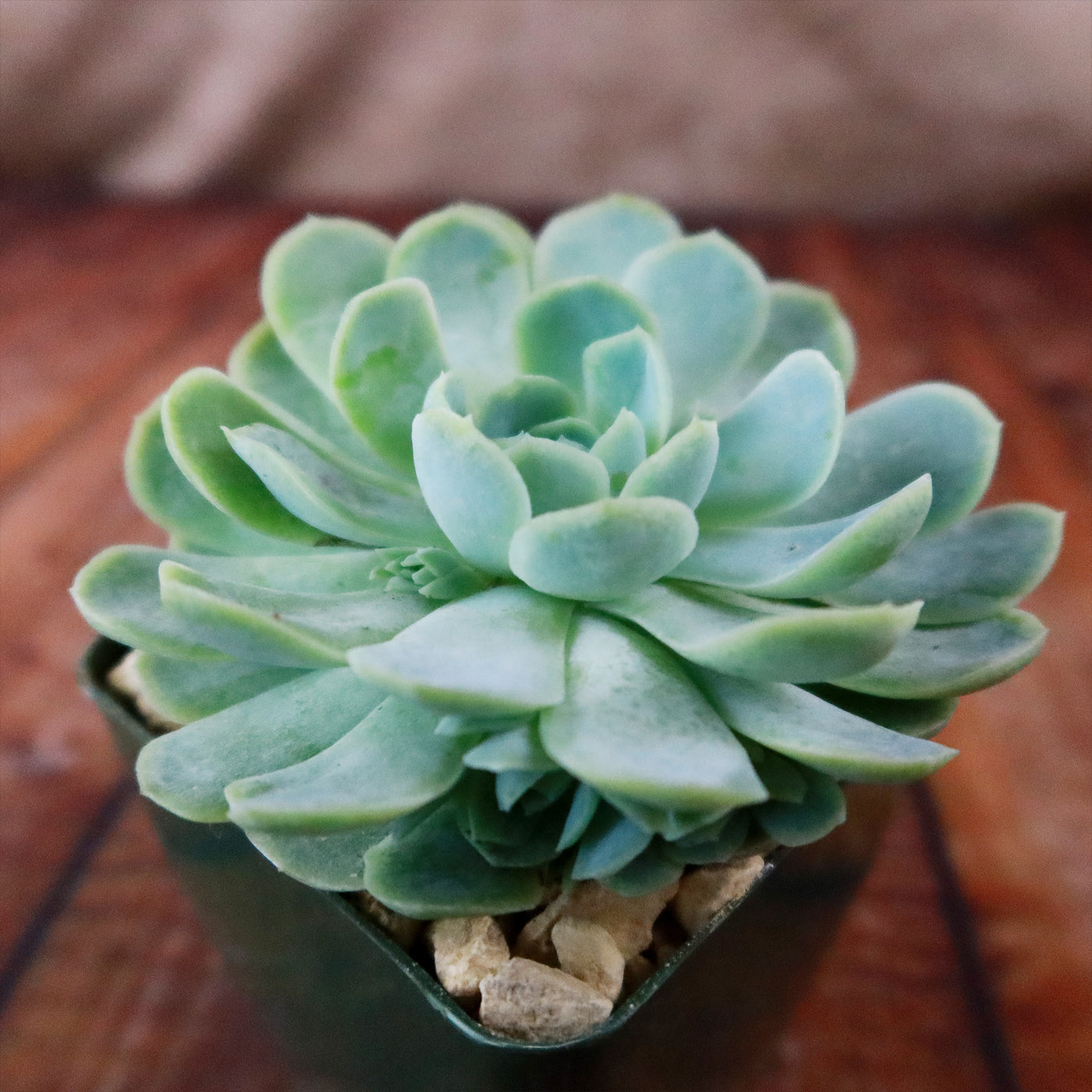
mexican succulent plant Mexican Snowball Succulent ‘Echeveria elegans’

Sale price$25.78 Regular price$28.64
Save 10%

Pay in installments of $7.16 with ShopPay, AfterPay and Klarna

Shipping Estimate
USA
  • USA
  • CAN

Ships within 48 hours · Estimated delivery Aug 1 - Aug 6

Promo Codes Available:

For Your Every Summer RSVP, with Code: SUMMER15

Description

mexican succulent plant Mexican Snowball Succulent ‘Echeveria elegans’The Echeveria elegans, known as Mexican Snowball Succulent, is a highly sought after species known for its stunning rosette shape, powdery blue green leaves, and remarkable drought tolerance. Its ability to store water in its fleshy leaves allows it to withstand extended dry periods, making it an ideal plant for low maintenance landscaping. Native to Mexico, it is commonly referred to as Mexican Gem, Hens and Chicks, or Mexican Ghost Plant, and gets

The Echeveria elegans, known as Mexican Snowball Succulent, is a highly sought-after species known for its stunning rosette shape, powdery blue-green leaves, and remarkable drought tolerance. Its ability to store water in its fleshy leaves allows it to withstand extended dry periods, making it an ideal plant for low-maintenance landscaping.

Native to Mexico, it is commonly referred to as Mexican Gem, Hens and Chicks, or Mexican Ghost Plant, and gets its name from its beautiful, compact rosettes that resemble delicate snowballs.  

The name Echeveria elegans is derived from the Latin word "elegans," which means elegant or graceful. This name was given to the plant due to its attractive appearance and refined characteristics. As one of the most iconic Echeveria species, it is widely used in rock gardens, succulent arrangements, and xeriscaping due to its adaptability and minimal care requirements. 

The Mexican Snowball is a relatively small succulent, with individual rosettes reaching 4 inches wide.

However, this plant spreads over time, forming dense clusters that can cover large areas of about 1 foot, when allowed to propagate naturally.

Its slow-growing nature makes it easy to manage, whether grown in containers, garden beds, or vertical planters.

One of its most defining features is its thick, spoon-shaped leaves, which are covered in a fine powdery coating called farina.

This natural wax helps protect the plant from harsh sunlight and moisture loss, giving the leaves a soft, pastel-blue appearance.

In colder weather, the leaf edges may develop a slight pinkish hue, adding to the plant’s visual appeal. The rosettes remain compact and symmetrical, making them a favorite for decorative displays and succulent arrangements. 

The flowering Echeveria elegans blooms from late winter to early spring and produce tall, arching flower stalks that rise above the foliage, bearing clusters of pink to coral-colored bell-shaped flowers with bright yellow tips. These vibrant blooms not only enhance the plant’s beauty but also attract pollinators such as bees and hummingbirds, making it a great addition to a wildlife-friendly garden. 

Beyond its ornamental value, Echeveria elegans is often used in wedding bouquets, living wreaths, and terrariums due to its symmetrical shape and long-lasting foliage. Its low-maintenance nature, combined with its aesthetic appeal, makes it a top choice for those looking to cultivate a beautiful yet easy-to-care-for succulent. Whether grown indoors on a sunny windowsill or outdoors in a rock garden, the Mexican Snowball Succulent remains a timeless favorite among plant enthusiasts. 

When and How to Water Your Echeveria elegans 

Echeveria elegans is an exceptionally hard to kill succulent that requires minimal watering and is well-suited for arid landscapes, rock gardens, and container arrangements. It has thick, fleshy leaves that store water, enabling it to withstand prolonged dry periods. Overwatering is one of the most common mistakes with this plant, so ensuring the soil is completely dry before the next watering is crucial.

From the spring to early fall, during its active growing season, Echeveria elegans benefits from regular but moderate watering. It should be watered deeply when the soil is dry, roughly every 10 to 14 days, depending on the climate.  

As temperatures drop and winter arrives, Echeveria elegans enters dormancy. During this period, it requires significantly less water, sometimes only once every 3 to 4 weeks. If grown outdoors, it should be protected from frost, as prolonged exposure to freezing temperatures can damage the plant. 

Light Requirements – How to Water Your Mexican Snowball Succulent

For indoor growers, your Echeveria succulent requires bright, indirect sunlight to thrive.

It should be placed near a south- or east-facing window where it receives at least 6 hours of sunlight per day.

If natural light is insufficient, supplementing with a grow light will help maintain its compact rosette shape and prevent etiolation.

Good air circulation is also essential to prevent excessive moisture buildup, which can lead to fungal issues.

When grown outdoors, Echeveria elegans flourishes in full sun to partial shade. Ideally, it should receive 6 to 8 hours of direct sunlight daily.

However, in regions with intense summer heat, providing afternoon shade can help prevent sunburn on its delicate leaves.  

Optimal Soil & Fertilizer Needs 

Echeveria elegans thrives in well-draining soil, preferably a succulent mix that contains sand, perlite, or pumice. These components help improve aeration and prevent excess moisture retention, reducing the risk of root rot. A soil pH between 6.0 and 7.0 is ideal. Planet Desert specializes in succulents and has specialized succulent potting soil, opens in a new tab that includes an organic substrate with mycorrhizae to help with the growth of a healthy root system to help your succulents thrive. 

Fertilizing is not always necessary, but a diluted, balanced liquid NPK fertilizer (such as 5-10-5) can be applied once a year in the spring during the growing season. Avoid high-nitrogen fertilizers, as they encourage leggy growth rather than compact, healthy rosettes. Fertilization should be discontinued in the winter when the plant is dormant. 

Hardiness Zones & More 

When growing indoors, the Mexican snowball plant thrives in temperatures between 60°F and 75°F with moderate humidity. It requires bright light, preferably near a window with direct morning sunlight. Humidity levels should remain low to prevent fungal issues, making it an excellent choice for dry indoor environments. 

In the United States, this is mostly an indoor plant, but if you live in southern Florida or Hawaii then you can cultivate it outdoor in USDA zones 9-11.

It prefers dry, warm climates with low humidity and should be planted in well-draining soil.

If temperatures drop below 32°F, consider bringing the plant indoors or providing frost protection to prevent damage. 

Wildlife – Echeveria elegans Flowers Attracts the Following Friendly Pollinators 

The Echeveria elegans are highly attractive to pollinators, particularly bees, butterflies, and hummingbirds, thanks to their vibrant, bell-shaped flowers. These blossoms emerge from late winter to spring and provide a valuable nectar source for beneficial insects.

Butterflies
Bees
Hummingbirds
Lady Bugs
Multi Pollinators
Other Birds

According to the ASPCA, these Echeveria’s are non-toxic to humans, cats, dogs, and other household pets. This makes it a safe choice for pet owners who want to keep succulents indoors without worrying about accidental ingestion harming their animals. 

How to Propagate Mexican Snowball Succulent 

Propagation of Echeveria elegans is straightforward and can be done through leaf cuttings, offsets, or seeds. The most common method is by separating offsets that grow around the mother plant. These should be gently removed and left to dry for a day or two before planting in dry, well-draining soil. Water sparingly until roots establish.

Leaf propagation is another effective method. A healthy leaf should be twisted off cleanly and placed on dry soil. Within a few weeks, small roots and a baby rosette will begin to form. Once established, the new plant can be transplanted into its own pot. 

Key Takeaways 

  1. Beyond its ornamental value, Echeveria elegans is often used in wedding bouquets, living wreaths, and terrariums due to its symmetrical shape and long-lasting foliage. 
  2. Echeveria elegans is a drought-tolerant succulent that requires minimal watering.
  3. It is non-toxic to pets, making it a safe indoor plant.
  4. This succulent produces attractive pink flowers that draw in pollinators like bees and hummingbirds.
  5. Its slow-growing nature makes it easy to manage, whether grown in containers, garden beds, or vertical planters.

The Bottom Line 

Overall, the Echeveria elegans (Mexican snowball succulent) is an excellent low-maintenance succulent that thrives in both indoor and outdoor settings. Its drought tolerance, compact rosette shape, and beautiful pink flowers make it a favorite among succulent enthusiasts. With proper care—adequate sunlight, well-draining soil, and mindful watering—this plant will flourish year after year. Whether used as ground cover, in rock gardens, or as a potted houseplant, it is a resilient and rewarding choice.

Shipping Notes
  • Free Standard Shipping on $100+ Orders to the USA.
  • Except Preorder products are shipped in 48 hours.
  • Delivery to the USA:
  1. Standard Shipping : 3-10 business days
  • If time is of the essence, please consider selecting expedited delivery for faster service.
Exchange/Return Notes
  • We offer a 30-day return/exchange service after receiving.
  • Final sale items are not eligible for returns or exchanges.
  • To process your return/exchange, please contact us at [email protected]
  • Please click here for more details>>> Return & Exchange Policy
SKU: 89670627241

Discover Niche Categories That Outsell mexican succulent plant

Top-Converting Item to Boost Your Average Order

4.8 ★★★★★
Based on 9 reviews
Sort
Highest Rating
Newest First
Oldest First
Product Reviews
B
Verified Purchase
Brucers
Los Angeles, US
★★★★★ 5
An excellent product!
Style: AVR-X2800H, Style: AVR-X2800H
Happy and satisfied does not begin to describe my satisfaction in this Denon product! Setup was a snap, instructions were detailed, and the finale results were amazing. And yes I’m running a full 7.1 setup, sounds fantastic….
WAS THIS REVIEW HELPFUL?YesReportShare
Reviewed in the United States on May 19, 2026
A
Verified Purchase
Amazon Customer
Chelsea, US
★★★★★ 5
Easy Set Up and Great Sound Distribution
Style: AVR-X3800H
I replaced an old Onkyo 535 with this Denon. It was a significant upgrade. There is zero noise, the Bluetooth is easy to use and provides excellent sound, and the HDMI circuitry is outstanding. The eARC capability is compatible with 2.1 HDMI, and it works seamlessly. Of note, I really like the way it provides the best sound configuration automatically for each source, and I don't have to switch around to find the best sound option. For example, if the source is compatible with Atmos, it provides Atmos. If it's only compatible with Dolby surround, it switches to that. Finally, the distribution of sound is superb. I have a 7.1 speaker configuration of mostly mid-level speakers, and the Denon uses them to their fullest. Rear sounds come clearly from the rear...same with each side, etc. And most of all, I don't have to tweak the system to get that. I just used the provided microphone and ran the set up (which was really easy), and I have really great sound. This unit is a good value.
WAS THIS REVIEW HELPFUL?YesReportShare
Reviewed in the United States on January 28, 2026
R
Verified Purchase
Reviewer JR
Louisville, US
★★★★★ 4
Expensive, but nice
Style: AVR-X4800H
I previously owned a Denon AVR-2808ci since 2008. That model's remote control didn't work well, and all controls were unnecessarily convoluted, so I was hesitant to buy another Denon. The thing that made me give them another chance is that the sound quality was nice, and I was hoping their engineers learned from their mistakes. I'm glad I gave them the chance. This new model, the AVR-X4800H, also has excellent sound quality; however, unlike the old one I had, the controls on both the receiver itself, and especially on the remote control, are significantly improved. The controls are intuitive, and everything works perfectly. That alone made me happy with the purchase; however, the ability to run 4k @ 120 hz for video gaming, and with extra HDMI ports they have here, all added to that value quite a bit. Then, in addition to that, the old model I had ran super hot. In fact, so hot, from just basic usage, it fried itself three different times in the span of a couple weeks (during the winter time), and it kept being repaired under warranty, until they replaced the top grate with one that allows more ventilation. However, this new model doesn't appear to suffer from that same issue. It gets pretty warm, but nowhere near what the old one did -- and I'm using the same Bose Surround Sound system with the new one. That said, as a precaution, I went ahead and ordered an AC Infinity AirCom to put on top of it, to assist with cooling/ventilation, which has worked wonderfully as well. No the tempts on this Denon AVR have never gone above 87 deg, even on a warm room on the third floor during the late spring / summer time. The other hesitancy I had was the price tag. I only purchased it because it was on a "25% discount", from $2500 down to around $1850. Granted, it was similar when I purchased the other one 15 years ago, but it's just an awful lot of money, in my humble opinion. I would say it was borderline on whether I would buy it for this amount, and if it went up at all, I wouldn't have purchased it. I may not purchase it again for this price, especially if I have one already that is working well -- it was only the wonky one that I already owned, that I just wanted to get rid of, that put more pressure to give them one more chance. With a working device, I probably wouldn't pay these prices again. But, if it were a few hundred dollars cheaper, then I probably would buy it again. Hopefully this helps someone. It's a great device, just a bit expensive. And, if you get it, I would still recommend getting a top cooling fan for it.
WAS THIS REVIEW HELPFUL?YesReportShare
Reviewed in the United States on June 13, 2024
B
Verified Purchase
B. Husher
West Palm Beach, US
★★★★★ 5
Solid Next-Generation AVR.
Style: AVR-X2800H
I bought this for my 2.1 system used for TV (4K with 120 Hz), movies, video games (4K with 120 Hz), turntable, and digital audio. I have previously used Denon, Marantz, and NAD AVRs. I was using an old NAD without HDMI, and I really wanted everything to synch up. I tried out a stereo receiver since I am only running a 2.1, but I didn't mesh for me. It was fine, but I felt it was lacking especially around multi-channel audio and the lack of an LFE output for the sub. The 2800H was very intuitive and easy to set up right out of the box. Hooked up to a TV, it runs through everything step-by-step. After the initial setup, I downloaded and ran a firmware update. When I finally got to use my ears, the sound was already superior to what I had from the mid-2000s 60-watt-per-channel NAD AVR with an external Bluetooth/DAC and PCM cable from the TV AND the brand-new, 2023 model HDMI-equipped stereo receiver (that cost me more than the 2800H). After running Audyssey, the sound only got better. Then, I set up my 2 front speakers on a bi-amp setting, utilizing two of my unused channels to drive my woofer and tweeter with discrete power sources. The eARC and settings makes turning on my TV, PS5, and AVR easier and quicker. I enjoy the fact that I can use any remote to fix the volume so there is always a remote close when we need a quick mute or change in the volume. I find the HEOS app to be a little clunky, but I am loving it anyway. I can run high-definition audio through streaming, which is a huge improvement from using Apple Airplay 2 or Bluetooth. It also lets me talk on the phone, send and receive messages, etc. without interrupting the music. Right now, I am still tweaking my settings, but I can definitely say that the sound is really good. Have I heard better? Sure. This isn't an 11-channel receiver with Dirac, a 200 watt-per-channel, high-end "audiophile"-grade component, or a tube amp. It is best at multi-channel audio and does really well for music, especially with a good set of speakers and quality sub with parametric EQ. My speakers have are low sensitivity (84dB), and the 2800H puts out enough grunt to listen give nuance and life to music in listening position, to bump the music to listen in my kitchen two rooms over, or watch at theater-level volume in my medium-sized living room with 8-foot ceilings. This thing is getting daily use, and it is more than enough to get the job done in style. For what I need, the 2800H is spot on.
WAS THIS REVIEW HELPFUL?YesReportShare
Reviewed in the United States on November 9, 2023
M
Verified Purchase
Mike
Louisville, US
★★★★★ 5
Excellent receiver next to the competition
Style: AVR-X2800H
Amazon has had some really good prices on the Amazon days so I bought a new receiver. Now I recently bought a AVR-S960H in 2022 which was excellent but I was needing another receiver. I originally reviewed the S960H comparing against an Onkyo back in 2022. I mistakenly stated the Onkyo was a TX-NR6100, which it was a TX-NR6050. Very similar with the NR6100 having THX and 10 more watts of power. This year I bought the Onkyo TX-NR6100 hoping it was better than the TX-NR6050 which it was in sound quality only, equaling the Denon AVR-S960H and Denon AVR-X2800H. However the Onkyo TX-NR6100 just doesn't compare with missing features, weird on-line manuals that have numerous inaccuracies, and weird, none standard Dolby decoding that is mentioned in the manuals. The biggest problem that I was hoping was corrected with a firmware update for the 2 years that passed with the TX-NR6050 was the incorrect speakers, playing the wrong dolby discrete channels. As I stated this is even mentioned in the manual as Onkyo thinks this is alright. I have a 7.1 speaker setup and listen to discrete 5.1 Dolby soundtracks of Concert Music Videos. I want to listen to the soundtrack discrete with no up mixing with a 5.1 speaker 'output'. The Onkyo's surround channel signals will only play out of the 'back' surround speakers leaving the surround speakers quiet. This is by design and acknowledged in the manual! This made the sound inferior and unacceptable to me. My Denon receivers play the surround channels correctly through the surround speakers. Then the above goes one step further in displaying the incorrect number of channels output in the on-screen display on your tv. It will say a 5.1 signal input to 7.1 speakers output. This is wrong and should say 5.1 signal input to 5.1 speakers output. Since the "back" speakers are playing, it somehow thinks that the output is 7.1 speakers when only 5.1 speakers are playing, even if it is the wrong speakers. Also the Onkyo has no HDR10+ for it's 3 inputs that aren't 8K compatible. Not good IMO. So with the quirks in the Onkyo TX-NR6100, I sent it back. I replaced it with a Denon AVR-X2800H. I could had replaced the Onkyo with a Denon AVR-S970H but I wanted the added room correction upgrade with the X2800 which is Audyssey MultiEQ XT, S970 has standard MultiEQ, no XT. Plus the X2800 in a 5.1 speaker setup will allow Speakers B to be assigned to the back surround speaker outputs or BIAMP if you have the need with your speakers. The S970 will not do that. The X2800 also has Zone 2 preamp outputs that the S970 does not. Also the X2800 has one year longer warranty than the S970. The X2800 also has 5 more watts/channel than the S970. At the time I bought during Amazon days, the X2800 was less than $200 more than the S970, so I bought the X2800. The X2800 steers the correct surround channels to the correct surround speakers unlike the Onkyo and sounds just as good if not better. I have more features and a long warranty with the Denon AVR-X2800H as well over the Onkyo. Also the Denon has HDMI 2.1 inputs for all 6 inputs and will play HDR10+ on all 6 HDMI inputs, that the Onkyo can not! I honestly have nothing to complain about the Denon. It does everything right and sounds great! It's also compatible with 8K60p(A) "UNCOMPRESSED" and 4K120p unlike some. I didn't look at the Yamaha RX-V6A/RX-A2A twins as they were not compatible with 8K60p(A) "UNCOMPRESSED" , just 8K60p(B) "COMPRESSED". They were the same price as the Denon AVR-S970H and AVR-X2800H models. That being Yamaha RX-V6A price about same as Denon AVR-S970H, and Yamaha RX-A2A about same as Denon AVR-X2800H. The Yamaha model compatible with 8K60p (A) "UNCOMPRESSED" is the more expensive RX-A4A but I seen no comparable pricing around what the Denon AVR-X2880H was selling at. Very similar to the Denon but more power with pre-amp outputs. I didn't need either for the hundreds more it was selling at. The Denon AVR-X2800H is the best bang for your buck 7.1 receiver right now IMO.
WAS THIS REVIEW HELPFUL?YesReportShare
Reviewed in the United States on September 21, 2024

recommand products