indigo plant seeds for sale Ossabaw Indigo (Sea Island Indigo) – Experimental Farm Network Seed StoreIndigofera suffruticosa Origin: Ossabaw Island, Georgia Improvement status: Feral Seeds per packet: ~35 seeds (roughly 25 pods) BOTANICAL SAMPLE NOT GERMINATION TESTED Life cycle: Annual or tender perennial It's an honor and a privilege to be offering these seeds. Because of Ossabaw Indigo's long and deep history, much of the reality of this plant's story will never be known. The most tragic details have been obscured by the legacy of brutal
Indigofera suffruticosa
Origin: Ossabaw Island, Georgia
Improvement status: Feral
Seeds per packet: ~35 seeds (roughly 25 pods)
BOTANICAL SAMPLE - NOT GERMINATION TESTED
Life cycle: Annual or tender perennial
It's an honor and a privilege to be offering these seeds. Because of Ossabaw Indigo's long and deep history, much of the reality of this plant's story will never be known. The most tragic details have been obscured by the legacy of brutal enslavement and oppression of African people. But there is much we can infer — and what we do know speaks of deep resilience of both plants and human beings.
The Sea Islands line the southeastern US coast from northern Florida to South Carolina. European colonization in the 1600s led to the violent expulsion of the region's indigenous people — including the Guale, Mocama, and Creek peoples — whose communities were swiftly replaced with massive plantations producing primarily rice and cotton with the forced labor of untold numbers of enslaved people. We know that slavery in the Sea Islands was part of a horrifying system of organized terror in which families were torn apart and people were treated worse than animals — and that this system generated wealth beyond belief for the white families who directed it using brutal violence and coercion. We also know that their descendants still benefit from all that wealth and that the white supremacist power-structure instituted during the days of slavery did not disappear with the abolition of slavery itself. Indeed, it persists in various manifestations to this day.
—
In the mid-1700s, Eliza Lucas — the 16-year-old daughter of a newly arrived British colonial officer — was put in charge of dozens of enslaved people and hundreds of acres. She is credited with launching the indigo industry in the Southeast (and, shamefully, still widely viewed as a symbol of female empowerment, despite the terrible cruelty inherent to her business). With seeds sent by her father from the Caribbean (where she was raised), and no doubt with the expertise of the African people her family kept in bondage (some of whom may well have had experience with indigo production in Africa), the Lucas family became incredibly wealthy supplying vivid blue dye to buyers in Great Britain.
The Revolutionary War led to the demise of the indigo industry in the Sea Islands after just a few decades, as the enslavers lost access to their main market. Rice and cotton once again predominated. During this time, many of the white people who claimed ownership of the islands actually lived on the mainland — unwilling to expose themselves to the isolation, malaria, and occasional hurricanes that mark life on barrier islands in the region — so this relative isolation meant that the African and African-descended people forced to work on the islands were able to maintain much more of their ancestral traditions than enslaved peoples elsewhere in North America. Eventually, the Civil War led white slavers to abandon their plantations completely for many years.
During the Union occupation of the islands and especially following the Emancipation Proclamation, the formerly enslaved people of the Sea Islands largely managed their own affairs. There were high hopes at the time that they would be granted ownership of the land — which would have provided some measure of justice and recompense for their decades in chains — but the government refused to enact such a program, and most of the white landowners eventually resumed control of the land. The formerly enslaved families then did what most of their cousins across the Southeast did: continued living on the land where they had been enslaved, eking out a living as sharecroppers, tenant farmers, and laborers.
But their relative isolation continued, and that in turn led to the ongoing flourishing of what is known today as Gullah-Geechee culture. Gullah language — which combines English and a multitude of African languages, including Menda, Vai, and Fulani — is still spoken by a few hundred remaining native speakers, plus a few thousand others. It is the only surviving African creole language in the United States. Beyond the linguistic connection to Africa, Gullah-Geechee cultural practices, including distinctive arts and crafts, traditional farming and fishing techniques, music, religious belief systems, rice-based foodways, and story-telling traditions, are all marked by clear West and Central African influences.
—
Ossabaw Island is the third largest of Georgia's coastal islands. With no road or causeway to the island, it escaped much of the development of the other islands (some of which have become opulent summer playgrounds for the rich and well-connected). Ossabaw was used by a handful of tenant-farmers through the early part of the 20th century, but by 1916 the whole of the island was owned by one man who used it as a hunting retreat (no doubt a favored target was the now-rare Ossabaw Island Hog, descended from a Canary Islands breed brought to the island by early Spanish colonists or adventurists). In 1924, it was sold to a wealthy Michigan couple from Grosse Pointe who used it as a winter home. Thankfully, in 1961, not long after ownership had passed to their daughter, Eleanor "Sandy" Torrey West and a brother, Mrs. West and her husband Clifford created the Ossabaw Foundation and the Ossabaw Island Project. The island soon became an artistic, scientific, and cultural retreat center. Luminaries including Ralph Ellison, Aaron Copeland, and Margaret Atwood are known to have spent time enjoying its natural beauty and solitude. In 1978, no longer able to afford to manage the operation, Sandy West and her brother's children negotiated a landmark agreement to sell the island (for half of its appraised value) to the State of Georgia as a permanent Heritage Preserve. The Georgia Department of Natural Resources technically controls it now, but the Ossabaw Foundation has a contract to maintain day-to-day management of the island, regulating access and use of historic areas.
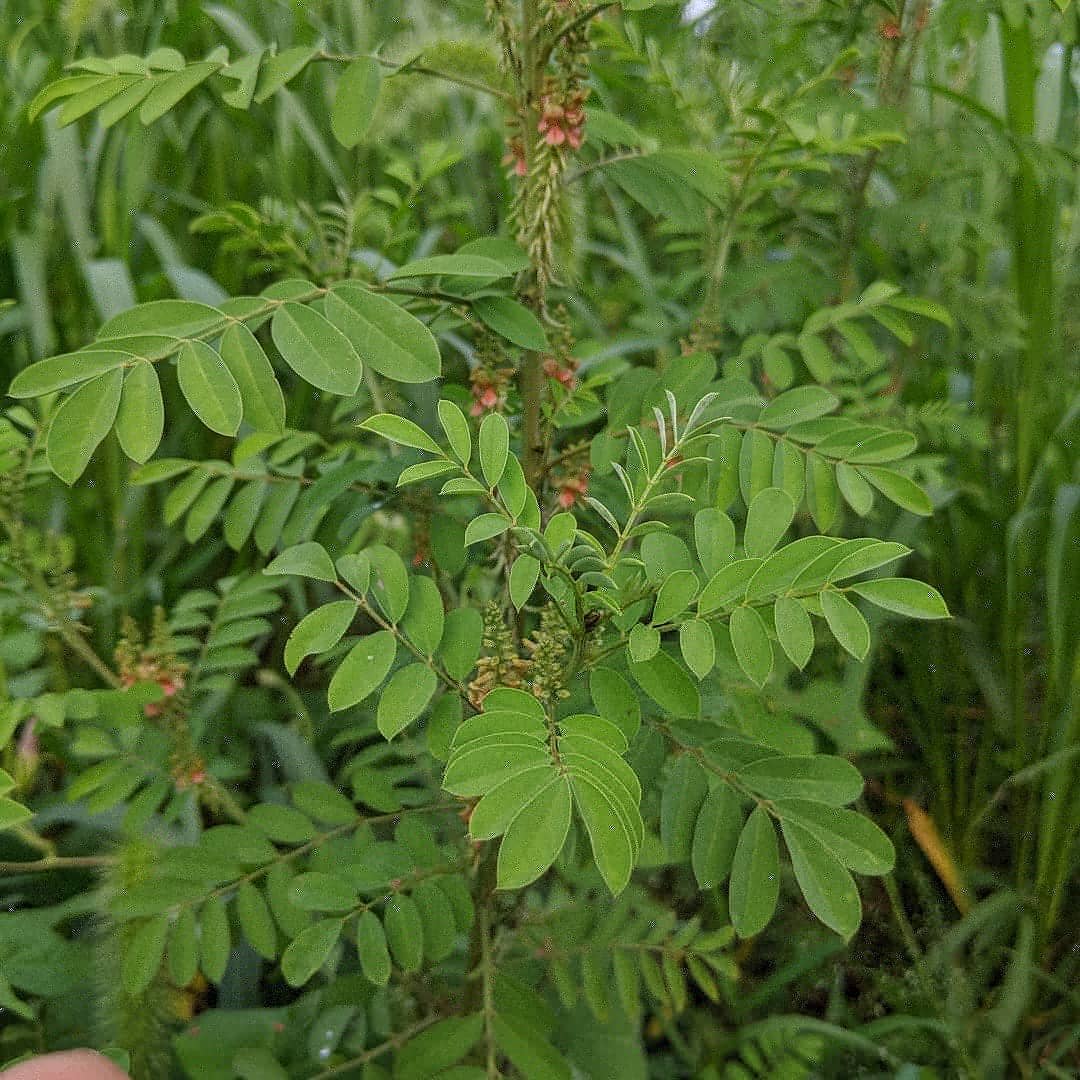
In 2007, the Foundation's longtime manager of Ossabaw, the late Jim Bitler, realized that a patch of unassuming leguminous plants with small orange flowers was actually a type of indigo. He began growing some of the plants, and soon shared his discovery with a natural dye enthusiast named Donna Hardy, who further spread the news of this fascinating find and began offering workshops and working to create an artisanal Sea Island indigo industry to benefit the local community. Donna has also figured out the best ways to process the fresh leaves into vivid blue pigment. Researchers from Clemson University got involved as well, and it was quickly realized that the species of indigo growing on Ossabaw was not the common indigo (an African species known as Indigofera tinctoria), but rather a species commonly known as "Guatemalan Indigo" (Indigofera suffruticosa). Used by Central American peoples to create an especially vivid blue color, the pigment produced by this species is known as "Mayan Blue."
It's assumed by most everyone involved with Ossabaw indigo these days that this was the species cultivated on Ossabaw in the 1700s, and that it managed to escape cultivation and naturalize in the island's mild climate. We assumed this for a while ourselves too, but recently learned that Indigofera suffruticosa is considered a native species not only in Central America but all along the coast of the Caribbean, Gulf of Mexico, and Atlantic Ocean to as far north as North Carolina (and as far south as Argentina, believe it or not). The populations are rather disjunct, based on county reports listed on the USDA-NRCS's PLANTS Database, so it's entirely possible that each report represents another example of feral "Guatemalan Indigo," and that the species didn't reach the Carolinas until the past few centuries. But it actually seems just as likely that the plant was already on Ossabaw when Eliza Lucas arrived — brought there by birds or tides — and that the seeds she started with (known to have been sent by her father from the Caribbean) were the more commonly grown Indigofera tinctoria, or "true indigo," which didn't naturalize as readily (though is also found in the Carolinas). We'll likely never know anything close to the full story of this plant. But in any event, that this largely tropical species should have a range extending into the Carolinas is an impressive sign of its resilience and fortitude.
—
We were given our initial seed stock by Dr. David Shields, noted scholar, author, Southern foodways expert, and University of South Carolina professor. He told Nate they were grown on Daufuskie Island, SC. We figured it would require a very long season, so weren't optimistic about producing seeds in New Jersey, but we got a bumper crop the first time we tried it — spring-planted plants begin flowering for us in June — with enough seed produced in a 20 foot row to offer it in the catalog the following winter. Ossabaw Indigo has since become widely grown, and in the process it's managed to demonstrate an ability to grow well and even produce seeds as far north as New England. It's reseeded a few times for us in New Jersey — with little plants popping up far later than I would start them and that need attention from us in order to beat their weedy plant neighbors in daily competition — but I expect it probably could only naturalize if grown in a place with large patches of ground that lack weed pressure.
If anyone of Gullah-Geechee heritage would like to grow these seeds, please get in touch with us. We will keep some seeds in reserve and would be happy to send them to you at no charge. We will also be donating 25% of the cost of these packets to a Gullah-Geechee community organization (in consultation with Gullah-Geechee friends).
GROWING TIPS: Start indoors a few weeks before last frost, and plant out once all danger of frost has passed. Seeds should be planted half an inch deep. Seedlings don't mind being crowded, but ultimately plants should be spaced out by at least 8 inches. In New Jersey the tallest grew almost four feet during the season. They began flowering in June and were still flowering by the time frosts arrived in fall. We are selling seeds still in their pods, each of which contains between zero and four viable seeds. We recommend breaking up the pods before planting, but it's probably not required.
NOTE: Due to the scarcity of seed, we decided not to sacrifice the amount of seed required for a full germination test, but the small sample size we tested did result in some germination, so we are confident you will get some plants. If you are unsatisfied with your purchase, please contact us.
 ,
,
 and
and

 Promo Codes Available: