Pay in installments of $6.04 with
 ,
,
 and
and

Shipping Estimate
USA
- USA
- CAN
- USA
- CAN
Ships within 48 hours · Estimated delivery Aug 8 - Aug 13
 Promo Codes Available:
For Your Every Summer RSVP, with Code: SUMMER15
Description
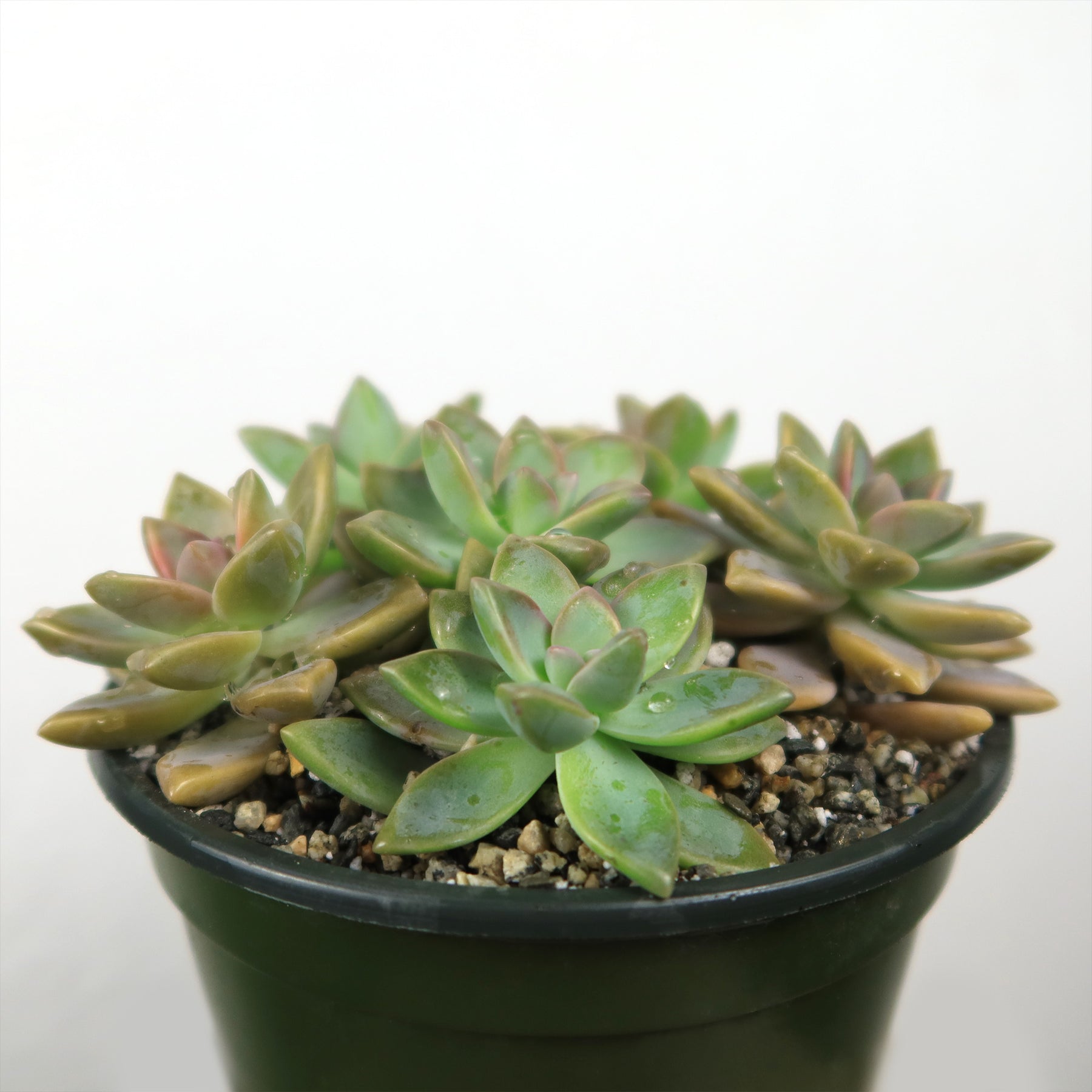
ghost plant succulent for sale Shop 'Ghost Plant - Graptopetalum paraguayense' Care and InfoIntroducing the ghost plant, known as Graptopetalum paraguayense, which is a low maintenance pet friendly plant that belongs to the Graptopetalum genus. Native to Mexico, it is known for its rosette shaped leaves and beautiful flowers. The ghost plant gets its name due to the pale, ghostly appearance of its leaves. It is also known by other common names such as mother of pearl plant and sedum weinbergii. The ghost plant has thick, fleshy, pointed,
Introducing the ghost plant, known as Graptopetalum paraguayense, which is a low-maintenance pet-friendly plant that belongs to the Graptopetalum genus. Native to Mexico, it is known for its rosette-shaped leaves and beautiful flowers.
The ghost plant gets its name due to the pale, ghostly appearance of its leaves. It is also known by other common names such as mother of pearl plant and sedum weinbergii.
The ghost plant has thick, fleshy, pointed, flat, or opalescent leaves that are typically arranged in a rosette formation. The leaves are pale blue-green or grayish white in color, giving the plant its ghostly appearance.
The fleshy leaves of the ghost plant are often covered in a powdery, waxy substance called "farina" that helps protect the plant from excessive sunlight.
The rosettes of plants can grow up to 8 inches tall and 12 inches wide, and in clumps ghost plants will grow up to 1 foot tall and 3 feet wide.
This makes it a great choice for potted houseplant or as part of a succulent arrangement in your rock garden.
The ghost plant blushes pink, purple, and yellow in full sun, displaying more blues, greens, and silvers in partial shade, and its powdery farina coating thickens under direct sun.
The Graptopetalum paraguayense flower blooms during the spring and early summer with clusters of small, star-shaped yellow flowers. These flowers attract butterflies and bees, making them a beautiful addition to any garden.
Propagation of the ghost plant succulent is relatively easy. It can be propagated through leaf cuttings or offsets. To propagate through leaf cuttings, simply remove a healthy leaf from the plant, let it callus over for a few days, and then place it in well-draining soil. Over time, roots will develop, and a new plant will grow. Offsets, which are small plantlets that grow around the base of the mother plant, can also be separated and planted to create new plants.
Watering Needs
When it comes to watering this ghost plant, it's important to strike a balance. Ghost plants are native to arid regions, so they prefer drier conditions. Overwatering can lead to root rot and other issues, so it's best to err on the side of underwatering.
To water your ghost plant, you'll want to follow a "soak and dry" method. This means thoroughly watering the soil and allowing it to dry out completely before watering again. When you do water, make sure to water the soil directly and avoid getting water on the leaves, as this can cause them to rot.
The frequency of watering will depend on various factors such as the climate, temperature, and humidity levels. As a general rule, you can water your Graptopetalum paraguayense every 2-3 weeks during the growing season in the spring and summer, but only once a month during the dormant season in the fall and winter.
Remember, it's always better to underwater than overwater your ghost plant succulent. Keep an eye on the soil moisture and adjust your watering schedule accordingly. And don't forget to provide good drainage for the plant by using a well-draining potting mix and a pot with drainage holes.
Light Requirements
When growing indoors ghost plant thrives in bright, indirect light. Find a spot near a sunny window where it can receive plenty of bright, filtered sunlight throughout the day. Avoid placing it in direct sunlight, as this can cause the leaves to burn or become discolored.
If you're growing the ghost plant outdoors, it can tolerate more direct sunlight compared to indoor conditions. It thrives in full sun to partial shade, so find a spot in your garden or patio where it can receive at least 4-6 hours of direct sunlight each day. However, keep in mind that if you're transitioning the plant from indoor to outdoor conditions, it's best to acclimate it gradually to prevent sunburn or stress to the ghost succulent.
Remember, the ghost plant Graptopetalum paraguayense is among the easiest succulents and can adapt to different light conditions.
If you notice the leaves stretching or becoming leggy, it may be an indication that the plant is not receiving enough light. On the other hand, if the leaves start to turn brown or develop sunburn spots, it may be getting too much direct sunlight.
Optimal Soil & Fertilizer Needs
Like other succulents, the Ghost plants thrive in well-draining soil that allows excess water to flow out easily. Planting them in ordinary soil will result in compacted roots, stunted growth, and most likely root rot. Instead, make or buy a well-draining potting mix, or ideally use our specialized succulent potting mix that contains 5 natural substrates and mycorrhizae to promote the development of a strong root system that helps your ghost plant succulent to thrive.
Graptopetalum paraguayense Ghost plants are not heavy feeders and can do well without frequent fertilization. In fact, too much fertilizer can actually harm the succulent plant. It's best to use a balanced (5-10-5), water-soluble NPK fertilizer specifically designed for succulents. During the growing season, in the spring, you can fertilize your ghost plant once a year. Be sure to dilute the fertilizer to half or quarter strength, as succulents have lower nutrient requirements compared to other plants.
Remember, it's important not to overdo it with fertilizer, as this can lead to nutrient burn and other issues. Always follow the instructions on the fertilizer packaging and err on the side of caution. With the right soil and proper fertilization, your ghost plant will be happy and healthy.
Hardiness Zone & More
When grown indoors, ghost plants prefer a warm temperature between 50°F to 65°F. It's important to avoid exposing them to extreme temperature fluctuations, as this can stress the plant.
For outdoor cultivation, the ghost plant is generally hardy in USDA zones 7 to 11. These zones have milder winters and can provide the right conditions for your mother of pearl succulent to survive and thrive.
In terms of humidity ghost plants are quite adaptable and can tolerate a range of humidity levels. They can handle both dry and moderately humid environments. However, it's important to avoid excessive moisture, as this can lead to rot or fungal issues. Good air circulation is also beneficial for the mother-of-pearl plant's overall health.
Final Thoughts
Overall, the ghost plant (Graptopetalum paraguayense) is a captivating succulent with its pale, ghostly leaves and delicate flowers. This low-maintenance houseplant features rosette-shaped leaves covered in a powdery substance called farina, giving it a unique appearance. With its compact size and easy propagation through leaf cuttings or offsets, the ghost plant is a great choice for both beginners and experienced plant enthusiasts. Just provide it with plenty of sunlight, well-draining soil, and occasional watering, and it will thrive as a beautiful addition to your succulent collection. As a result, succulents like ghost plants are frequently planted in containers, both indoors and outdoors, or in rock gardens.
Shipping Notes
- Free Standard Shipping on $100+ Orders to the USA.
- Except Preorder products are shipped in 48 hours.
- Delivery to the USA:
- Standard Shipping : 3-10 business days
- If time is of the essence, please consider selecting expedited delivery for faster service.
Exchange/Return Notes
- We offer a 30-day return/exchange service after receiving.
- Final sale items are not eligible for returns or exchanges.
- To process your return/exchange, please contact us at [email protected]
- Please click here for more details>>> Return & Exchange Policy